by Staff Writers Kuala Lumpur (AFP) April 18, 2014
Malaysia
and Australia will sign a deal specifying who handles any wreckage from
missing flight MH370 that may be recovered, including the crucial
"black box" flight data recorders, local media reported Friday.
Malaysia
is drafting the agreement "to safeguard both nations from any legal
pitfalls that may surface during that (recovery) phase," the New Straits
Times reported.
The government hopes the deal can be finalised
soon and endorsed in a Cabinet meeting next week. Canberra is studying
the memorandum of understanding, it said.
"The MoU spells out
exactly who does what and the areas of responsibility," civil aviation
chief Azharuddin Abdul Rahman was quoted as saying.
Azharuddin
added that Malaysia would lead most of the investigation, with Australia
and others helping. Details of the MoU will not be made public, the
report said.
Azharuddin and other officials could not immediately be reached by AFP.
The
Malaysia Airlines flight carrying 239 people inexplicably veered off
course en route from Kuala Lumpur to Beijing on March 8 and is believed
to have crashed in the southern Indian Ocean far off western Australia.
But a massive international search has failed to turn up any wreckage so far.
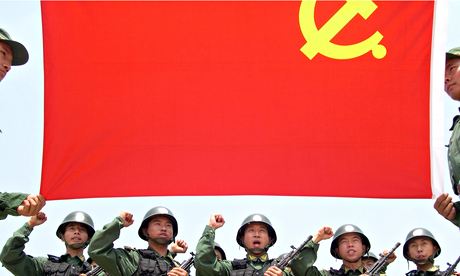
A Chinese communist party flag is held by soldiers. Photograph: China Newsphoto/Reuters
A
senior Chinese official has killed himself in his Beijing office,
according to reports – the latest mysterious suicide of a ruling
Communist party cadre.
Xu Ye'an, 58, was deputy chief of China's state bureau for letters and calls – the agency that fields grievances from citizens over injustices or disputes.
According
to the respected magazine Caixin, Xu was discovered to have killed
himself in his office on Tuesday, although the details surrounding his
death remain unclear.
"It is learned that Xu was not in good
health lately and was suffering from tinnitus over the past few months,"
Caixin reported, citing a person close to the bureau for letters and
calls. "He was always in a bad mood."
China tells US not to meddle in Hong Kong's internal affairs
Published time: April 07, 2014 19:47
China
has warned the United States against meddling in Hong Kong’s internal
affairs after Vice President Joe Biden met with two former Hong Kong
legislators who expressed concern that Beijing is tightening control
over the territory.
Biden met with Anson Chan, former chief
secretary and founder of pro-democracy group Hong Kong 2020, and Martin
Lee – founder of Hong Kong's opposition Democratic Party – at the White
House on Friday.
During the meeting, the activists spoke out
against whey they described as Beijing’s increasing control over Hong
Kong. They also said they fear that only candidates picked by the
central government will be allowed to take part in the 2017 chief
executive vote. Lee and Chan also voiced concerns over press freedom in
Hong Kong - referring to violent assaults on journalists and alleging
that Beijing is pressuring advertisers to shun critical media, AFP
reported.
Vice President Biden underscored Washington’s “long-standing
support for democracy in Hong Kong and for the city’s high degree of
autonomy under the 'one country, two systems' framework,” the White House said in a statement.
PHOTO: The Vice President drops by a meeting with Hong Kong pro-democracy advocates Martin Lee and Anson Chan. pic.twitter.com/5HXNqSMGWp
— Office of VP Biden (@VP) April 4, 2014
In
response, China's Ministry of Foreign Affairs said that it “firmly
opposes any countries meddling in the city's internal affairs in any
way,” South China Morning Post quoted.
“Hong Kong affairs are China's internal affairs,” said a spokesperson for the Office of the Commissioner of the Foreign Ministry in Hong Kong.
The official added that Hong Kong is currently going through a sensitive political reform period.
“[We]
would hope the US would be cautious of their words and actions
regarding Hong Kong affairs and not let Hong Kong issues impede
Sino-American relations,” he noted.
New Zealand's economic ties with China have been strengthened with a
deal to allow direct trading of the New Zealand dollar against the
Chinese currency the renminbi or yuan.
The deal, struck
relatively swiftly negotiations began in April last year, will reduce
costs for exporters and importers by removing the necessity for
transactions to be settled in two foreign exchange trades via a third
currency - usually the US dollar.
Prime Minister John Key and
China's Premier Li Keqiang announced the agreement after meeting at the
Great Hall of the People during Key's first day of an official visit to
China this evening.
"It's great to have been in Beijing to
witness the conclusion of negotiations to launch direct trading of the
New Zealand and Chinese currencies, which I kicked off during talks with
President Xi on the margins of the Bo'ao Forum in April 2013", Key
said.
"I am delighted that the project has been brought to a successful conclusion so quickly.
It highlights the strong relationship and goodwill between New Zealand and China."
Key
said the agreement "will make doing business with China easier by
reducing the costs of converting between the two currencies, and will
stimulate trade and investment".
"Direct trading will also
increase the integration between the New Zealand and Chinese financial
systems, and deepen the economic relationship between the two
countries."
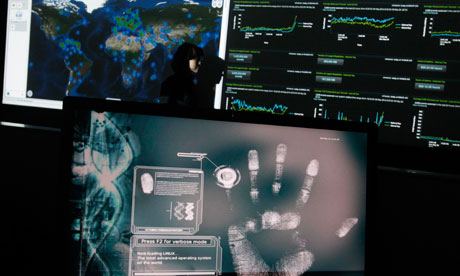
Obama's move to
establish a cyber warfare doctrine will heighten fears over the
increasing militarization of the internet. Photograph: Jim Young/Reuters
Barack Obama
has ordered his senior national security and intelligence officials to
draw up a list of potential overseas targets for US cyber-attacks, a top
secret presidential directive obtained by the Guardian reveals.
The
18-page Presidential Policy Directive 20, issued in October last year
but never published, states that what it calls Offensive Cyber Effects
Operations (OCEO) "can offer unique and unconventional capabilities to
advance US national objectives around the world with little or no
warning to the adversary or target and with potential effects ranging
from subtle to severely damaging".
It says the government will
"identify potential targets of national importance where OCEO can offer a
favorable balance of effectiveness and risk as compared with other
instruments of national power".
The directive also contemplates
the possible use of cyber actions inside the US, though it specifies
that no such domestic operations can be conducted without the prior
order of the president, except in cases of emergency.
The aim of
the document was "to put in place tools and a framework to enable
government to make decisions" on cyber actions, a senior administration
official told the Guardian. The administration published some declassified talking points
from the directive in January 2013, but those did not mention the
stepping up of America's offensive capability and the drawing up of a
target list.
Obama's move to establish a potentially aggressive
cyber warfare doctrine will heighten fears over the increasing
militarization of the internet.
The directive's publication comes
as the president plans to confront his Chinese counterpart Xi Jinping at
a summit in California on Friday over alleged Chinese attacks on
western targets.
Even before the publication of the directive,
Beijing had hit back against US criticism, with a senior official
claiming to have "mountains of data" on American cyber-attacks he
claimed were every bit as serious as those China was accused of having carried out against the US.
Presidential
Policy Directive 20 defines OCEO as "operations and related programs or
activities … conducted by or on behalf of the United States
Government, in or through cyberspace, that are intended to enable or
produce cyber effects outside United States government networks."
Asked
about the stepping up of US offensive capabilities outlined in the
directive, a senior administration official said: "Once humans develop
the capacity to build boats, we build navies. Once you build airplanes,
we build air forces."
The official added: "As a citizen, you
expect your government to plan for scenarios. We're very interested in
having a discussion with our international partners about what the
appropriate boundaries are."
The document includes caveats and
precautions stating that all US cyber operations should conform to US
and international law, and that any operations "reasonably likely to
result in significant consequences require specific presidential
approval".
The document says that agencies should consider the
consequences of any cyber-action. They include the impact on
intelligence-gathering; the risk of retaliation; the impact on the
stability and security of the internet itself; the balance of political
risks versus gains; and the establishment of unwelcome norms of
international behaviour.
Among the possible "significant
consequences" are loss of life; responsive actions against the US;
damage to property; serious adverse foreign policy or economic impacts.
The
US is understood to have already participated in at least one major
cyber attack, the use of the Stuxnet computer worm targeted on Iranian
uranium enrichment centrifuges, the legality of which has been the
subject of controversy. US reports citing high-level sources within the
intelligence services said the US and Israel were responsible for the
worm.
In the presidential directive, the criteria for offensive
cyber operations in the directive is not limited to retaliatory action
but vaguely framed as advancing "US national objectives around the
world".
The revelation that the US is preparing a specific target
list for offensive cyber-action is likely to reignite previously raised
concerns of security researchers and academics, several of whom have
warned that large-scale cyber operations could easily escalate into
full-scale military conflict.
Sean Lawson, assistant professor in
the department of communication at the University of Utah, argues: "When
militarist cyber rhetoric results in use of offensive cyber attack it
is likely that those attacks will escalate into physical, kinetic uses
of force."
******************************************************************************* By TBC Courtesy of Wikimedia Commons
*******************************************************************************
HUFF POST
Obama Cyber Memo Is Just The Latest Sign That The U.S. Is Preparing For Cyberwar
The Huffington Post
|
By Gerry Smith
Posted: 06/07/2013 5:43 pm EDT | Updated: 06/07/2013 6:07 pm EDT
A top-secret presidential memo published Friday marked the latest sign that the Obama administration is ready to go on the offensive in a potential cyberwar.
On Friday, the Guardian published a secret presidential directive
calling on national security and intelligence officials to create a
list of potential foreign targets for U.S. cyber attacks. The 18-page
document, known as Presidential Policy Directive 20, aims "to put in
place tools and a framework to enable government to make decisions" on
cyber actions, a senior administration official told the Guardian. The directive states
that cyber attacks can be launched as part of "anticipatory action
taken against imminent threats," but should comply with U.S. and
international law and receive approval from the president if they are
"reasonably likely to result in significant consequences," according to
the Guardian.