Showing posts with label Gardening. Show all posts

Thursday, September 10, 2015

5 Root Cellar Alternatives That Are Low-Cost And Easy-To-Make


Off The Grid News

Written by: Tricia Drevets Off-Grid Foods
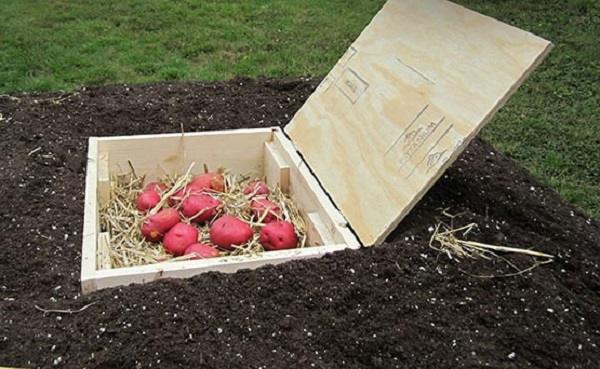
Image source: HomeDepot Image source: HomeDepot   During the summer there is nothing better than picking fruits and vegetables from your garden and then enjoying them at your dinner table that evening. The taste, freshness and convenience cannot be beat. But how can you continue to enjoy fresh homegrown produce when they’re not in season? One way is with a root cellar. It is with the use of root cellars that our ancestors provided nutritious food to their families all year round. Long before refrigerators were in every kitchen, most homes included some sort of root cellar that was designed to preserve nature’s bounty. Root cellars today can take many forms, from very basic to more complicated. But all of them provide a cool, ventilated, humid and dark space to store fresh food. Foods that do well in a root cellar environment include apples, pears, oranges, potatoes, carrots, beets, onions, garlic, winter squash and nuts.

Read More Here

Wednesday, September 9, 2015

A Plan for Food Self-Sufficiency

 
Planning a garden in advance can help you enjoy local, homegrown food year-round! Estimate how much to grow or buy and learn how to achieve food security with these guidelines.
By Cindy Conner October/November 2012
A well-planned garden can provide your family with the freshest, most nutritious produce, plus a more secure, self-reliant lifestyle.
Photo By Matthew T. Stallbaumer
Slideshow
Providing high-quality food for your family year-round takes foresight and planning, plus healthy doses of commitment and follow-through. Whether you grow as much of your food as you can or you source it from local producers, the guidelines here will help you decide how much to produce or purchase. The charts linked to in “Plan How Much to Grow” later in this article will also help you estimate how much space you’ll need — both in your garden to grow the crops, and in your home and pantry or root cellar to store preserved foods. Here’s a step-by-step plan to help you make the best use of your garden space (or farmers markets) to move toward homestead food self-sufficiency.

1. Establish Your Goals

Make a list of the foods you and your family eat now — and note the quantities as well. The charts linked to in “Plan How Much to Grow” further along in this article assume a half-cup serving size for fruits, vegetables and legumes, and a 2-ounce serving for dry grains. If your servings differ from the charts, be sure to adjust your calculations accordingly. Decide what you’d like to grow, noting the foods your family prefers and recognizing that not every crop will grow in every climate. Research different crop varieties: Some crops — such as melons — require long, hot days to mature, but certain varieties need fewer days to reach maturity, which allows them to be grown in areas with a shorter growing season. Don’t be afraid to start small and build gradually toward food self-sufficiency. A good starting goal might be to produce all of a certain crop that you use. An early milestone for me was growing all of the green beans we needed for a year and all of the ingredients for the spaghetti sauce I canned. Maybe you’ll aim to eat at least one thing from your garden each day. Keep your goals in mind as you’re planning a garden.
Read More Here

Friday, November 15, 2013

Become self-sufficient in food and housing with EnviroNative Training Initiatives

Becky Big Canoe: Become self-sufficient in food and housing with EnviroNative Training Initiatives

Alfred Lambremont Webre Alfred Lambremont Webre


Published on Nov 15, 2013
VIDEO: Becky Big Canoe: Become sustainable in food and housing with EnviroNative Training Initiatives
WATCH ON YOU TUBE:
http://www.youtube.com/watch?v=0clxix...

VANCOUVER, B.C. - In an interview with Alfred Lambremont Webre, Becky Big Canoe of Ontario, Canada describes becoming sustainable in food and housing with EnviroNative Training Initatives.

EnviroNative Training Initiatives, which Becky Big Canoe founded, is a not-for-profit organization set up to design and deliver training programs in food security, entrepreneur skills and natural building. Their target clientele is First Nations women and at risk youth.

You can support this initiative in self sufficiency by voting at:

http://www.avivacommunityfund.org/ide...

Information:

EnviroNative Training Initatives

https://www.facebook.com/environative...

Becky Big Canoe

https://www.facebook.com/becky.bigcanoe

Thank you.


Becky Big Canoe: Become sustainable in food and housing with EnviroNative Training Initiatives

http://bit.ly/1ihreLN

..........
Enhanced by Zemanta

Wednesday, July 17, 2013

Vertical Gardening Techniques for Maximum Returns

You can grow bigger, better cukes, beans, tomatoes and cantaloupes with simple, sturdy trellises

By Barbara Pleasant
December 2010/January 2011


Vertical Gardening Supports
Clockwise from top left: Rigid livestock panels do double duty as a fence and support for tomatoes, plus they can be bent to create an arched entry; saplings or bamboo poles are easy to use for pole bean tipis; pea tendrils love to cling to twiggy brush; and so-called “tomato” cages work better to support peppers and eggplants.


ILLUSTRATION: ELAYNE SEARS
Whether your garden is large or small, you can make better use of every square inch by using vertical gardening techniques to grow upright crops. Pole beans typically produce twice as many beans as bush varieties, and the right trellis can double cucumber yields. Then there are crops, such as tomatoes, that need some type of support to keep them above damp ground, where diseases have a heyday. All properly supported plants are easier to pick from and monitor for pests, plus you’ll get help from bug-eating birds that use trellises as hunting perches.

How Plants Climb

Plants that benefit from garden trellises use a variety of methods to cling to support, including curling tendrils, twining stems or, in the case of tomatoes, long, ropy branches that form roots in places that touch the ground.
Curling tendrils produced by peas and cucumber-family crops will twist around whatever is available, so you have plenty of versatility when supporting these crops. Tendrils cling to horizontal and vertical parts of a trellis, so netting woven from biodegradable string attached to posts often works well. Twining stems spiral around their support, growing steadily upward until they turn back on themselves — a growth habit seen in hops, pole beans, Malabar spinach and yard long beans.
Twining stems have little use for horizontal lines, so they do best with trellises composed mostly of poles or an upright fence. (See illustration in the Image Gallery.)
Tomatoes like to throw themselves over their support. They must be trained and tied to an upright trellis, which isn’t as easy as growing them in wire cages. The larger, more robust the tomato plant, the more you need a sturdy tomato cage that provides support on all sides.

Temporary or Permanent?

In my experience, a truly sturdy upright garden trellis must be anchored by T-stakes or vertical 4-by-4 posts (or 3-inch-diameter saplings from the woods), sunk 18 inches deep. Installing this semi-permanent garden structure takes time and muscle. In my garden, the most versatile trellises are about 8 feet wide, stand 4 to 5 feet high, and are made of woven wire fencing or a livestock panel attached to two posts. Allowing 4 inches of clearance between the bottom of the fencing and the ground makes the area easier to weed and cultivate. The advantages of such a trellis are the ready availability of the structure each spring and the option to make an attractive permanent feature in the garden.
The drawback of this or any other long-lasting vertical gardening supports (like an existing fence) is that it limits rotations to peas, beans, tomatoes and cucumber-family crops. Temporary trellises, such as bamboo tipis, give you more flexibility in terms of what you plant where, but they need to be taken down and stored in a dry place through winter to keep them from rotting. If you gather trellis parts and bind them together with string or strips of cloth in the fall and store them over the winter, they will go up quickly the following season.

Read More  Here

Enhanced by Zemanta