Showing posts with label Britain. Show all posts

Friday, May 16, 2014

UK - Self-employed earn fifth less than in 2008, and 40% less than typical employee

Collapse in pay lies behind Britain’s return to work: Self-employed are hidden victims of recession, report warns


The study by the Resolution Foundation think tank reveals the dark side of the sharp growth in self-employment, which has helped the Government to maintain its boast that unemployment is falling as more and more people find work.
Since the start of the recession five years ago, the number of self-employed has risen by 650,000 to 4.5 million. They now represent 15 per cent of the active workforce.
But the new analysis reveals that the average weekly income of someone in self-employment is 20 per cent lower than in 2008.  As a result, a typical self-employed worker now earns 40 per cent than a typical employee.  An Ipsos-Mori survey commissioned as part of the report also found that 27 per cent of those who became self-employed in the past five year do so because they had no other choice - up from 10 per cent five years ago.
Gavin Kelly, chief executive of the Resolution Foundation, said: “Self-employment is often a highly precarious existence which isn’t that well supported by public policy. High levels of self-employment seem likely to be here to stay and policy-makers have some catching up to do.”
The grim truth about pay and living standards in some the regions of the UK has also been highlighted by official EU figures showing that parts of Britain are effectively poorer that countries from  former communist countries in Eastern Europe.
People in Cornwall and the Welsh Valleys are worse off than residents of Estonia and Lithuania, according to Eurostat figures comparing wealth across the EU using a measure known as “purchasing power standards” - which takes into account GDP per person and cost of living.
In addition, Durham and the Tees Valley, in the north east of England, are poorer than those in the wealthiest regions of Bulgaria and Romania, the two most deprived countries in the EU.
By contrast, the Eurostat figures show that London is the richest place in Europe.
According to the Resolution Foundation report, self-employed people are more likely than people in full time employment to complain of being under employed.

Read More Here

.....

Pension fears for rising number of self-employed

Higher levels of self employment have become a permanent feature of the UK economy as a result of Britain’s ageing workforce and a greater desire for Britons to “work for themselves”.
The Resolution Foundation said the increase in self-employment also presented a “worrying picture of the security and vulnerability of self employed people”, who have traditionally saved less for retirement than employees. Photo: PA

Higher levels of self employment have become a permanent feature of the UK economy as a result of Britain’s ageing workforce and a greater desire for Britons to “work for themselves”.
The number of people who are self employed has grown by 650,000 since the 2008 financial crisis, to 4.5m, meaning one in seven workers is now self employed.
While some of the shift towards self-employment has been caused by cyclical factors, the Resolution Foundation said 73pc of workers had chosen to become self-employed. “The high self-employment numbers are here to stay,” said Laura Gardiner, a senior policy analyst at Resolution Foundation.
The rise in self employment has attracted attention from the Bank of England, where policymakers have argued over whether the increase reflects structural changes in the UK economy or “disguised labour market slack” because many of these workers would prefer to be working full-time.
While the Foundation said there was less slack in the economy caused by self-employment than some policymakers believed, it said underemployment among these workers was “marginally worse than for employees”, representing a reversal of the pre-crisis trend.

Read More Here

.....
Enhanced by Zemanta

Wednesday, February 26, 2014

Sell UK visas to highest bidders, say government immigration advisers


Proposal to allow wealthy to bid for tier-one visas criticised as creating 'eBay culture' for British residence
Passports being checked at passport control
Visas giving the right to settle in Britain are already available to rich individuals under tier one of the points-based immigration system. Photograph: Gareth Fuller/PA Archive/Press Association Ima
Visas giving the right to settle in Britain could be auctioned off to the highest bidders under proposals expected to be unveiled on Tuesday by the government's official immigration advisers.
The suggestion, expected from the home secretary's migration advisory committee (Mac), has already been criticised by immigration lawyers for creating an "eBay culture" for permanent UK residence.
Under the proposal overseas millionaires will be invited to bid for a limited proportion of investor or tier-one UK visas which allow holders and their families to live indefinitely in Britain.
A second option would allow visas to be "bought" through donations to hospitals or universities.
The proposals are expected to be put forward in response to concerns that the existing investor visa route is failing to benefit the UK and has simply become a cheap way for some wealthy Russian, Chinese and Middle Eastern families to settle permanently in Britain.
The existing route, known as tier one of the points-based immigration system, lets rich individuals accelerate the process of being allowed to settle in the UK by between two and five years depending on how much is invested.
Applications have been running at about 600 a year to apply under this route which does not require applicants to be able to speak English or have a job to come to.
Official concern over the use being made of tier-one visas first came to light in December 2012 when the Home Office announced that leveraged investment funds held in offshore accounts could not be used to fund their investments in Britain.

Read More Here

.....

Oligarchs buy UK visas for £1million: Now Home Office advisers want to auction them off for at least £2.5m so taxpayers get a better deal

  • Migration Advisory Committee issues call for immigration shake-up
  • Oligarchs offered visas for taking on £1million of £1trillion national debt
  • Wants 100 visas to be sold at auction or given to donors to universities
By James Slack
|

Britian has been handing visas to hundreds of Russian oligarchs in return for them paying at least £1million towards our £1.2trillion national debt.
Russian and Chinese businessmen have been allowed to jump to the front of the immigration queue by ‘investing’ a seven-figure sum in Government gilts.
Immigration advisers say the foreign investors and their families are the big winners because as long as they have their money stored in Treasury bonds, they can settle in the UK and enjoy its fair legal system and good schools.
The Home Office's Migration Advisory Committee warned the British public get 'very little out of' the deals which allow Russian and Chinese businessmen have been allowed to jump to the front of the immigration queue

Indeed, because they receive interest on the bonds, the Government is effectively paying the wealthy to live here – where they can then also invest in our lucrative property market. If they take their money out of the bonds the visa is revoked.
But the British public gets very little out of the deal, according to the Home Office’s Migration Advisory Committee.
 
It is calling for a major shake-up of the scheme to get more benefit for the British taxpayer.
Currently, non-EU nationals who invest £1million, £5million or £10million can apply for permanent residency after five, three or two years respectively.
Under proposed new rules, the minimum amount they would need to invest to come here would be doubled to £2million and they would be allowed to apply for permanent residency after five years.
Instead of going into bonds, MAC suggests the money could be ploughed into large infrastructure projects.
More controversially, the committee also wants around 100 visas to be auctioned off to the highest bidder every year.

Read More Here

.....
Enhanced by Zemanta

Tuesday, February 11, 2014

Barclays to cut 12,000 jobs, pays bigger bonuses

MSN Money

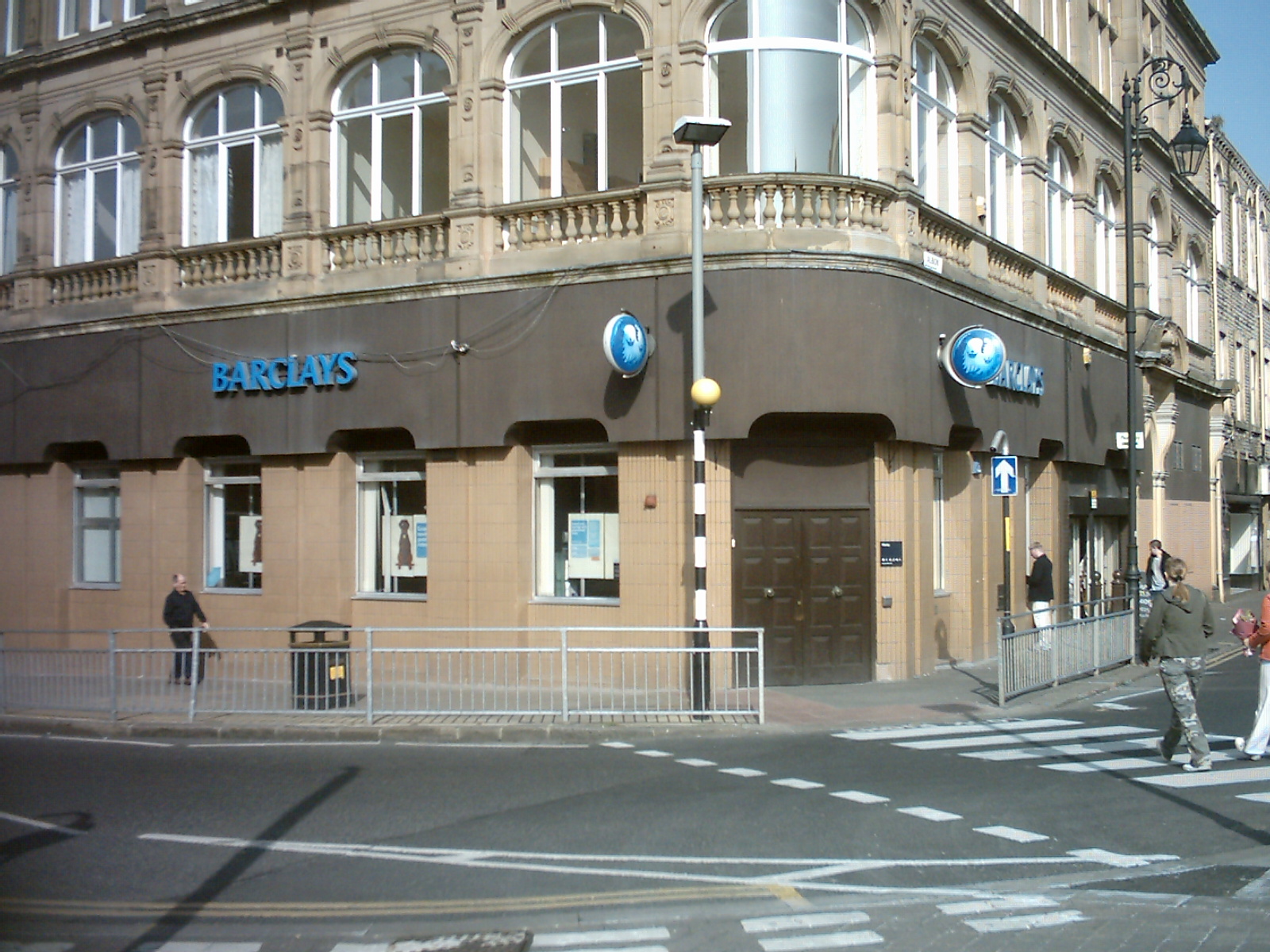
File:Barclays in Morley.jpg
Barclays on Queen Street, Morley, West Yorkshire
Image Source :  Wkimedia. org
Author Mtaylor848
.....
February 11, 2014 12:04 PM ET
By Steve Slater and Matt Scuffham

LONDON (Reuters) - Barclays said it would axe up to 12,000 jobs this year even as it raised bonuses for investment bankers, prompting fury among politicians and unions who said it had not learned the lessons of the financial crisis.
Britain's third-biggest bank said up to 9 percent of employees could go, including 7,000 in Britain, as it tries to lower costs. The cuts are not concentrated in any one business area.
It said it paid 2.4 billion pounds ($3.9 billion) in incentive awards last year, raising bonuses at the investment bank by 13 percent despite a slump in its profits. The average bonus for the investment bank's 26,200 staff was 60,100 pounds.
Critics of the bonus hike said it showed Britain's biggest banks were still failing to heed the lessons of a financial crisis caused by dangerous risk taking and excessive pay.
"Today Barclays has stuck two fingers up to hard-pressed families across Britain by announcing another multi-billion pound bonus pool," said Frances O'Grady, General Secretary of the Trades Union Congress.
Barclays Chief Executive Antony Jenkins, who took the helm in 2012 after an interest rate rigging scandal, has vowed to improve culture and standards at the bank while also reducing risk and strengthening the balance sheet.
But its investment bank profits slumped 37 percent last year to 2.5 billion pounds and analysts voiced concern about whether Jenkins can reach his target of a return on equity above 11.5 percent by 2016.
Getting costs down looked more challenging than expected, they said, while increased regulatory pressure and a grim outlook for fixed-income revenue made the target on returns look difficult to achieve.
Barclays shares were down 5 percent at 261 pence by 7.55 a.m. ET, underperforming a 0.7 percent rise by an index of European banks.
"WE NEED THE BEST PEOPLE"
The higher bonuses lifted the compensation-to-income ratio in the investment bank to 43.2 percent last year from 40 percent in 2012. Jenkins, who gave up his own bonus for 2013, said he still aimed for a ratio in the "mid-30s" across the bank.
He defended the bigger bonus pot, saying the bank had to recruit the best staff to compete with global rivals and continued to have "constructive" talks with investors over pay.
"We need to recruit people from Singapore to San Francisco. We need the best people in the bank to drive long-term sustainable returns for our shareholders," Jenkins told reporters on a conference call.
"I understand that there will be some (people) who feel that this decision is the wrong one for Barclays. But it is the decision of the board and myself that this entirely is the right decision for the group and in the long-term interests of shareholders," he said.
But business leaders' group the Institute of Directors said the bank's bonus policy raised the question of whether it was being run for its shareholders, or its staff.


Read More Here

.....
ZeroHedge

Barclays Fires 12,000; Reports Horrible Earnings, Awards Itself Bigger Bonuses


It is not easy for one bank to anger more people with one announcement than what Barclays did in the past 24 hours. In one fell swoop, the British bank infuriated shareholders after announcing dismal earnings (an adjusted Q4 profit of about 200 million pounds and a statutory profit of less than 100 million as investment banking income slumped 37% as income fell 9% to 10.7 billion due to a fall in fixed income, and it took further charges related to a cleanup of the banking industry in the wake of the 2008 financial crisis) which sent the share price sliding, it then pissed off UK workers and taxpayers after it announced it would hike investment bank bonuses by 13% despite the abovementioned profit slump, and finally it crushed 9% of its workforce, or 12,000 workers, who are set to prepare pink slips as the bank "streamlines."
Barclays said 820 senior roles would go, and half of those were cut at the investment bank in the last two weeks. It cut 7,650 jobs last year, including 1,400 in the investment bank, as part of a restructuring unveiled a year ago by Jenkins to cut 1.7 billion pounds of annual costs. There were 139,600 Barclays employees by the end of the year.
More from Reuters:
Stepping up efforts to cut costs, Barclays said up to 9 percent of employees could go, including 7,000 in Britain, where half of the affected staff had already been notified. The cuts are not concentrated in any single business area.
Britain's third-biggest bank said it paid 2.4 billion pounds ($3.9 billion) in incentive awards last year after raising bonuses at the investment bank by 13 percent despite a slump in profits from the business. The average bonus across the investment bank's 26,200 staff was 60,100 pounds.


Read More Here

.....

Enhanced by Zemanta

Wednesday, January 8, 2014

Battle stations! Navy scrambles destroyer to challenge Russian warship off British coast (but it takes 24 hours to make 600-mile journey from Portsmouth base - was Putin testing our response time?)


  • Russian vessel detected 30 miles away from Scotland last night
  • Only ship available to respond was on south coast of England
  • Tensions heightened when aerial photos showed ship full of missiles
By Mark Nicol
|

A Russian cruiser came within 30 miles of the British coast but the Navy only had one ship to respond (file image)

A fully armed Royal Navy warship was scrambled to challenge a missile-carrying Russian vessel  in the waters off Britain just days before Christmas, defence sources revealed last night.
In a calculated test of Britain’s reduced naval capacity in the North Sea, the Russian warship came within 30 miles of the coast.
It was detected nearing Scotland, but the only ship the Royal Navy had available to respond after Ministry of Defence cuts was in Portsmouth, resulting in a delay of 24 hours until it was in position.
The threatening approach towards Britain’s territorial waters triggered a top-secret Navy and Air Force operation co-ordinated by the military top brass at the Permanent Joint Headquarters (PJHQ) bunker at Northwood, just outside London.
RAF reconnaissance aircraft tracked the progress of the Russian warship as it neared north-east Scotland, and the tension heightened when aerial photographs revealed the ship was carrying a full payload of guided missiles.
Commanders at PJHQ decided to send the new Type 45 destroyer HMS Defender, which is Britain’s immediate-response ship during a national security crisis.
The Russian ship waited in the Moray Forth, a stretch of water  that flows into Loch Ness, for Defender to arrive, as if her captain were recording the Navy’s response times.
At the time, Defender was in dock at Portsmouth. Her crew were forced to make the 600-mile journey around the coastline, because budget cutbacks mean there are no maritime patrol vessels sailing off Scotland.
 A defence source said: ‘This was no exercise – the Russian ship was behaving very aggressively in a stretch of water bordering Britain’s territorial waters.
‘They were watched very closely by the RAF and it was agreed that HMS Defender should block the Russians’  passage.
A tense stand-off ensued when Defender reached the Moray Firth as crews tried to establish intentions

‘Defender was fully equipped with Sea Viper surface-to-air missiles and guns capable of firing 40kg shells as far as 18 miles. Her captain and crew knew this was the real deal and were prepared to engage.’

Read More Here
Enhanced by Zemanta

Monday, January 6, 2014

Rather than discuss the greed behind the 18 percent increase in energy bills UK energy firms lectures the public on energy fasts and making sacrifices

‘Co-showering, less tea:’ UK energy firm’s advice how to cut bill

Published time: January 04, 2014 18:46
Reuters / Stefan Wermuth
Shower with other people, go to bed early and stop drinking tea if you want to cut expenses, suggests British energy firm Frist Utility after whopping their prices up by 18 per cent.
Frist Utility, Britain’s biggest independent energy firm with 120,000 customers, has said that customers should follow an “energy diet” where two days of the week, they save and the remaining five days they use whatever electricity they want.
“Just stick to the low-usage energy plan on fast days, then use what you like on the other five and you could save an average of £154 a year,” the company, which charges an average of £1,120 for electricity and gas, said in a statement.
Showering together can save £34 a year, while turning off the telly and turning out the lights can knock another £18 off your bill, Frist Utility said. Playing a board game and microwaving meals instead of cooking them could also save £12 a year.
Enhanced by Zemanta

Friday, December 20, 2013

MI5 and MI6 face questions over torture of terrorism suspects


Gibson inquiry concludes UK government and intelligence agencies had been involved in so-called rendition operations
Andrew Tyrie
Andrew Tyrie, Conservative MP: 'It is deeply shocking that Britain facilitated kidnap and torture'. Photograph: Felix Clay
 
 
Former government ministers and intelligence chiefs face a series of disturbing questions over the UK's involvement in the abduction and torture of terrorism suspects after 9/11, an official inquiry has concluded.
In a damning report that swept aside years of denials, the Gibson inquiry concluded that the British government and its intelligence agencies had been involved in so-called rendition operations, in which detainees were kidnapped and flown around the globe, and had interrogated detainees who they knew were being mistreated.
MI6 officers were informed that they were under no obligation to report breaches of the Geneva conventions; intelligence officers appear to have taken advantage of the abuse of detainees; and Jack Straw, as foreign secretary, had suggested that the law might be amended to allow suspects to be rendered to the UK.
After examining about 20,000 documents which outlined allegations involving around 200 detainees, the chair of the inquiry, Sir Peter Gibson, and his team raised 27 questions that they said would need to be answered if the full truth about the way in which Britain waged its so-called war on terror was to be established – and the heads of MI5 and MI6 were told they have a month to respond.
The questions include:
• Did UK intelligence officers turn a blind eye to "specific, inappropriate techniques or threats" used by others and use this to their advantage in interrogations?
• If so, was there "a deliberate or agreed policy" between UK officers and overseas intelligence officers?
• Did the government and its agencies become "inappropriately involved in some renditions"?
• Was there a willingness, "at least at some levels within the agencies, to condone, encourage or take advantage of a rendition operation"?
The report also questions whether MI5 and MI6 provided the intelligence and security committee (ISC) with accurate, complete information about the mistreatment of detainees in the past, "or sometimes whether they were notified at all".
However, the answers will be provided not to Gibson, but to the ISC, the secretive Westminster cross-party body that is supposed to provide oversight of the agencies. After promising for more than three years that an independent judge-led inquiry would examine the many allegations that the intelligence agencies face, the government announced on Thursday that it was handing the investigation over to the ISC.
That decision was immediately condemned by human rights groups who said that instead of drawing a line under the episode, the government was exposing itself to the allegation that it was engaging in a cover-up.
As a result of the decision to hand over to the ISC, it remains unclear whether any of the answers to Gibson's 27 questions will ever be made public. The committee's hearings are almost always behind closed doors, and its reports are censored before publication, in consultation with the agencies upon which it reports.
"It is deeply shocking that Britain facilitated kidnap and torture," Andrew Tyrie, a Tory backbencher and chairman of the Treasury select committee, told MPs. "The decision to abandon this judge-led inquiry will come to be seen as a mistake."
Tyrie said that an investigation by the ISC will never command public confidence, a criticism that was echoed by human rights groups. Amnesty International said: "Handing the investigation over to the ISC raises the prospect that much of the truth may remain buried." Human Rights Watch said: "The ISC has neither the independence nor the transparency to carry out such an important task."
Cabinet minister Kenneth Clarke told MPs that the inquiry's report paints a picture of government and intelligence agencies struggling to adapt to the new realities faced in the wake of 9/11 and said it was a matter of "sincere regret" if "mistakes and failures were made".
"It is now clear that our agencies and their staff were in some respects not prepared for the extreme demands suddenly placed upon them," he said.

Read More Here
Enhanced by Zemanta