‘Turkey acts like ISIS ally, should not be EU member’– Czech president
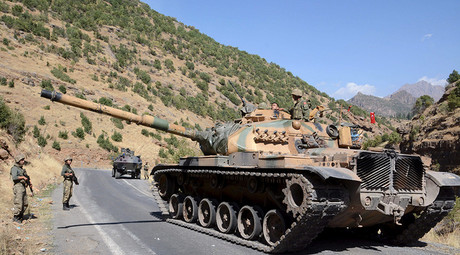
Turkey should not become an EU member, said Czech President Milos Zeman, adding that Ankara sometimes behaves like an Islamic State (IS, formerly ISIS/ISIL) ally, even though Turkey is part of NATO.
"I think Turkey is indeed a member of NATO, but sometimes behaves as if it’s more an ally of Islamic State. It removes oil from Syria which finances Islamic State," Zeman said, as quoted by Czech newspaper Parlamentni Listy.
By shooting down Russian jet, Turkey exposed as more than terrorist accomplice
The president’s remarks came on Tuesday while addressing voters at the end of a three-day visit to the Czech town of Kadan, North Bohemia, local media reported.
Zeman suggested Turkish policy stems from the principle “the enemy of my enemy is my friend,” referring to Turkey’s suppression of the Kurds, “who are the only ones who have fought effectively with IS,” the newspaper reported.
The president maintained this is the reason why Turkey should be approached with caution and has no reason to be an EU member.
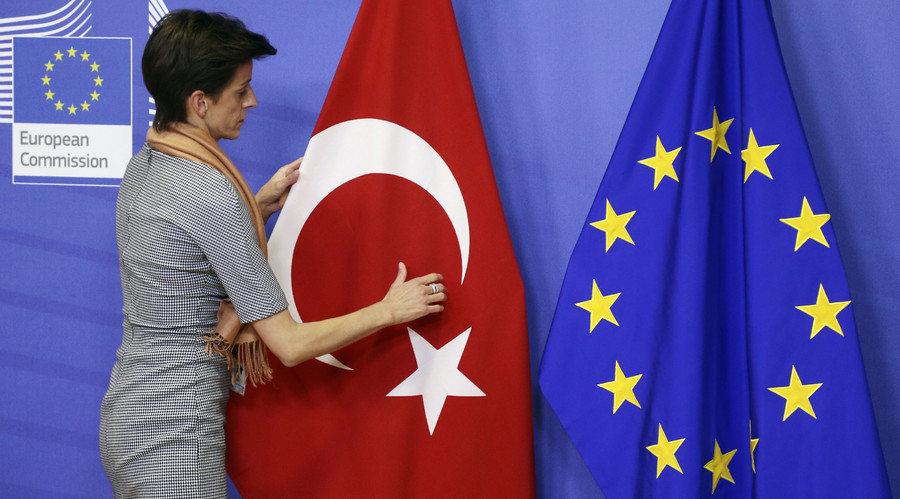
Turkey has signed an agreement with the EU at a summit in Brussels in which the country will help stem the flow of migrants to Europe in return for €3 billion ($3.18bn) of support and the reestablishing of talks on EU accession.
1. The EU agrees to provide "an initial" €3 billion ($3.18bn) over two years for Turkey to better cater for the needs of 2.2 million Syrian refugees in the country.
2. The EU promises to open a new chapter in negotiations regarding Turkey's EU ascension and to bring the country's standards in economic and financial policies up to scratch.
3. The EU pledges to lift visa requirements for Turkish citizens in the Schengen zone by October 2016 once all the requirements set forth in the EU roadmap are met.
The European Union, struggling with the flow of refugees coming from the war-torn Middle East and North Africa, will allocate €3 billion of initial aid to Turkey that will help with managing the crisis by taking in some 1.5 million migrants, Chancellor Merkel has confirmed, Reuters reports. The sum can be adjusted with time depending on circumstances.
Apart from that, the EU has promised to renew talks on Turkey’s EU membership that haven’t seen much progress since 2005. The new chapter of discussions will open in December while further chapters are expected to come in the first three months of 2016.
“We agreed that [Turkey's] accession process needs to be re-energized,” European Council President Donald Tusk told a news conference after the summit, Reuters reported.
"Social Explosion" Begins In Greece As Massive Street Protests Bring Economy To A Fresh Halt
Submitted by Tyler Durden on 11/12/2015 08:46 -0500
One thing that became abundantly clear after Alexis Tsipras sold out the Greek referendum “no” back in the summer after a weekend of “mental waterboarding” in Brussels was that the public’s perception of the once “revolutionary” leader would never be the same. And make no mistake, that’s exactly what Berlin, Brussels, and the IMF wanted.
By turning the screws on the Greek banking sector and bringing the country to the brink of ruin, the troika indicated its willingness to “punish” recalcitrant politicians who pursue anti-austerity policies. On the one hand, countries have an obligation to pay back what they owe, but on the other, the subversion of the democratic process by using the purse string to effect political change is a rather disconcerting phenomenon and we expect we’ll see it again with regard to the Socialists in Portugal.
After a month of infighting within Syriza Tsipras did manage to consolidate the party and win a snap election but he’s not the man he was - or at least not outwardly. He’s obligated to still to the draconian terms of the bailout and that means he is a shadow of his former self ideologically. As we’ve said before, that doesn’t bode well for societal stability.
On Thursday, we get the first shot across the social upheaval bow as the same voters who once came out in force to champion Tsipras and Syriza are staging massive protests and walkouts.
Read More Here
........................................................................................
Bloomberg Business
Greece Comes to a Standstill as Unions Turn Against Tsipras
November 11, 2015 — 6:01 PM CST Updated on November 12, 2015 — 6:04 AM CST
Unions hold general strike to protest against austerity
PM races to satisfy creditor demands in exchange for funds
As Greek workers took to the streets in protest on Thursday, Alexis Tsipras was for the first time on the other side of the divide.
Unions -- a key support base for the prime minister’s Syriza party -- chanted in rallies held in Athens the same slogans Tsipras once used against opponents. Doctors and pharmacists joined port workers, civil servants and Athens metro staff in Greece’s first general strike since he took office in January, bringing the country to a standstill for 24 hours.
As many as 20,000 protesters gathered in central Athens while a small group of anarchists at the tail of the demonstration threw petrol bombs at police officers at around 1:30 pm local time, a police spokesman said, requesting anonymity in line with policy. The police responded with tear gas and stun grenades.
Greece’s biggest unions, ADEDY and GSEE, are holding marches accusing Tsipras of bowing to creditors and imposing measures that “perpetuate the dark ages for workers,” as the country’s statistical agency released data showing that 1.18 million Greeks, or 24.6 percent of the workforce, remained unemployed in August.
The 41-year-old Greek premier, who was among anti-austerity protesters in previous general strikes, is now racing to complete negotiations with creditors on belt-tightening in exchange for the disbursement of 10 billion euros ($10.7 billion) to be injected into banks. Failure to reach an accord with euro-area member states and the International Monetary Fund on policies including primary residence foreclosures, and stricter rules on overdue taxes, would put the solvency of the country’s lenders in doubt.
“The economic policies Tsipras has to implement are definitely harsher than warranted, and also harsher than they would be if it wasn’t for these seven months of brinkmanship and extreme political uncertainty,” said Manolis Galenianos, a Professor of Economics at the Royal Holloway, University of London. “This wasn’t necessary, it could have been avoided, and the government will now implement deeper cuts to achieve less ambitious fiscal targets.”
100
said killed in Paris theater alone as attackers tossed explosives at
hostages; police kill at least 2 gunmen in raid; gunman said to shout
‘Allahu Akbar’; French capital terrorized by attacks in 7 locales
Victims
lay on the pavement outside a Paris restaurant, Friday, Nov. 13, 2015.
Police officials in France on Friday reported multiple terror incidents,
leaving many dead. (AP Photo/Thibault Camus)
France's
President Hollande declares a state of emergency amid multiple attacks
in Paris, November 13, 2015 (France 24 screenshot)
Fans
leave the Stade de France amid a stream of fatal attacks in Paris,
including explosions near the stadium, November 13, 2015. (Foto
AP/Michel Euler)
The Times of Israel is live blogging events as they unfold late Friday and into Saturday.
1,500 extra soldiers deployed to Paris after attacks
The
office of the French President Francois Hollande says that at least
1,500 extra soldiers have been deployed to Paris after the deadly
attacks tonight.
A
French police official says top government officials including
President Francois Hollande were headed to the Bataclan concert hall
where hostages were taken.
According to police, at least 100
people were killed in the theater. A police assault on the venue
finished earlier tonight, leaving at least two attackers dead, officials
say.
Facebook activates ‘safety check’ feature after Paris attacks
Facebook
has activated its Safety Check feature — allowing users to alert
friends and others that they are safe — following the deadly terror
attacks in Paris which have claimed the lives of at least 140 people
tonight.
Screenshot from Facebook’s ‘Safety Check’ feature allowing users to report that they are safe.
Netanyahu: Israel stands shoulder to shoulder with France against terror
Prime
Minister Benjamin Netanyahu says Israel stands “shoulder to shoulder”
with France in the “war against terrorism” after a deadly string of
attacks in Paris left at least 140 dead tonight.
“Israel stands
shoulder to shoulder with President Francois Hollande and with the
French people in the war against terrorism,” Netanyahu said as he
offered his condolences to the families of the victims.
Police say 100 dead inside Paris theater; total death toll up to 140
French
police say that about 100 people were killed inside the Bataclan
theater in Paris tonight, bringing the total death toll from the
multiple terror attacks across the French capital to 140.
‘Dozens’ killed in Paris theater as attackers tossed explosives at hostages
Dozens
of people are dead inside Paris’ famous Bataclan theater where a
terrorist attack took place earlier tonight, and some 100 people were
taken hostage. The death toll is expected to rise as the situation
becomes clearer.
Police launched a raid and killed two attackers a short while ago.
One Paris official described “carnage” inside the building, saying the attackers had tossed explosives at the hostages.
Click to Open Overlay Gallery PlatonAs winter approaches in Moscow, Snowden may have new hope of a safe haven in a warmer expatriate climate: The European Union.
On
Thursday the EU parliament voted by a narrow margin of 285-281 to
protect Snowden from extradition if he were to reside in Europe, a step
toward allowing the NSA leaker to leave Moscow and safely live or travel
on the continent. The motion, according to a statement from the parliament,
will “drop any criminal charges against Edward Snowden, grant him
protection and consequently prevent extradition or rendition by third
parties, in recognition of his status as whistle-blower and
international human rights defender.”
Snowden himself reacted with excitement to the news, calling it “extraordinary” and a “game-changer” on his Twitter feed—a strong sign that he may take the EU up on its offer.
A
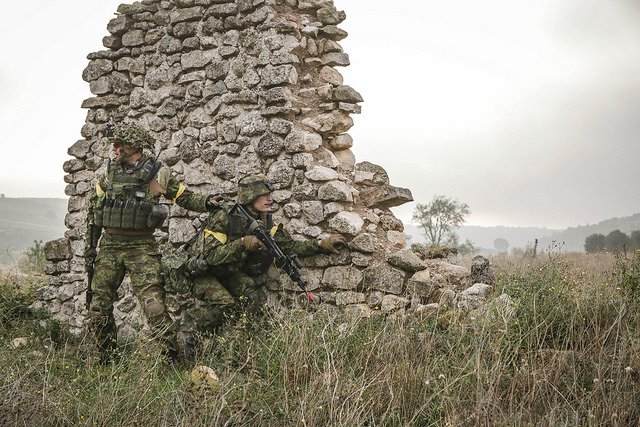
rift appears to be growing in Europe as NATO announced it was
considering putting more troops into the Baltic region to increase
pressure on Russia, while at the same time Federica Mogherini, the EU's
Foreign Affairs chief advocated rapprochement with Russia.
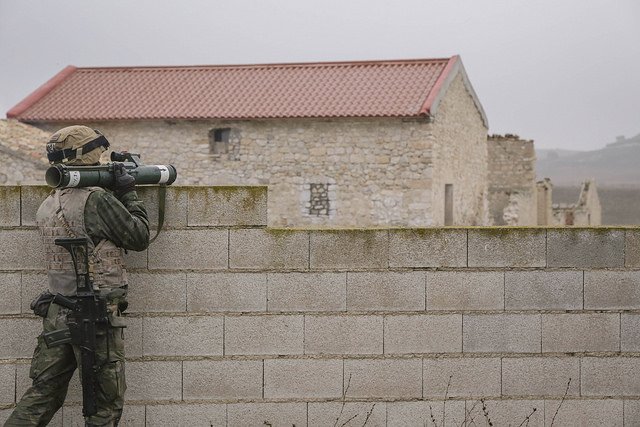
NATO
has been ramping up its operations in the Baltic States as well as in
Eastern Europe, since the Ukraine crisis began. Now it is being reported
that it is considering different ways of increasing its military
presence in Eastern Europe to put further pressure on Russia,
despite previous denials that it would do this.
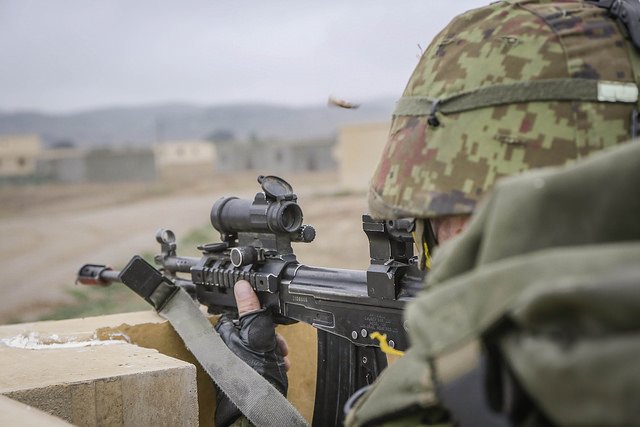
Go Baltic Batallion! - Urban exercise in Trident Juncture #TJ15#NATO
"Claims that NATO is building bases around Russia are… groundless," NATO states on its website.
"Outside
the territory of NATO nations, NATO only maintains a significant
military presence in three places: Kosovo, Afghanistan, and at sea
off the Horn of Africa.
"With respect to the
permanent stationing of US and other Allied forces on the territory
of other Allies in Europe, NATO has full abided by the commitments made
in the NATO-Russia Founding Act. There has been no permanent stationing
of additional combat forces on the territory of other allies; and total
force levels have, in fact, been substantially reduced since the end
of the Cold War."
Governments
use the European Union to bypass national democracy and pass laws that
national parliaments would not accept, a Home Office minister has
admitted.
Karen Bradley told a fringe meeting at Conservative
party conference that other countries sometimes asked British MEPs to
push legislation through the European Parliament so it could not be
blocked by their own national legislatures.
She used the example
of mandatory passenger name records on flights, which she said British
MEPs were currently pushing through in Brussels for an unnamed country.
“When
I’ve sat down with my counterparts and ministers from European
countries and talked about passenger name records it’s quite clear that
at a government level in all these countries they also want passenger
name records but they cannot get them through their national
parliaments,” she told the fringe meeting organised by the pro-EU
Conservative Europe Group.
“They cannot get something like
passenger name records through their national parliaments. So they say
to us – can you please help us get it through at the European level?
The
EU is engaged in humanitarian efforts and victim assistance concerning
the Syrian crisis, Federica Mogherini's spokesperson said.
BRUSSELS
(Sputnik) – The European Union is ready to play a key role in the
political settlement of the Syrian crisis under the auspices of the
United Nations, EU foreign policy chief Federica Mogherini’s spokeswoman
said Thursday.
"The EU called again
for renewed international effort led by the UN to bring an end to the
war, and it confirmed that it is ready to put all its political weight
to try and facilitate a solution to this conflict," Catherine Ray told
reporters.
Ray observed that the bloc is not involved militarily
in airstrikes against the Islamic State extremist group, but is engaged
in "complimentary" activities, including humanitarian efforts and victim
assistance.
New
report finds that the Trans-Atlantic Trade and Investment Partnership
poses a threat to state regulations against hazardous pesticides,
products, and fracking chemicals
by Sarah Lazare, staff writer
Fracking wells in McKenzie County, North Dakota. (Photo: Tim Evanson/flickr/cc)
The
mammoth Trans-Atlantic Trade and Investment Partnership (TTIP) under
secret negotiation between the United States and European Union is
poised to slash the power of local governments to regulate toxins—from
pesticides to fracking chemicals—the Center for International
Environmental Law (CIEL) warned in a report released Tuesday.
Preempting
the Public Interest: How TTIP Will Limit US States’ Public Health and
Environmental Protections (pdf) is based on an analysis of the European
Commission's proposed chapter on regulatory cooperation from the April
20 round of negotiations. The report follows other analyses of the text
which conclude that the TTIP poses a threat to human rights,
environmental protections, and democracy on both sides of the Atlantic.
Beyond
the regulatory cooperation chapter, little else is known about the
content of the closed-door negotiations over what is set to be the
largest bilateral "trade" deal in history.
The chapter's contents,
warns CIEL, highlight the direct threat the TTIP poses to public health
and environmental protections on the U.S. state level. This is
especially troublesome, the report argues, because federal regulations
under the Toxic Substance Control Act have proven "egregiously
ineffective"—and could be even further eroded, thanks to the influence
of the chemical industry in Congress.
"The bottom line is if
you're trying to make the U.S. compatible with an international
standard, and you have minimal federal regulations on the U.S. side, and
you have states that go beyond that, the provisions will be used to
attack state chemical and pesticide regulations." —Sharon Treat, report co-author
In
contrast, some state governments have taken the lead in responding to
the dangers posed by fracking chemicals, pesticides, and hazardous
products by adopting "more than 250 laws and regulations protecting
humans and the environment from exposure to toxic chemicals," the report
says.
However, so-called "harmonization provisions" in the EU's
proposal could force states to conform to the lowest common
denominator—in this case weaker federal guidelines. As Sharon Treat,
attorney, co-author of the report and former Maine state legislator,
explained to Common Dreams, "The bottom line is if you're trying to make
the U.S. compatible with an international standard, and you have
minimal federal regulations on the U.S. side, and you have states that
go beyond that, the provisions will be used to attack state chemical and
pesticide regulations."
What's more, the report asserts, the
proposed chapter calls for an imposition of "multiple procedural
mandates—from an early warning system to regulatory exchanges to the
trade and cost-benefit impact assessments—that will lead to a regulatory
chill caused by delay, increased costs for government, fear of legal
challenges, and heightened industry influence and conflicts of
interest."
Beyond their demobilizing effect, such requirements
could also expand the power of private interests in corporate tribunals,
known as the investor-state dispute settlement (ISDS) systems.
"If
you are requiring state and federal governments to do more studies to
review whether a regulation could be done in a way that is less of an
imposition on trade or big business, then you could bolster the case of
the ISDS systems to block regulations," explained Treat. "That would be
tipping the scales even further in favor of international corporations
running roughshod over regulations and procedures to protect public
health and the environment.
Given the continued secrecy of the
talks, it is not known how the U.S. responded to the proposed chapter,
but the researchers at CIEL say the EU's language alone is cause for
alarm. CIEL warns that the "largest chemical and manufacturing
corporations on both sides of the Atlantic" are playing a role in
pressing the TTIP's regulatory agenda—and that the U.S. is likely
pressing for a similar race to the bottom for EU member states.
Meanwhile,
the Obama administration is negotiating the TTIP alongside two other
secret trade deals: the Trans-Pacific Partnership and the Trade in
Services Agreement. All three have come under stiff opposition from
social movements and civil societies across the globe concerned that
they will bolster corporate power at the expense of people and the
planet. Some observers argue that these deals could collapse, in part
due to their unpopularity and internal contradictions.
.................................................................................................................. This work is licensed under a Creative Commons Attribution-Share Alike 3.0 License
Russia
and China have just signed what is being called "the gas deal of the
century", and the two countries are discussing moving away from the U.S.
dollar and using their own currencies to trade with one another. This
has huge implications for the future of the U.S. economy, but the
mainstream media in the United States is being strangely quiet about all
of this. For example, I searched CNN's website to see if I could find
something about this gas deal between Russia and China and I did not
find anything. But I did find links to "top stories" entitled "Celebs
who went faux red" and "Adorable kid tugs on Obama's ear". Is it any wonder why the mainstream media is dying?
If a particular story does not fit their agenda, they will simply
ignore it. But the truth is that this new agreement between Russia and
China is huge. It could end up fundamentally changing the global
financial system, and not in a way that would be beneficial for the
United States.
Russia and China had been negotiating this natural
gas deal for ten years, and now it is finally done. Russia is the
largest exporter of natural gas on the entire planet, and China is
poised to become the world's largest economy in just a few years. This
new $400 billion agreement means that these two superpowers could
potentially enjoy a mutually beneficial relationship for the next 30 years...
Russia reached a $400 billion deal to supply natural gas to China through a new pipeline over 30 years, a milestone in relations between the world’s largest energy producer and the biggest consumer.
President
Vladimir Putin is turning to China to bolster Russia’s economy as
relations sour with the U.S. and European Union because of the crisis in
Ukraine. Today’s accord, signed after more than a decade of talks, will
allow state-run gas producer OAO Gazprom (GAZP) to invest $55 billion
developing giant gas fields in eastern Siberia and building the
pipeline, Putin said.
It’s an “epochal event,” Putin said in
Shanghai after the contract was signed. Both countries are satisfied
with the price, he said.
Of course countries sell oil
and natural gas to each other all the time. But what makes this deal
such a potential problem for the U.S. is the fact that Russia and China
are working on cutting the U.S. dollar out of the entire equation. Just
check out the following excerpt from a recent article in a Russian news source...
Russia and China are planning to increase the volume of direct payments in mutual trade in their national currencies,
according to a joint statement on a new stage of comprehensive
partnership and strategic cooperation signed during high-level talks in
Shanghai on Tuesday.
“The sides intend to take new steps to
increase the level and expansion of spheres of Russian-Chinese practical
cooperation, in particular to establish close cooperation in the
financial sphere, including an increase in direct payments in the Russian and Chinese national currencies in trade, investments and loan services,” the statement said.
In my recent article entitled "De-Dollarization: Russia Is On The Verge Of Dealing A Massive Blow To The Petrodollar",
I warned about what could happen if the petrodollar monopoly ends. In
the United States, our current standard of living is extremely dependent
on the rest of the world continuing to use our currency to trade with
one another. If Russia starts selling natural gas to China without the
U.S. dollar being involved, that would be a monumental blow to the
petrodollar. And if other nations started following the lead of Russia
and China, that could result in an avalanche from which the petrodollar
may never recover.
And it isn't just the national governments of
Russia and China that are discussing moving away from the U.S. dollar.
For example, the second largest bank in Russia just signed a deal with
the Bank of China "to pay each other in domestic currencies"...
U.S. Strikes at Putin’s Inner Circle With Sanctions as Fight Over Ukraine Intensifies
By Roger Runningen and Jonathan AllenApr 28, 2014 12:35 PM CT
The
Obama administration today imposed sanctions on seven Russian officials
and 17 companies linked to President Vladimir Putin’s inner circle over
the crisis in Ukraine.
The list includes Igor Sechin, OAO Rosneft (ROSN) chief executive officer, and Sergei Chemezov,
director of State Corporation for Promoting Development, Manufacturing
and Export of Russian Technologies High-Tech Industrial Products, also
known as Rostec, and banks such as InvestCapitalBank and SMP Bank.
The
travel bans and asset freezes announced by the White House were levied
in coordination with the European Union, which said today it’s adding 15
more names to the list of 55 individuals previously sanctioned. The
identities of those targeted by the EU weren’t immediately disclosed.
The U.S. and EU say Russia
hasn’t lived up to an accord signed April 17 in Geneva intended to
defuse the confrontation between the Ukrainian government and
pro-Russian separatists. The U.S. warned it’s prepared to levy
additional penalties to hit the broader Russian economy if Putin
escalates by sending troops into Ukraine.
“The goal here is not to go after Mr. Putin, personally,” President Barack Obama said earlier today at a news conference in the Philippines.
“The goal is to change his calculus with respect to how the current
actions that he’s engaging in in Ukraine could have an adverse impact on
the Russian economy over the long haul.”
Photographer: Scott Olson/Getty Images
Pro-Russian activists break through the gate in front of TRK Donbass television station... Read More
Export Restrictions
The U.S. also expanded export restrictions on defense technologies and services and revoked previously approved export licenses.
The new sanctions list includes
Oleg Belavantsev, Putin’s presidential envoy to Crimea; Dmitry Kozak,
deputy prime minister of the Russian Federation, and Evgeniy Murov,
director of Russia’s Federal Protective Service and an army general.
Most of the companies on today’s list are tied to Gennady Timchenko
or brothers Arkady and Boris Rotenberg, who were placed on a sanctions
list on March 20. They include the Volga Group, which is controlled by
Timchenko, and InvestCapitalBank and SMP Bank, which are controlled by
the Rotenbergs.
One of the most prominent individuals on the list
is Sechin, 53, who was Putin’s colleague at the St. Petersburg mayor’s
office before rising to become the head of state-run Rosneft. Over the
past decade he has built it into the world’s largest publicly traded oil
company by output and reserves.
Photographer: Maxim Shipenkov-Pool/AP Photo
Russian President Vladimir Putin enters for his meeting with Royal Dutch Shell's CEO... Read More
Company Ties
Rosneft,
in which British oil company BP Plc holds a 20 percent stake, isn’t
being sanctioned. The Russian company also has exploration projects with
other international oil producers, including a venture with Exxon Mobil Corp. (XOM) to drill a multibillion-barrel prospect in Russia’s Arctic Ocean.
U.S. Sanctions Target Putin Allies’ Companies, Rosneft’s Sechin
By Elena Mazneva and Torrey ClarkApr 28, 2014 1:45 PM CT
Photographer: Meridith Kohut/Bloomberg
The Obama administration imposed sanctions on OAO Rosneft Chief Executive Officer Igor... Read More
The U.S. imposed sanctions on seven Russian executives and officials and 17 companies controlled by four of President Vladimir Putin’s allies as the crisis in Ukraine escalates.
The following is a list of those targeted.
*Igor Sechin
Sechin,
53, has worked with Putin for more than two decades, starting the St.
Petersburg mayor’s office in the 1990s. He was appointed chief executive
of OAO Rosneft (ROSN)
in 2012, having served as board chairman since 2004. Sechin oversaw the
company’s growth over the past 10 years into the world’s biggest
publicly traded oil producer by output, largely through acquiring Yukos
Oil Co.’s assets and TNK-BP.
*Sergey Chemezov
Chemezov, 61,
heads Rostec, the state corporation that owns arms exporter
Rosoboronexport and holds stakes in more than 660 other civilian and
military-industrial manufacturers. He is chairman at titanium producer
OAO VSMPO-Avisma and OAO Uralkali, the world’s largest potash producer,
and is on the boards of automaker OAO AvtoVAZ, controlled by Renault
SA-Nissan, and OAO Kamaz, part-owned by Daimler AG.
Chemezov has known Putin since the 1980s, when the Russian leader served as a KGB officer in Dresden, then East Germany.
*Dmitry Kozak
Kozak, 55, a deputy prime minister, was in charge of Russia’s
preparations for the Sochi Winter Olympics and is now overseeing the
development of Crimea, the Black Sea peninsula that Russia annexed from Ukraine.
*Vyacheslav Volodin
Volodin, 50, has served as the first deputy chief of the presidential staff under both Putin and now Prime Minister Dmitry Medvedev, replacing Kremlin ideologue Vladislav Surkov in 2011.
*Alexei Pushkov
Pushkov, 59, heads the foreign affairs committees of Russia’s lower house of parliament and supported the annexation of Crimea.
Russian Billions Scattered Abroad Show Trail to Putin Circle
By Henry Meyer and Irina ReznikApr 28, 2014 8:23 AM CT
Outside a Moscow stadium one night in 2006, deputy central bank chief Andrei Kozlov
was walking to his car after playing soccer when two men opened fire,
pumping bullets into his head and neck and killing his driver.
Days
before the murders, the man leading Russia’s fight against money
laundering had shut down a scheme used to funnel $1.6 billion of dirty
funds abroad, including at least $112 million via Vienna-based
Raiffeisen Zentralbank Oesterreich AG, according to Russian and Austrian
investigators.
It was a trickle in a flood of illegal outflows
that would reach $52 billion in 2012 alone, according to former central
bank Chairman Sergey Ignatiev. Such flows are now in the cross hairs of
President Barack Obama’s efforts to penalize Vladimir Putin
for annexing Crimea and to halt his incursions into Ukraine. Obama
signed a law on aid to Ukraine this month that includes a clause that
allows the U.S. to go after assets of Russian officials and their allies
who are deemed complicit in “significant corruption.”
“This is a declaration of war by the Obama administration on the current governing Russian elite,” Ariel Cohen,
senior fellow at the Heritage Foundation, a Washington-based research
group, said by phone from New York. “There will be a lot of people
potentially targeted.”
Photographer: Andrey Rudakov/Bloomberg
The two-headed eagle symbol of Russia's central bank sits on ruble banknotes... Read More
Money Game
One possible weapon in this new battle is Dmitry Firtash,
48, the billionaire Ukrainian and major Raiffeisen client who was
arrested in Vienna last month on U.S. bribery charges, according to Mark Galeotti, a Russian organized crime expert at New York University who advises regulators on money laundering.
A longtime ally of Viktor Yanukovych, the ousted Ukrainian president who fled to Russia in February, Firtash made his fortune as a middleman in OAO Gazprom’s
secretive gas trade with Ukraine, conduit for 15 percent of Europe’s
supply and the most corrupt country on the continent, according to
Transparency International. He’d be an invaluable asset to the U.S. if
he agrees to cooperate because he knows how Russian officials have
shifted billions of dollars into banks abroad, Galeotti said.
“Firtash knows the way the game is played, the way the money is moved,” Galeotti said in an interview in Moscow.
Ignatiev
told lawmakers last June that money laundering in Russia, ranked the
most corrupt major economy by Transparency International, was so
pervasive that fighting it consumed more of his time than formulating
monetary policy. In his last address to parliament before stepping down
after a decade in the post, he highlighted one network in which 1,173
shell companies channeled $24 billion to foreign banks.
‘Almost Anyone’
About
half of all illegal capital flight, including bribes to bureaucrats and
revenue from criminal syndicates, “appears to be controlled by one
well-organized group of people,” Ignatiev told the Vedomosti newspaper
in a rare interview in February 2013, without elaborating. Ignatiev, 66,
is now an adviser to his successor, Elvira Nabiullina.
The wording of the new U.S. law is so broad it could apply to “almost anyone” close to Putin, 61, said Masha Lipman, an analyst at the Carnegie Moscow Center who’s co-written academic articles on Putin with former U.S. Ambassador Michael McFaul.
The
U.S. today imposed sanctions on 17 Russian companies and seven
individuals, including Igor Sechin, CEO of OAO Rosneft, the country’s
largest oil producer. That adds to the more than two dozen officials and
billionaires penalized last month for being what the Treasury
Department called part of Putin’s inner circle.
‘Body Blow’
An
agreement to disarm pro-Russian rebels and anti-Russian groups in
Ukraine that both countries signed with the U.S. and the European Union
is on the brink of collapse. Secretary of State John Kerry said Russia was trying to impose its will on Ukraine by the “barrel of a gun and the force of a mob.”
Russia is already on the verge of recession, so the U.S. can inflict major damage with industry-wide sanctions, according to John Herbst, a former U.S. ambassador to Ukraine.
“Even
without European support, U.S. sanctions against the Russian financial
sector would deal a body blow to the nation’s economy,” Herbst said by
e-mail.
U.S. Said to Sanction Seven Russians, 17 Companies
By Daria Marchak, Margaret Talev and Jonathan AllenApr 28, 2014 7:51 AM CT
The
Obama administration will sanction seven Russians and 17 companies,
including some involved in the financial, energy and infrastructure
sectors, according to a congressional official briefed on the actions.
President Barack Obama
said today in Manila that the U.S. is “moving forward with an expanded
list of individuals and companies that will be affected by sanctions.
They will remain targeted. It will also focus on some areas of high-tech
defense exports to Russia.”
European Union representatives have
discussed similar penalties, a European Commission spokeswoman said. The
announcements of expanded measures came as Gennady Kernes,
the mayor of Ukraine’s second-largest city Kharkiv, was shot in the
back and rushed to hospital for surgery. It also followed the seizure of
international military inspectors by pro-Russian separatists last week.
In
the worst confrontation with the U.S. and its European allies since the
Cold War, Russia has started military exercises on Ukraine’s border
where the North Atlantic Treaty Organization says Putin is massing about
40,000 troops in a potential preparation for invasion. That conflicts
with an April 17 agreement signed in Geneva aimed at solving the
standoff, according to U.S. and EU officials.
Photographer: Scott Olson/Getty Images
Pro-Russian activists take control of TRK Donbass television station on April 27, 2014 in Ukraine.
‘Expanded List’
“Later
today, there will be an announcement made, and I can tell you that it
builds on the sanctions that are already in place,” Obama told a news
conference in the Philippine capital Manila today. “We are going to be
moving forward with an expanded list of individuals and companies that
will be affected by sanctions. They will remain targeted. It will also
focus on some areas of high-tech defense exports to Russia.”
The U.S. list may include people inside Putin’s inner circle such as Alexey Miller, chief executive of gas-export monopoly OAO Gazprom and his deputy Alexander Medvedev, as well as Igor Sechin, CEO of oil company OAO Rosneft, according to people familiar with developments.
Representatives of the 28 EU states met to discuss extending a “stage two” black list, spokeswoman Pia Ahrenkilde Hansen said in Brussels today. German Deputy Foreign Minister Gernot Erler
said in an interview on ZDF television yesterday he had “the
impression” that the EU would extend visa bans and asset freezes to
“maybe another 15 people.”
Asset Freezes
“We’ve already
taken action, we’ve already introduced travel bans and asset freezes on
certain individuals,” U.K. Chancellor of the Exchequer George Osborne
said in Paris after meeting his German, French, Italian and Spanish
counterparts. “European countries are discussing further such action
today following the statement from the G-7.”








 The European Parliament


 By Michael Snyder, on May 21st, 2014


