

People wait in line to meet a job recruiter at the UJA-Federation Connect to Care job fair in New York March 6, 2013.
Credit: Reuters/Shannon Stapleton
U.S. job growth jumps, but shrinking labor force a blemish
WASHINGTON Fri May 2, 2014 4:52pm EDT
(Reuters)
- U.S. employers hired workers at the fastest clip in more than two
years in April, pointing to a rebound in economic growth after a
dreadful winter and keeping the Federal Reserve on track to end bond
purchases this year.
The brightening outlook was, however,
tempered somewhat by a sharp increase in the number of people dropping
out of the labor force, which pushed the unemployment rate to a
5-1/2-year low of 6.3 percent. Wage growth also was stagnant.
Nonfarm
payrolls surged 288,000 last month, the Labor Department said on
Friday. That was largest gain since January 2012 and beat economists'
expectations for only a 210,000 rise.
"It lends significant
legitimacy to the positive tone in the wide array of post-February
economic reports, which have all been consistently pointing to a
significant pick-up in economic growth momentum this quarter," said
Millan Mulraine, deputy chief economist at TD Securities in New York.
March and February's data was revised to show 36,000 more jobs than previously reported.
U.S.
stocks briefly rallied on the report, which was later eclipsed by
rising tensions in Ukraine. Stocks ended lower, while safe-haven bids
pushed the yield in the 30-year U.S. government bond to its lowest level
in more than 10 months.
The dollar was flat against a basket of currencies.
About
806,000 people dropped out of the labor force in April, unwinding the
previous months' gains. That helped to push down the unemployment rate
0.4 percentage point to its lowest level since in September 2008.
The
labor force participation rate, or the share of working-age Americans
who are employed or unemployed but looking for a job, also fell
four-tenths of a percentage point to 62.8 percent last month, slipping
back to a 36-year low touched in December.
Overall, however, the data suggested the
economy was gathering strength and led investors to pull forward their bets on when the Fed will start to raise interest rates.
The
strong payrolls growth added to upbeat data such as consumer spending
and industrial production in suggesting that sputtering growth in the
first quarter was an aberration, weighed down by an unusually cold and
disruptive winter.
Read More Here

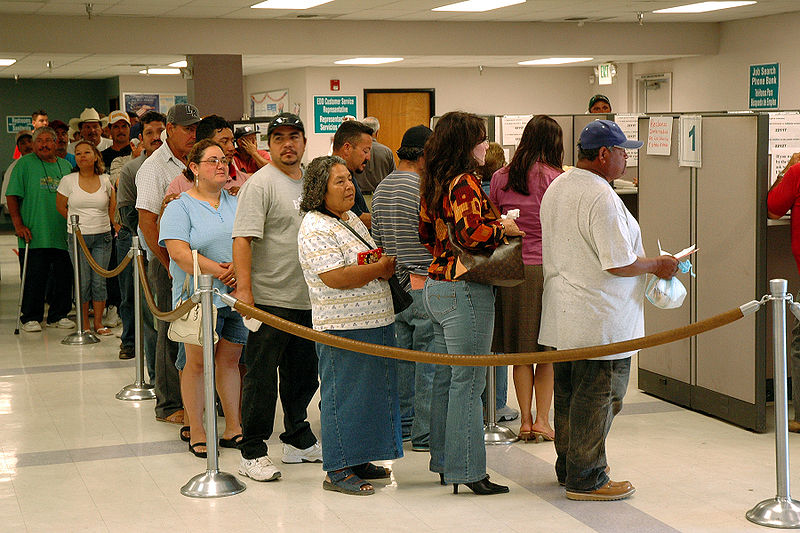 Unemployment Line - Wikipedia.org
 By Michael Snyder, on October 4th, 2015


