Written by Joe Wolverton, II, J.D.
On
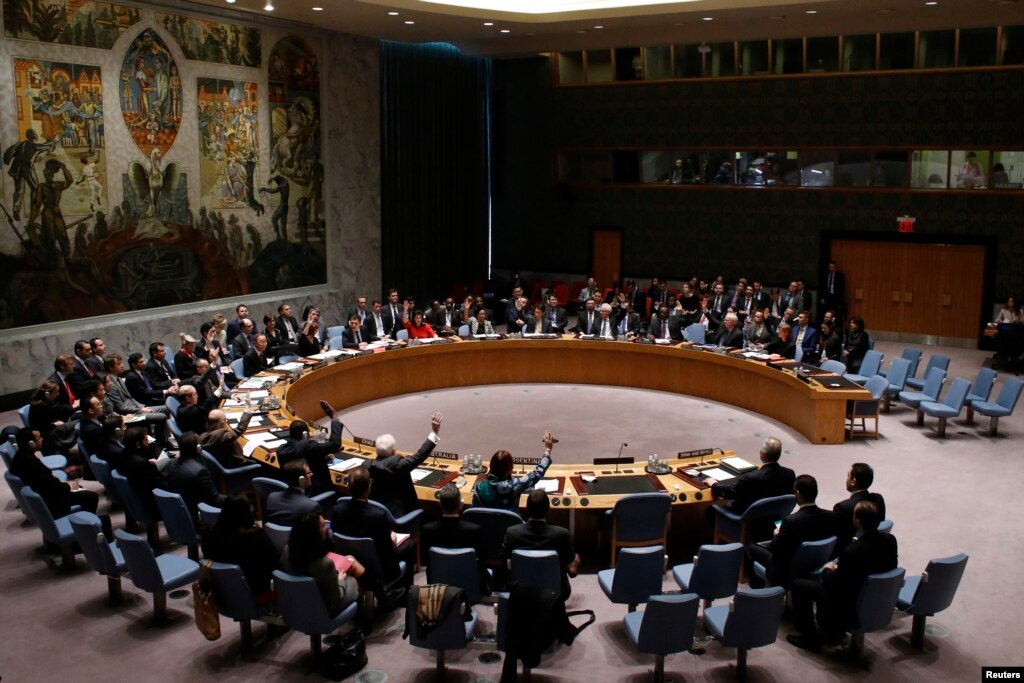
September 11, the United Nations reasserted that it believes it has the
exclusive and undeniable right to determine when a people is worthy of
sovereignty and when the UN must step in and rule for them.
At an informal meeting of the General Assembly,
UN Secretary-General Ban Ki-moon declared
the international body’s continuing commitment to protecting
populations of member states from suffering under regimes that fail to
“fulfill their obligations under the rule of law.” This includes Syria,
Libya, and anywhere else in the world that isn't toeing the
one-world-government line.
Societies, said Ban, must “embrace
diversity” or face the intervention of regional and international bodies
that will step in to “protect and empower” the people living under the
offending regime.
In order to impose its will and enforce its
vision of “diversity,” the UN will prevent the governments of member
states from passing laws, programs, and policies that prohibit the
establishment of a UN-approved body of law.
Preventing governments
from opposing the UN is a significant step toward the achievement of
the UN’s ultimate aim: permanent aggregation of all national sovereignty
into one global entity under the rule of globalists bureaucrats. Ban
addressed this issue in his statement on September 11:
Prevention
may sound abstract, but it is very concrete and specific. It means,
among many things, that States translate obligations and standards set
out in international law, notably international humanitarian and human
rights law, into policies, programmes, laws and institutions that
protect and empower their people.
This principle underlying this
drive to force nations to, as U.S. UN Ambassador Samantha Power (shown)
said, give up a “pinch of sovereignty” in exchange for the United
Nation’s version of peace and prosperity is known as Responsibility to
Protect (R2P).
Power, it must be noted, played a significant role
in the development of R2P. Her influence on President Obama and his
nationally televised address on Syria was
recognized by National Review Online.
“This was a Samantha Power speech,” wrote Stanley Kurtz, referring to
President Obama’s call for American intervention in Syria.
Americans
committed to the maintaining our Republic, our Constitution, and our
right to determine our own laws, regulations, and policies must become
familiar with the Responsibility to Protect doctrine and the
extraordinary lengths the UN will go to to impose its provisions.
In
an address given in last September,
the UN secretary-general promoted the global shadow government’s
ultimate goal of eradicating national sovereignty by way of the R2P
policy.
Agreed to by the UN General Assembly at a summit of world
leaders in 2005, R2P purports to grant the global government power to
decide whether individual nations are properly exercising their
sovereignty.
UN literature describes R2P as the concept that holds
"states responsible for shielding their own populations from genocide,
war crimes, ethnic cleansing, and related crimes against humanity and
requires the international community to step in if this obligation is
not met.”
That is to say, if the UN determines that a national
government is not voluntarily conforming to the UN's idea of safety,
then the “international community” will impose its will by force, all
for the protection of that nation’s citizens.
Lest anyone believe
that the globalists at the UN are simply pacifists whose desire is to
meekly encourage regimes to treat their people kindly, Secretary-General
Ban Ki-moon took a more forceful posture at the conference held at
the UN headquarters in New York:
We
all agree that sovereignty must not be a shield behind which States
commit grave crimes against their people. But achieving prevention and
protection can be difficult. In recent years, we have shown how good
offices, preventive diplomacy, mediation, commissions of inquiry and
other peaceful means can help pull countries back from the brink of mass
violence.
However,
when non-coercive measures fail or are considered inadequate,
enforcement under Chapter VII will need to be considered by the
appropriate intergovernmental bodies. This includes carefully crafted
sanctions and, in extreme circumstances, the use of force.
Chapter VII of the UN Charter
authorizes the Security Council to use force in the face of a threat to
peace or aggression, taking “such action by air, sea, or land forces as
may be necessary to maintain or restore international peace and
security.” As there is currently no UN military, all such interventions
are carried out by the national armed forces of member nations.
Faithfully,
the United States, as the chief financial engine of the international
body, has not only signed on to promote the Responsibility to Protect
scheme, but President Obama has established a federal agency to ensure
that it is executed effectively.
The agency is the
White House Atrocities Prevention Board (APB), which was headed by Samantha Power until she was confirmed as the U.S. ambassador to the UN.
Exercising
the powers he created for himself in Executive Order 13606, President
Barack Obama demonstrated his support for the R2P program when he
established the Atrocities Prevention Board.
Read More Here