Showing posts with label Poisons in Our Foods. Show all posts

Wednesday, December 2, 2015

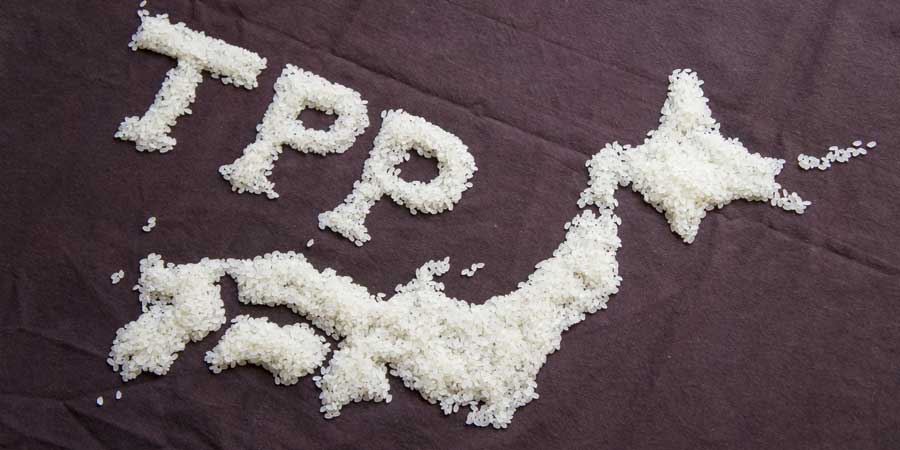
TPP a Disaster for Natural Health


TPP Deal Finally Revealed

Details of the long-secret Trans-Pacific Partnership are public at last: it will undermine the safety of our food supply, make medicine more expensive, and give power to the biotech monopoly. Action Alert!

A few weeks ago, the full text of the Trans-Pacific Partnership (TPP) trade deal was finally released after many years of closed-door negotiations between officials from the US and eleven other countries, all of whom border the Pacific Ocean. Its provisions were apparently kept secret from all but the biotech and pharmaceutical industries.

Leaked documents during the trade negotiations provided reason to be concerned about the final agreement. And now, a review of the deal’s twenty-nine chapters and five thousand pages proves these early concerns were completely justified. The final package now awaits a vote in Congress, which is likely to take place in Spring 2016.

Here are some of the most pressing concerns for natural health advocates:

It Undermines the Safety of the Food Supply


The TPP contains a number of provisions that threaten current food safety laws.

Generally speaking, passage of the TPP would mean that any US food safety law concerning things like pesticides, food additives, or labeling that is more stringent than “international standards” may be considered an “illegal barrier” to trade, and subject to enforcement. We have learned to beware of such “international standards.” They are largely determined by global special interests.

The TPP expands corporate power in other ways. The deal includes an investor-state dispute settlement (ISDS) system in which multinational corporations can challenge a host company’s regulations in an international court. ISDS has been a fixture in other trade treaties, including NAFTA (the North Atlantic Free Trade Agreement), and has been used to challenge countries’ economic policies, anti-smoking efforts, and environmental preservation laws. It is another giveaway to Big Food and other powerful multinational interests—a recurring theme throughout the TPP document.
The trade agreement also undercuts US efforts to inspect food imports. The agreement limits food import inspections at the border “to what is reasonable and necessary,” and if an issue arises, a country must also provide an “opportunity for a review of the decision.” This provision, referred to as the Rapid Response Mechanism, may give exporting countries the right to challenge basic food safety provisions in the US.

It Gives New Patent Protections to Big Pharma


The TPP contains an entire chapter on intellectual property rights, with many provisions relating to pharmaceutical patents. No doubt heavily influenced by the pharmaceutical industry, the trade deal will force signatory countries to accept many of the same patent laws that have kept drug prices so astronomically high in the US.

The deal would extend and broaden certain patent and data protections for the pharmaceutical industry, which Big Pharma can then use to keep prices high and delay competition from generics. It is a wonderful gift to the pharmaceutical industry—but a grave loss to patients in developing countries looking for access to affordable drugs.

The TPP also allows a practice known as “evergreening,” which lets drug companies extend a patent on an old drug when it can be used to treat a new condition—another boon for Big Pharma’s monopoly power.

Even when Big Pharma loses in the TPP, it wins. One of the more controversial topics in TPP negotiations concerned patent and data protections for biologic drugs—medicines derived not from inert chemical compounds but from living organisms. Big Pharma wanted twelve years of exclusivity— they already have this in the US—and US trade officials pushed hard in the negotiations to make this the standard. Instead, the deal grants them at least five years of exclusivity and as much as eight.

It’s Also a Gift to Biotech Seed Companies


Finally, the TPP deal expands biotech’s monopoly over the seed industry. The deal requires all twelve countries to join a number of global intellectual property treaties. One of these treaties is the 1991 International Convention for the Protection of New Varieties of Plants (UPOV91), which emphasizes the rights of seed companies over farmers. Among other things, UPOV91:

  • Requires intellectual property (IP) protection for all plant species;
  • Provides IP protection for 20 to 25 years; and
  • Stops farmers from exchanging seeds—a common and important practice in many developing nations and indeed throughout human history.

In countries that have not already turned agriculture over to the biotech industry, this could mean a substantial rewrite of regulations meant to protect farmers.

Other treaties that signatory countries are compelled to join make it easier to apply for patents—making it very likely that more plants and seeds will be patented.

If these gifts to industry were not enough, President Obama moved earlier this summer to have the deal “fast-tracked”—that is, Congress will be given a fixed period to review the agreement, after which time legislators must make a yes/no vote without the possibility of amending the deal. Essentially, it’s “take it or leave it.”

We say: leave it. And if the US does reject it, do not worry about losing the reduction of tariffs that is already included. There will just be a second (and, we hope, a better) version to replace it.
Action Alert! Write to your members of Congress and urge them to oppose the TPP deal, which undermines consumers and farmers and extends monopoly rights to major industries. Please send your message immediately.


Take-Action

Monday, November 30, 2015

AquaBounty’s genetically modified (GMO) salmon facing further backlash from national grocery stores and restaurant chains : Costco and Red Lobster Say No to GMO Salmon


Costco and Red Lobster Say No to GMO Salmon

| November 25, 2015 9:21 am |
 
 
The U.S. Food and Drug Administration’s (FDA) controversial approval of AquaBounty’s genetically modified (GMO) salmon has garnered further backlash from national grocery stores and restaurant chains.

Costco, the second largest retailer in the world with 487 stores and one of the largest retailers of salmon and seafood in the U.S., has made a firm commitment not to sell GMO salmon.


gmosalmonfight750


“Although the FDA has approved the sale of GM salmon, Costco has not sold and does not intend to sell GM salmon at this time,” the company said in a statement.

Costco’s move to reject GMO salmon comes after vehement opposition from anti-GMO activists.
According to a statement from Friends of the Earth, Walmart and Publix are among the last remaining large retail grocers in the U.S. that have not yet rejected GMO salmon.

“The market is rejecting GMO salmon. Stores won’t sell it and people don’t want to eat it,” said Friends of the Earth Campaigner Dana Perls. “Now other retailers like Walmart and restaurants need to follow suit, and we need mandatory GMO labeling so that consumers know how to avoid GMO salmon.”

More than 60 grocery store chains representing more than 9,000 stores across the U.S. have made commitments to not sell GMO salmon, including Safeway, Kroger, Target, Trader Joe’s, Whole Foods, Aldi and many others.

The nation’s largest seafood restaurant is also denying GMO salmon. Red Lobster, with 705 North American locations and more than 40 internationally, told the Dallas Morning News that it would not sell GMO salmon last Friday.

Incidentally, consumers might not even know they’re eating GMO salmon. AquaBounty’s salmon, which is genetically altered to grow to market size in half the time of conventional salmon, will not require a GMO label under FDA guidelines.

It’s unclear if we’ll  ever see labels for genetically altered food, period—not just salmon. Currently, the hotly contested Safe and Accurate Food Labeling Act—dubbed by opponents as the Denying Americans the Right to Know Act or DARK Actlanguishes in the Senate.

The act, H.R. 1599, which passed the House of Representatives in July, bans states from issuing mandatory labeling laws for foods containing GMOs. The bill gives the FDA the authority to establish national standards and regulations for GMO food. The Department of Agriculture would be granted full discretion over the law’s implementation.


Read More Here

Tuesday, November 24, 2015

EFSA Findings : Glyphosate by itself doesn’t cause cancer. But products like Monsanto’s Roundup, which contain glyphosate and other additives are another story.


Organic Consumers Association

Campaigning for health, justice, sustainability, peace, and democracy

Monsanto’s Roundup: The Whole Toxic Enchilada

November 19, 2015
Monsanto’s Roundup: The Whole Toxic Enchilada


Last week, while we waited for the U.S. Environmental Protection Agency (EPA) to announce whether or not the agency will give Monsanto’s Roundup a free pass by green lighting the use of glyphosate for another 15 years, the EPA’s counterpart in the EU made its own big announcement.
Glyphosate is “unlikely to cause cancer” said the authors of the new report by the European Union Food Safety Authority (EFSA).

That headline, music to Monsanto’s ears, seemed to fly in the face of the findings published earlier this year by the World Health Organization (WHO). After extensive review of the evidence, all 17 of WHO’s leading cancer experts said glyphosate is a “probable human carcinogen?”

Sustainable Pulse (SP), publisher of global news on GMOs and other food-related issues, quickly reported the glaring omission made by the majority of news sources reporting on EFSA’s findings.
According to SP, what EFSA really concluded is this: Glyphosate by itself doesn’t cause cancer. But products like Monsanto’s Roundup, which contain glyphosate and other additives and chemicals that are essential to making the herbicide work? That’s another, or in this case, the rest of the story.

Read More Here

Sunday, November 22, 2015

AquaBounty genetically-modified salmon approved by FDA


AquaBounty has been working on approval for the genetically-modified fish for 20 years

CBC News Posted: Nov 19, 2015 11:27 AM ATLast Updated: Nov 20, 2015 3:25 PM AT
 
Media placeholder
 AquaBounty's salmon are genetically modified to grow twice as fast as regular salmon. (AquaBounty Technologies)
 
 
Genetically-modified salmon approved by FDA 2:25
A genetically modified salmon that grows at twice the rate of regular salmon has been approved as food by the U.S. Food and Drug Administration.

The eggs for the salmon are raised in a facility in the eastern P.E.I. community of Bay Fortune and exported to Panama, where they're grown in above-ground tanks.

 
This is the first genetically modified food animal approved for sale in the world.
"The FDA has thoroughly analyzed and evaluated the data and information submitted by AquaBounty Technologies regarding AquAdvantage Salmon and determined that they have met the regulatory requirements for approval, including that food from the fish is safe to eat," said Bernadette Dunham, director of the FDA's Center for Veterinary Medicine, in a news release.


The Massachusetts-based company AquaBounty Technologies first sought approval for its salmon 20 years ago.

In a news release, the company's CEO Ron Stotish called the product, AquAdvantage Salmon a "game-changer."


Read More Here

Thursday, October 15, 2015

Italy and Austria join growing list of countries banning GMO agriculture. EU Committee Wants to Demolish their right to do so.


NaturalNews's profile photo
NaturalNews

Italy and Austria join growing list of countries banning GMO agriculture


EU

(NaturalNews) European nations are leading the world in rejecting genetically modified organisms in food and crops, with two more countries recently joining the list: Italy and Austria.

As reported by Nation of Change, Italian ministries have opted to utilize the newly created European Union rules that permit member countries to opt out of growing GM crops. Austrian officials joined in as well, with both nations making the decision to stop growing eight varieties of GM maize, which essentially amounted to a complete ban on GM crops.

The EU's opt-out regulations were implemented earlier this year. They allow member states to decide on their own if they want to continue using GM crops or ban them altogether.

As reported by Sustainable Pulse, a number of other countries in the EU have also opted out of GM crops:

Wales: "These new rules proposed by the European Commission provide Wales with the necessary tools to maintain our cautionary approach by allowing us to control the future cultivation of GM crops in Wales," said Welsh Deputy Minister for Farming and Food, Rebecca Evans. "It will allow us to protect the significant investment we have made in our organic sector and safeguard the agricultural land in Wales that is managed under voluntary agri-environment schemes."

She added: "Farming and food processing businesses remain the driving force of our rural economy. Our emphasis is on competing on quality, strong branding and adding value through local processing. We, therefore, need to preserve consumer confidence and maintain our focus on a clean, green, natural environment. "

Poland: In 2013, the Polish government actually adopted a regulation that banned GMO farming in the country, well ahead of the EU action. But once the EU approved its regulation giving member nations the right to ban if they chose, that was more than enough authority for the Polish government to act.

"Now we no longer have to explain the scientific aspects and we can already relate to social issues," Polish Agriculture Minister Marek Sawicki said at the time of the country's ban.

Germany: German government officials announced in late September that the country would no longer permit the cultivation of GM crops, as stated by German Agriculture Minister Christian Schmidt.

Slovenia: Slovenian Agriculture Minister Dejan Zidan said in announcing the country's ban that "the government adopted the decision for a request for the exclusion of the entire geographical territory of Slovenia for GM maize to the EU, including the already registered variety MON 810 and seven other varieties which are in the process of registration with the European Commission. This allows me to formally send the request as the Ministry of Agriculture in accordance with the law for the exclusion of Slovenia with the regards to the cultivation of GM maize."

Serbia: State Secretary in the Serbian Ministry of Agriculture and Environmental Protection Danilo Golubovic recently announced the country's GMO ban. In making the announcement, Golubovic said the decision was based on a desire to improve public health and safety.

Bulgaria: This government has decided to burnish its clean and green image by banning GM crops. As noted by Sustainable Pulse's director, Henry Rowlands, "Bulgaria is home to a wide variety of unique flora and fauna and is also the base of many ancient civilizations, it is with this background that Bulgarians know what is at risk when it comes to using an untested and unnecessary technology."

European nations that have opted out of growing GM crops thus far are Latvia, France, Austria, Cyprus, Lithuania, the Netherlands, Scotland, Northern Ireland, Poland, Germany, Greece, Croatia, Hungary, Slovenia and Italy, Sustainable Pulse reported.

Sources:


BullHorn.NationOfChange.org


SustainablePulse.com


Reuters.com
EcoWatch.com

Reuters.com


About NaturalNews

The NaturalNews Network is a non-profit collection of public education websites covering topics that empower individuals to make positive changes in their health, environmental sensitivity, consumer choices and informed skepticism. The NaturalNews Network is owned and operated by Truth Publishing International, Ltd., a Taiwan corporation. It is not recognized as a 501(c)3 non-profit in the United States, but it operates without a profit incentive, and its key writer, Mike Adams, receives absolutely no payment for his time, articles or books other than reimbursement for items purchased in order to conduct product reviews.

The vast majority of our content is freely given away at no charge. We offer thousands of articles and dozens of downloadable reports and guides (like the Honest Food Guide) that are designed to educate and empower individuals, families and communities so that they may experience improved health, awareness and life fulfillment.

Learn More About Natural News Here

 
...................................................................................................


by Christina Sarich
Posted on October 15, 2015

 
gmo_corn_syringe_735_250

EU Committee Wants to Demolish Existing Law Allowing Member States to Ban GMOs

As 19 EU nations plan GMO bans


Stating a concern that the proposed law would lead to the reintroduction of border controls between GM and non-GMO-growing countries, the European Parliament news service reported that Members of the Environment Committee shot down a draft EU law that would allow member states to restrict or prohibit sales of genetically modified crops.

This vote goes against numerous EU states that have made it clear in recent months that they plan to instate total bans on GM crops. A total of 19 EU countries have sent letters to the EP saying that they plan GM bans, citing concern over spoiling agricultural markets, and also the desire to provide their citizens with organic food.


Thursday, October 1, 2015

US workers sue Monsanto over ‘cancer-causing’ weed-killer

© Charles Platiau
Two US agricultural workers have simultaneously sued Monsanto, claiming that the company’s weed-killer herbicide caused their cancers. They have also accused the bio-tech giant of pressuring regulators to downplay the risks from its Roundup herbicide.

In his lawsuit against Monsanto, 58-year-old former farm worker Enrique Rubio said he believes that the bone cancer he was diagnosed with back in 1995 was a result of his work with Monsanto’s weed-killer.

Working in California, Texas and Oregon over several years, Rubio’s duties included spraying fields of cucumbers, onions and other vegetable crops with pesticides and Roundup, one of Monsanto’s widely used herbicides.

Another plaintiff, 64-year-old Judi Fitzgerald, joined Rubio in his legal battle against Monsanto. Diagnosed with leukemia in 2012, Fitzgerald had to use Roundup in the 1990s when she worked at a horticultural products company.


View image on Twitter

Cattle leukemia virus found in milk linked to breast cancer – study http://on.rt.com/6rqz 


Read More Here

Wednesday, September 30, 2015

Think you can avoid glyphosate by buying organic? Think again. Investigation finds many products in the US organic grain market contain glyphosate residue.


contaminated_wheat_grain
Think you can avoid glyphosate by buying organic? Think again. A new investigation by Tropical Traditions reveals that many products in the organic grain market in the U.S. contain glyphosate residue at levels almost the same as conventional grains.

Brian Shilhavy
Health Impact News Editor

With over 80% of the U.S. food supply now reportedly contaminated with the herbicide glyphosate, many people are turning to USDA certified organic products to avoid this toxic chemical. Current USDA NOP (National Organic Program) standards do not allow the use of the herbicide glyphosate on organic crops.

However, a new investigation by Tropical Traditions has revealed that the U.S. organic grain market is contaminated with glyphosate.

Tropical Traditions has sold organic grains for years. After reading new research about the issue of “crop desiccation” done by using glyphosate on wheat and other grains just prior to harvest, Tropical Traditions decided to first test some commercial wheat products with wheat grown in Montana, North Dakota, and Canada. They sent the commercial samples to a well-known and respected laboratory to test for glyphosate.

All tested positive for glyphosate residue. The range was from 0.07 mg/kg to 0.09 mg/kg. Keep in mind this is glyphosate found in non-GMO crops. For a GMO crop such as GMO soybeans, which are sprayed heavily with glyphosate, the range is typically between 3.3 and 5.7 mg/kg. (Source.)
Next, Tropical Traditions tested the USDA certified organic grains from suppliers they had been using, sourced mainly from western states such as Montana and Idaho. Sadly, the presence of glyphosate residue was found in organic wheat and other organic grains, including organic barley, oats, spelt, and einkorn. The range was from 0.03 to 0.06 mg/kg, just slightly lower than the conventional grains that were tested.

The only organic grains that tested clean were organic rye and organic millet. There was also one variety of organic wheat from small-scale farmers in Wisconsin that tested clean from glyphosate.

Why Should We be Concerned about Glyphosate?

Glyphosate is in 80% of our food supply in the U.S., and some scientists believe it may well be the most toxic chemical ever approved for commercial use. Glyphosate is now linked to kidney disease, antibiotic resistant bacteria, inflammatory bowel disease, obesity, depression, ADHD, autism, Alzheimer’s disease, Parkinson’s disease, ALS, multiple sclerosis, cancer, cachexia, infertility, and developmental malformations. It destroys the microbiome of humans and plants, which is the root cause of many modern diseases.


Read More Here

Friday, September 11, 2015

Armed with 50,000 signatures from consumers supporting mandatory GMO labeling, there is a showdown brewing in the U.S. Senate

http://www.senate.gov/legislative/LIS/floor_activity/Us_senate_seal.gif

U.S. Senate Seal


Battle lines drawn as legislative fight over labeling looms

Combatants in a national food fight over labeling genetically modified products are gearing up for a showdown in the U.S. Senate, campaign leaders said on Tuesday. The tactics range from old-fashioned lobbying to modern social media campaigns, and both sides say it is too early to tell who will prevail. "I feel like we're in the final battle now," said David Bronner, a California business owner and leading backer of mandatory labeling for foods made with genetically engineered crops, also known as GMOs. Bronner, CEO of Dr. Bronner's Magic Soaps, said in a phone interview he has purchased $250,000 in advertising space in several national publications to identify what GMO critics see as concerns about GMO crops, and to challenge what he called a "smokescreen" promoted by corporations and others who say GMOs and the pesticides used on them are safe.
Read More Here

Thursday, September 3, 2015

Arpad Pusztai - Blowing the Whistle, He Knew the Truth About GMO's Years Ago

Hello  everyone , 

 I am back from my hiatus.  I really was  not sure if I would be back at all.   Yet here I am  with an oldie but definitely a goody.  This video was posted in 2012 with test results and  scientific findings  that  should have  made  the  difference  in the termination of GMO in the  marketplace.  Or at least a moratorium on its widespread release.  Not to mention the  cross contamination with non-gmo crops out in the fields.   This is  clear  and  concise proof that we  have been  sold out .  Not to mention being used as  guinea pigs in this race to fill Monsanto's  bank accounts .  Along with other companies like it and their  benefactors the  FDA and The  USDA.
Sooooooo,  if you were still living in that fantasy land that believes  the government is there to protect you, then please  wake up and  smell the rotting corpse of what used to be a public service oriented office.  For it is now and  has been for quite a  while an office of corporate, personal, political and  governmental gain at the expense of the  people.  It is our children and all the children who will come after who are  and will be the by product of this exercise in greed and callous disregard for human life. 
Still asleep?

Desert Rose+

********************************************************************************

** A  heartfelt Thank you, to those of you  who waited and  those of you who joined in my absence.  Your  support is very much appreciated.  I am not sure how active I will be , but I will do my best to bring you some of the information I come across on a daily basis as well as some Guest writers when and as they arise  :)

~Be vigilant and aware , for our foes only advantage is the element of surprise~

Desert Rose

**********************************************************************

 Patrick Timpone


Published on Oct 1, 2012
Click on the link to hear the entire interview
http://www.oneradionetwork.com/health...

World renowned scientist lost his job when he warned about GE foods


Dr Arpad Pusztai evoked world wide media attention in August 1998, when he said in British TV that he would not eat genetically engineered food because of the insufficient testing procedures they have undergone.

Pusztai is a world renowned expert on food safety, who worked at UK's leading food safety research lab, the Rowett institute. His statement obviously threatened to damage the then ongoing multimillion PR campaign of the Biotech industry to create public confidence in GE foods. A few days after his public appearance he was suspended and gagged by the research institute where he worked.

Pointed out weakness in present food regulations
Dr Pusztai's pointed out that substances in Genetically Engineered (GE) foods that have a slow acting effect would not be detected because present regulations do not require long term safety testing. The regulations prescribe an approval procedure based on the principle of substantial equivalence. In practice this procedure allows very superficially tested foods to be approved. As an illustrative example, he mentioned fresh results from his research on certain pesticidal Lectins (Pusztai is recognized as a world leading expert on Lectins). Pusztai found that rats developed immune system defects and stunted growth after a time period corresponding to 10 years of human life.

Humiliating statements displayed about Pusztai
A few days after his appearance on TV and Radio, the Rowett intstitute suspended Pusztai. It was said that the GE potatoes were not intended to be used as food. It was maintained that the results reported by Dr Pusztai were misleading because he had mixed up the results of different studies. In that context it was pointed out that he was old (68), giving the impression of a senile and confused person. It was also said that the research had not been done on GE potatoes but on a mixture of natural potatoes and Lectin. It was indicated in a humiliating way that the quality of Dr Pusztai's research was deficient. The formal reason for his suspension was that he had presented the results publicly before they had been reviewed by other scientists (peer review) as required by the Rowett Institute. At the same time as he was suspended, he was disallowed to speak with the media to defend himself (which would have revealed the misleading information from Rowett Institute).

A scientific committe was asked by the Rowett institute to review the study Pustai referred to. It said there were important deficiencies in the study.

Independent scientists confirmed the correctness of Pusztais conclusions
Pusztai then sent the research protocols to 24 independent scientists in different countries. These turned down the conclusions of the review committee and found that his research was of good quality and justified his conclusions. They found that Pusztai had not mixed up any results.

Scientists and physicians (including the undersigned), who had been in touch with Pusztai confirmed that he was perfectly clear-minded with no signs of confusion or memory defects.

"Breathtaking impertinence" by Royal society according to Lancet
Then a second review committe was appointed by the Royal Society in UK. It again concluded that Pusztai's results were inconclusive yes even flawed.

A world leading scientific journal found the judgement of the Royal Society "a gesture of breathtaking impertinence" (Lancet, Editorial, May 22, p1769).

Pusztai has pointed out a number of obvious deficencies in this review report, see also the interview below and Dr Pusztai's website, where he explains this in detail.


Harmful GE potatoes would have been approved
Recently Pusztai has also said that the lectin potatoes he had been studying were indeed intended for food although that was denied by the Rowett institute. That was the reason why he wanted to make the alarming results known. Had not Pusztai's long term study revealed the danger, the GE lectin potatoes might very well have turned up on the market, as formally they were "substantially equivalent" with the natural variety, Pusztai said. This case demonstrates the serious insufficiency of the present regulations for food safety that don't demand long term testing of GE foods, see Substantial equivalence versus scientific food safety assessment. This is the probable reason why great efforts were made to suppress the truth and to "kill" the messenger.

Saturday, May 24, 2014

Landslide victory against Biotech crops : Despite hundreds of thousands of dollars spent by companies like Monsanto. Jackson County, Oregon are now enjoying a landslide victory against GMO crops being grown within it's borders.

Genetically engineered crops banned in Jackson County, Oregon in landslide victory against GMOs


Oregon


Wednesday, May 21, 2014


(NaturalNews) A ban on the growing of all genetically engineered plants appears to be a landslide victory in Jackson County, Oregon. With 100 percent of the precincts reporting and a huge voter turnout of over 50 percent, nearly 66% of voters elected to ban all genetically engineered crops from being grown in the county.

The vote ran 39,489 to 20,432 in favor of the ban, and it sends a clear signal that the People of Jackson County, Oregon -- a largely agricultural area of the country -- absolutely do not want genetically engineered crops to be growing anywhere near them. (Click here to see county election results.)

This is on top of the recent victory in Vermont where lawmakers passed a mandatory GMO labeling law that requires foods to be honestly labeled with their GMO content. (The evil biotech industry and its Grocery Manufacturers of America front group plant to sue Vermont to keep consumers in the dark.)

"Destroy all genetically engineered plants"

This ordinance in Oregon requires everyone to "destroy" all genetically engineered plants except those grown under indoor laboratory conditions (i.e. those which are safely isolated from the wild). This will allow scientists to continue to study GMOs without risking the lives of everyone else in the process.

Click here to read the full text of the ordinance (PDF).


.....

Oregon counties ban cultivation of GMO crops

Published time: May 21, 2014 16:37
Edited time: May 22, 2014 11:18


Reuters/Ints Kalnins
Despite the flood of corporate money poured into two small Oregon counties, local residents voted on Tuesday to ban genetically engineered crops from being planted within their borders.
Although Jackson County itself is home to less than 120,000 registered voters, the measure to ban genetically modified crops (GMOs) made headlines around the nation when it was revealed that large biotech companies like Monsanto were pouring hundreds of thousands of dollars into the area in order to affect the vote’s outcome.
As RT reported previously, Monsanto and five other corporations spent at least $455,000 in an attempt to defeat the initiative, and opponents of the GMO ban had gained an eight-to-one spending advantage as of April. According to the Associated Press, nearly $1 million of the $1.3 million spent during the campaign was used by opponents.
When the results were tallied, however, 66 percent of Jackson County residents voted in favor of the ban.
"We fought the most powerful and influential chemical companies in the world and we won," local farmer and anti-GMO advocate Elise Higley told the Oregonian.
"It's a great day for the people of Oregon who care about sustainability and healthy ecosystems," added the group GMO Free Oregon on its Facebook page.


.....
Enhanced by Zemanta

Friday, May 16, 2014

GMO Update—Vermont Passes GMO Labeling Bill and Stands Up to Industry Bullying as New Research Confirms Safety Concerns


.....

By Dr. Mercola
In a recent article titled "Monsanto GM Soy is Scarier than You Think," Mother Jones1 went into some of the details surrounding our genetically engineered (GE) food supply.
Soybeans are the second-largest food crop grown in the US, and more than 90 percent of it is genetically engineered. Some have been modified to withstand the herbicide Roundup (i.e. Roundup-Ready soy), while other varieties have been designed to produce its own pesticide, courtesy of the Bt gene (so-called Bt soy).
As noted in the featured article, organic soy production is miniscule, accounting for less than one percent of the total acreage devoted to soy in the US. The rest is conventionally grown non-GE soy.
Even if you don't buy soy products such as tofu or soy milk, you're undoubtedly consuming plenty of soy if you're eating any processed foods and/or meats from animals raised in confined animal feeding operations (CAFOs). A large portion of the GE soy grown actually ends up in your meat, as soy is a staple of conventional livestock feed. Much of the rest ends up as vegetable oil.
According to the US Soy Board, soybean oil accounts for more than 60 percent of all the vegetable oil consumed in the US—most of which is used in processed foods and fast food preparation. As noted in the featured article:2
"Given soy's centrality to our food and agriculture systems, the findings of a new study published in the peer-reviewed journal Food Chemistry3 are worth pondering.
The authors found that Monsanto's ubiquitous Roundup Ready soybeans... contain more herbicide residues than their non-GMO counterparts. The team also found that the GM beans are nutritionally inferior."

New Research Questions Quality and Safety of GE Soybeans


Three varieties of Iowa-grown soybeans were investigated in this study:4
  1. Roundup Ready soybeans
  2. Non-GE, conventional soybeans grown using Roundup herbicide
  3. Organic soybeans, grown without agricultural chemicals
All of the Roundup Ready soybean samples were found to contain residues of glyphosate, which is the active ingredient in Roundup, along with its amino acid metabolite, aminomethylphosphonic acid (AMPA).
On average, GE soy contained 11.9 parts per million (ppm) of glyphosate. The highest residue level found was 20.1 ppm. Meanwhile, no residues of either kind were found in the conventional non-GE and organic varieties.
In terms of nutrition, organic soybeans contained slightly higher levels of protein and lower levels of omega-6, compared to both conventionally-grown non-GE and GE soy. Similar results were found in a 2012 nutritional analysis of GE corn, which was found to contain 13 ppm of glyphosate, compared to zero in non-GMO corn.
It may be worth noting that the US Environmental Protection Agency (EPA) actually raised the allowable levels of glyphosate5, 6 in oilseed crops such as soy, from 20 ppm to 40 ppm just last summer. It also raised the levels of permissible glyphosate contamination in other foods—many of which were raised to 15-25 times previous levels!

Why Glyphosate Contamination Matters


Nearly one BILLION pounds of Roundup are used each year for conventional crop production around the globe, but genetically engineered (GE) crops see some of the heaviest use. This is especially true for Roundup Ready crops, which are designed to withstand otherwise lethal doses of this chemical.
The issue of glyphosate contamination is well worth considering if you value your health. Recent research suggests glyphosate may in fact be an instrumental driver of many chronic diseases, and in my view, avoiding glyphosate is a major reason for buying organic, in and of itself.
Labeling GMOs could help you select products that are less likely to have heavy contamination, although you'd also avoid many other hazardous chemicals used in conventional farming by opting for products labeled 100% organic.
It's important to understand that these glyphosate residues CANNOT be washed off, as the chemical is actively integrated into every cell in the plant. Dr. Don Huber, who is one of the most prominent scientific experts in plant toxicology, firmly believes glyphosate is FAR more toxic and dangerous than DDT. A number of other studies have raised serious questions about the safety of glyphosate, including but not limited to the following:
  • Research published in the International Journal of Toxicology7 in January revealed that glyphosate-based formulations like Roundup pose a threat to human health through cytotoxicity and oxidative effects. Such formulations were also found to be lethal to human liver cells
  • A 2012 study8 found that 3 ppm of Roundup in water induced morphological changes in frogs
  • A German study9 on poultry, published in 2013, showed that glyphosate tends to be more harmful to beneficial gut bacteria like Lactobacillus, while pathogenic bacteria like Salmonella entritidi tend to be largely resistant to the chemical. Subsequently, the microbial balance tends to shift toward pathogenic overgrowth when exposed to glyphosate, and can predispose the animal to botulism

Victory! Vermont Passes First Effective GMO-Labeling Bill


On April 16, 2014, the Vermont Senate passed the first no-strings-attached GMO labeling bill (H.112) by an overwhelming margin—28-2. The bill sailed through a House/Senate conference committee and was approved by the House of Representatives on April 23.
Governor Shumlin has already indicated he will be signing the bill into law—which will require any genetically engineered food sold in Vermont to be labeled by July 1, 2016.10 Food served in restaurants, alcohol, meat, and dairy products would be exempt from labeling however. Foods containing GMO ingredients would also not be allowed to be labeled "natural."
"I am proud of Vermont for being the first state in the nation to ensure that Vermonters will know what is in their food," Governor Shumlin said in a statement. "The Legislature has spoken loud and clear through its passage of this bill. I wholeheartedly agree with them and look forward to signing this bill into law."
This is truly an historical moment that will likely reverberate across the US in coming years. As noted by Ronnie Cummins in a recent Huffington Post article:11
"Strictly speaking, Vermont's H.112 applies only to Vermont. But it will have the same impact on the marketplace as a federal law. Because national food and beverage companies and supermarkets will not likely risk the ire of their customers by admitting that many of the foods and brands they are selling in Vermont are genetically engineered, and deceptively labeled as 'natural' or 'all natural' while simultaneously trying to conceal this fact in the other 49 states and North American markets. As a seed executive for Monsanto admitted 20 years ago, 'If you put a label on genetically engineered food you might as well put a skull and crossbones on it.'"
The Burlington Free Press12 recently ran an excellent article on how the Vermont GMO labeling bill was won. I would highly encourage you to read it in its entirety, to get a real-world view of just how effective a grassroots campaign can be. It really boils down to letting your representatives know what you want. Despite the threat of a lawsuit from food manufacturers, Vermont legislators realized that their constituents were serious about wanting GMOs labeled. And they voted accordingly. Indeed, the chemical technology and food industry knows this, which is why they've fought tooth and nail to stop any and all GMO labeling efforts in the US. They've even threatened to sue any state that passes a labeling law—a threat taken seriously by Vermont.

Vermont Braces for Legal Challenge


Vermont Senate agreed to establish a state defense fund to pay for legal costs associated with defending the law against any legal challenge by the food industry, which will undoubtedly be spearheaded by the Grocery Manufacturers Association (GMA). It's unlikely that the industry would win such a legal challenge, however. As reported by the Burlington Free Press:13
"Rep. Teo Zagar, D-Barnard, told House members that... changes the Senate made will help the state prevail in court. 'This bill has been re-engineered to be more resistant to legal challenge,' he said."
As you may recall, after getting caught laundering money and narrowly defeating the Washington labeling campaign, the Grocery Manufacturers Association (GMA) sued the state of Washington, arguing they should be allowed to hide their donors—which is a direct violation of state campaign disclosure laws—in order to "speak with one voice" for the interests of the food industry.14 I subsequently named the GMA "the most evil corporation on the planet," considering the fact that it consists primarily of pesticide producers and junk food manufacturers who are hell-bent on violating some of your most basic rights, just to protect their own profits.
The GMA was initially forced to reveal their donors, but has since removed their online membership list—again hiding their members to prevent consumer awareness of who is behind this radical front group. You can find the cached members list on web.archive.org15 however. Not surprisingly, Pepsi, Coke, and Nestle—top purveyors of chronic ill health—were the top funders trying to hide their identity during the Washington State GMO labeling campaign.

Read More Here

Enhanced by Zemanta