Showing posts with label rising costs. Show all posts

Thursday, December 10, 2015

"The Middle Class, died this week after a long battle with capitalism. Its passing has been expected since the recent death of its partner, The American Dream." : Hamilton Nolan (Gawker)


Published on
by

Deepening Inequality Driving US Middle Class into Oblivion

"The hollowing of the middle has proceeded steadily for four decades, and it may have reached a tipping point," Pew Research Center says
 
 
A closer look at the shift out of the middle reveals that "a deeper polarization is underway in the American economy," says Pew Research Center report. (Image: DonkeyHotey/flickr/cc)
The American middle class is shrinking.

For the first time in more than four decades, middle-income households have lost their majority status in the U.S., according to new findings, and are now outnumbered by their counterparts on opposite ends of the income spectrum.

"The fastest-growing segments are the ones at the extremes, the very lowest and highest ends of the income distribution."

—Pew Research Center

Based on the definition used in the Pew Research Center report released Wednesday, the share of American adults living in middle-income households—that is, with an income that is two-thirds to double that of the overall median household income, or $42,000 to $126,000 annually in 2014—has fallen from a high of 61 percent in 1971 to 50 percent in 2015.

At the same time, the share living in the upper-income tier jumped from 14 percent to 21 percent over the same period, and the share in the lower-income tier rose from 25 percent to 29 percent.
"The hollowing of the middle has proceeded steadily for four decades, and it may have reached a tipping point," the Pew study suggests. Furthermore, a "closer look at the shift out of the middle reveals that a deeper polarization is underway in the American economy."

"The movement out of the middle-income tier has been more than just a step in one direction or the other," the report says. "The fastest-growing segments are the ones at the extremes, the very lowest and highest ends of the income distribution."

In addition, middle class families have fallen further behind financially, the study shows, with the share of U.S. aggregate household income held by middle-income households having "eroded significantly over time."

"Upper-income households now command the greatest share of aggregate income and are on the verge of holding more in total income than all other households combined," the report reads. "This shift is partly because upper-income households constitute a rising share of the population and partly because their incomes are increasing more rapidly than those of other tiers."
The Pew findings support what many 2016 presidential candidates, led by U.S. Sen. Bernie Sanders, have been saying on the campaign trail.


In an op-ed published this summer, Sanders decried what he called "the war against the American middle class," marked by Wall Street greed, anti-worker policies, and corporate tax evasion.


And on Thursday, he tweeted:


There's been a massive transfer of wealth from the 99% to the top 1%. We've got to bring that money back to working families.
A Wall Street Journal/NBC News poll in January found that 47 percent of respondents considered reducing income inequality an absolute priority for the government to pursue this year, with Democrats placing far greater importance on it than Republicans.

In a piece for Gawker on Thursday, Hamilton Nolan responded to Pew report with an irreverent eulogy.

"The Middle Class, a popular figure in American folklore, died this week after a long battle with capitalism," Nolan wrote. "Its passing has been expected since the recent death of its partner, The American Dream."


Wednesday, November 18, 2015

Obamacare enrollees are reeling from high deductibles


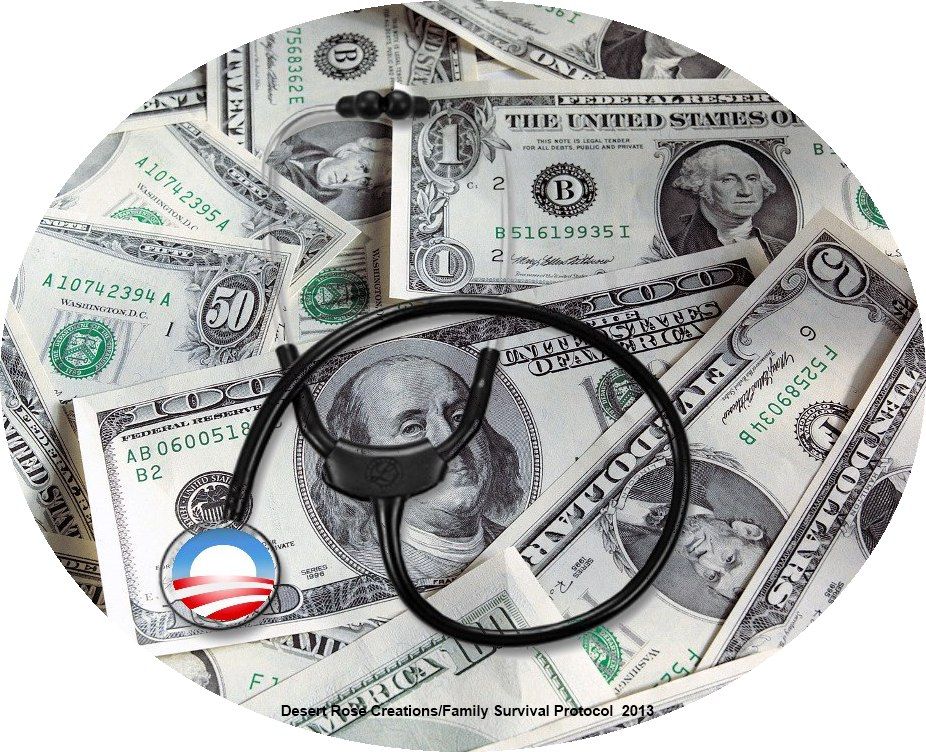
Obamacare (c) Desert Rose Creations / Family Survival Protocol 2013 photo obamacarelogo_zps3de31909.jpg
Obamacare (c) Desert Rose Creations / Family Survival Protocol 2013
........................................................................................................


First, the administration revealed that enrollments for Obamacare next year will barely hit 10 million, far below previous projections.

Then last week, the consulting firm of McKinsey & Company estimated that premiums for policies under the Affordable Care Act, also known as Obamacare, were going up substantially in 2016. For instance, the median rate increase for the lowest priced, highly popular “Silver” plan will rise by 11 percent – compared to just a seven percent increase in 2015.

Related: Millions Face Premium and Deductible Sticker Shock under Obamacare

Now there are troubling reports  that consumers will be facing soaring out-of-pocket costs for deductibles next year – increases that in many cases will neutralize the benefits of their health care plans or discourage some from purchasing coverage.

“That these deductibles are so high is clearly one of the reasons people aren’t buying a plan—they simply don’t see themselves getting anything for the money,” Robert Laszewski, president of Health Policy & Strategy Associates, a business and policy consultant, said in a newsletter on Monday.

Department of Health and Human Services officials insist that there are still plenty of plans available with low premiums for those willing to aggressively shop on the federal and state operated insurance exchanges. Americans have until the end of the year to enroll for the third season of Obamacare. But even in cases where consumers find good deals on premiums, they are likely to be stung on the back end by requirements to pay sizeable out of pocket costs before their Obamacare coverage actually kicks in.

The average annual out-of-pocket costs per worker increased nearly 230 percent between 2006 and 2015, according to an annual survey of employer health benefits coverage by the Kaiser Family Foundation.


Read More Here


................................................................................................

Americans Give Health Insurers a Big Thumbs Down

 
Americans haven’t been this fed up with health insurance companies in a decade, and their frustration likely won’t fade soon.

Consumer satisfaction with health insurance providers fell to the lowest level since 2005, largely due to the slow processing of claims and the rising costs of premiums, deductibles and copays, according to a new survey from the American Customer Satisfaction Index that dates to 2001.


Related: How Workers Are Getting Slammed With Higher Health Care Costs
 

Americans are extremely cost sensitive, especially in the health sector, and take notice of how fast their costs go up, says ACSI managing director David VanAmburg.

Obamacare also plays an indirect role. Providers are unable to keep up with customer service as more people purchase insurance, he says. And many insurers haven’t beefed up their staffing to deal with the increase in demand. As insurers become responsible for more consumers, they may need to recalibrate, VanAmburg says.


Read More Here

Thursday, October 29, 2015

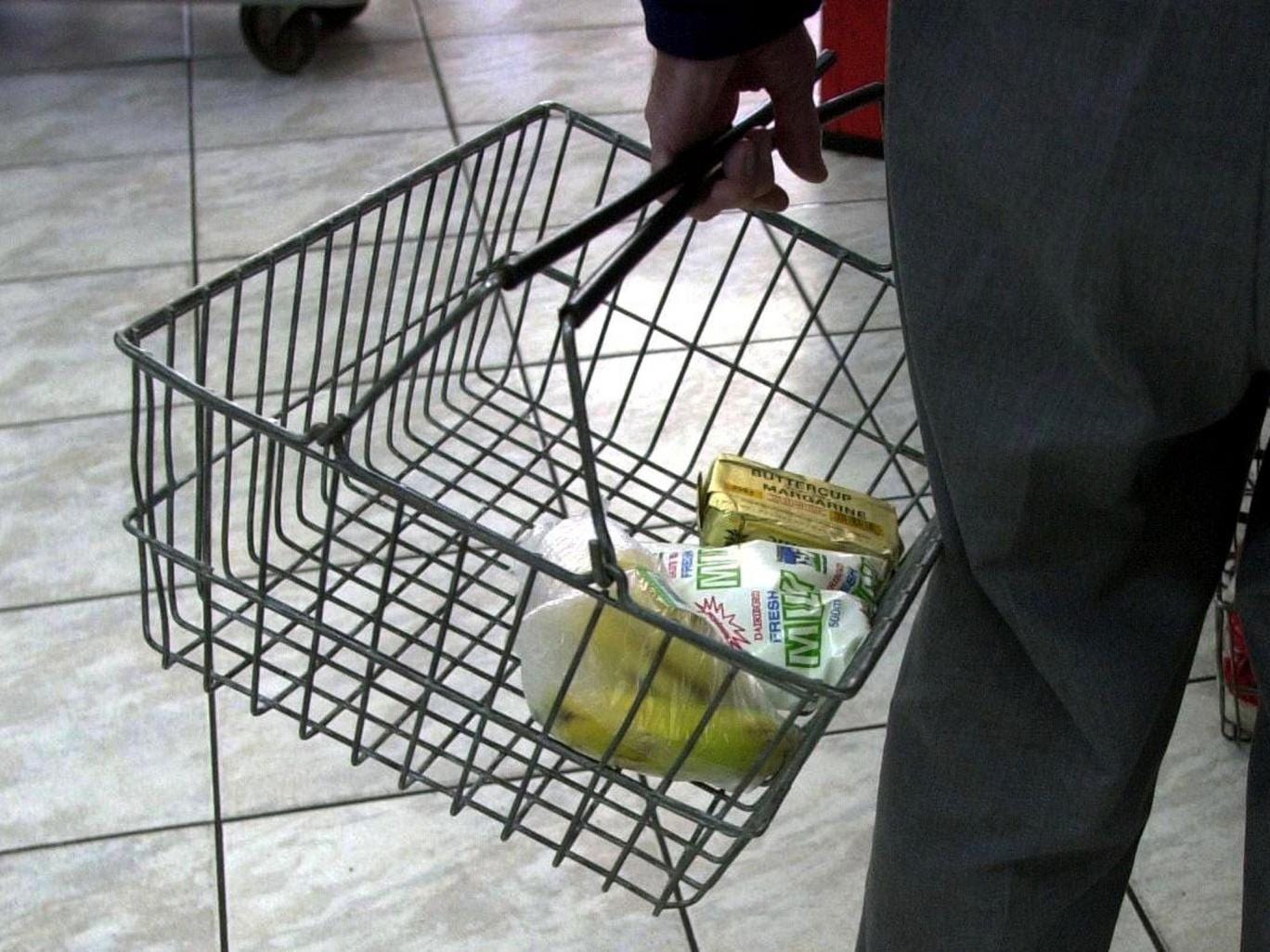
England : Malnutrition and Cases of Victorian-era diseases including scurvy, scarlet fever, cholera and whooping cough have increased since 2010


The Independent

Malnutrition and 'Victorian' diseases soaring in England 'due to food poverty and cuts'

Cases of malnutrition and other “Victorian” diseases are soaring in England, in what campaigners said was a result of cuts to social services and rising food poverty.

NHS statistics show that 7,366 people were admitted to hospital with a primary or secondary diagnosis of malnutrition between August 2014 and July this year, compared with 4,883 cases in the same period from 2010 to 2011 – a rise of more than 50 per cent in just four years.

Cases of other diseases rife in the Victorian era including scurvy, scarlet fever, cholera and whooping cough have also increased since 2010, although cases of TB, measles, typhoid and rickets have fallen.
Chris Mould, chairman of the Trussell Trust, which runs a nationwide network of foodbanks, said they saw “tens of thousands of people who have been going hungry, missing meals and cutting back on the quality of the food they buy”.


Read More Here

............................................................................

The Independent

Malnutrition cases in English hospitals almost double in five years

Admissions to hospitals have soared as poorer families struggle to afford food


The shocking impact of recession and austerity on England’s poorest people has come to light again in figures showing the number of malnutrition cases treated at NHS hospitals has nearly doubled since the economic downturn.

Primary and secondary diagnoses of malnutrition – caused by lack of food or very poor diet – rose from 3,161 in 2008/09 to 5,499 last year, according to figures released by the health minister Norman Lamb.

While the data does not include information on the circumstances of each diagnosis, the rise coincides with a dramatic increase in the cost of living, and a spike in demand for charity food hand-outs.

The figures, broken down by region, reveal the heaviest burden of hunger is being felt in rural areas. Hospitals in Somerset saw the most cases, with 215 diagnoses, followed by Cornwall and Scilly Isles.


Read More Here

Monday, October 26, 2015

Obamacare customers are facing an average 7.5 percent price increase for a key benchmark health plan next year; But the average rate hikes will vary dramatically from state to state


 POLITICO

obamacare_gty_629.jpg
Roughly 80 percent of Obamacare customers received subsidies. | Getty

Obamacare rates to rise 7.5 percent next year

But the figures will vary widely from state to state.

Obamacare customers are facing an average 7.5 percent price increase for a key benchmark health plan next year, according to limited data the Obama administration released just days before the start of a challenging enrollment season.

But the average rate hikes will vary dramatically from state to state — skyrocketing more than 30 percent in Alaska, Montana and Oklahoma while dropping 12.6 percent in Indiana.
The administration's analysis looks at the second-cheapest "silver" plan available to customers when open enrollment begins on Nov. 1. Those benchmark plans, which are among the most popular sold on the law's health insurance exchanges, are important because they're used to calculate how much federal support low- and middle-income exchange customers will receive toward their monthly premiums.

More than 70 percent of exchange customers chose silver plans this year, which cover about 70 percent of medical costs. Roughly 80 percent of Obamacare customers received subsidies, worth an average monthly credit of $270.


Read More Here

Friday, October 23, 2015

How Rising Rents Are About to Crush American Spending Power


File:Loz rent car.JPG
  Rent Is Too Damn High Party car
Wikipedia.org
..........

We just learned America’s rental affordability crisis is as bad as it’s ever been. Unfortunately, it’s about to get a whole lot worse.

The American Community Survey for 2014, released a few weeks ago, found that the number of renters paying 30 percent or more of their income on housing – the standard benchmark for what’s considered affordable – reached a new record high of 20.7 million households, up nearly a half-million from the year before. Despite the improving economy, the increase was nearly five times bigger than last year’s gain.

That means about half of all renters live in housing considered unaffordable. And the latest increase comes on top of substantial growth since 2000 that has seen this number climb by roughly six million households over the period, an increase of about 41 percent.

Related: More Americans Struggling to Pay the Rent
 

Read More Here

As Congress Fails to Act, 1 in 3 Seniors Facing Big Hike in Medicare Premiums


Wikimedia Commons
 
 
​
_
 
Hopes are dimming that Congress will intervene to block a huge Medicare premium increase of over 50 percent for nearly a third of the 50 million elderly Americans who receive their physician care and other health services through Medicare Part D.

Republicans and Democrats are deadlocked over how to come up with roughly $10.5 billion to prevent Medicare premiums from skyrocketing for millions of seniors beginning next January. The looming increase is the result of a quirk in the law that drives up premiums for wealthier Americans and poor people with chronic medical problems in years when the Social Security Administration doesn’t approve a cost-of-living adjustment for beneficiaries.

Related: Millions Face a 50 % Medicare Premium Hike If Obama and Congress Don’t Act
 
While both parties are interested in doing something to reduce or avert the premium hikes, Republicans are demanding that the cost of any bailout be offset by cuts in other areas of the Medicare program, while Democrats are resisting that approach. Moreover, there is a division between House Minority Leader Nancy Pelosi (D-CA) – a major champion of a bailout – and some Senate Democratic leaders who are less enthusiastic about the effort and how to pay for it.

“It’s a big mess,” said one Washington health care expert who is following the negotiations closely.
Negotiations may pick up later this month once the Centers for Medicare and Medicaid Services formally releases its official 2016 premium rates, according to a report on Thursday by the Morning Consult.


Read More Here_

Wednesday, October 21, 2015

Rent is so high in San Francisco that I’m a software engineer and I live in a van


QUARTZ

October 17, 2015
 
About a year ago, I was having lunch with a friend when I made a throwaway comment: “Have you seen the rent in San Francisco? If I get a job in the Bay Area, I’ll totally live in a van.”
As I sit in darkness writing this, I’m trying to keep my typing quiet, lest a real inhabitant of the neighborhood I’m parked in should walk by and wonder about the sounds coming from the rusty bus loitering on their block. Yes, you understood that correctly: Today, I work in a multi-million dollar office complex, and I live in a van.

This summer, after receiving a job offer in Silicon Valley, I went on Craigslist and began sifting through housing listings: “verrrrrryyy cheap bedroom ;),” “great deal on rent!” A single room with a shared bathroom? Two thousand per month on the low-end. A small studio apartment, you ask? If your startup wasn’t recently bought for seven figures, forget about it.

I perked up after finding a listing for $1,000 per month. Now this could work. Clicking through to the details section however revealed the offer was for a single bunk in a room with eight people, a set-up referred to as a “hacker house” by an (evil) marketing genius.

Even if I was to spend the huge majority of my salary on rent, I knew I would likely still be in a grim living situation, resenting every penny I handed over that could have gone towards paying back my student loans. And as a software engineer, I’m one of the lucky ones! Imagine those who aren’t lucky enough to be on the tech payroll.

Anyway, three weeks ago I took the equivalent of three months’ rent and bought an old red bus. It’s a 1969 VW camper van with a hole in the floor and a family of spiders that has more of a right to be here than I do (sleeping in your car on public land in California is illegal).


(Katharine Patterson/blog.thinkkappi.com)
But with the help of Ikea and an army of cleaning supplies I was able to get the bus into livable condition.

Read More Here

Monday, October 19, 2015

Many Low-Income Workers Say ‘No’ to Health Insurance


MSN News

Many Low-Income Workers Say ‘No’ to Health Insurance

By STACY COWLEY
 

An employee at Golden Corral taking clean cups from the kitchen. Some Golden Corral restaurants began offering health insurance to employees, but few have opted in.© Logan R. Cyrus for The New York Times An employee at Golden Corral taking clean cups from the kitchen. Some Golden Corral restaurants began offering health insurance to employees, but few have…
 
 JACKSONVILLE, N.C. — When Billy Sewell began offering health insurance this year to 600 service workers at the Golden Corral restaurants that he owns, he wondered nervously how many would buy it. Adding hundreds of employees to his plan would cost him more than $1 million — a hit he wasn’t sure his low-margin business could afford.
His actual costs, though, turned out to be far smaller than he had feared. So far, only two people have signed up.

“We offered, and they didn’t take it,” he said.

Evidence is growing that his experience is not unusual. The Affordable Care Act’s employer mandate, which requires employers with more than 50 full-time workers to offer most of their employees insurance or face financial penalties, was one of the law’s most controversial provisions. Business owners and industry groups fiercely protested the change, and some companies cut workers’ hours to reduce the number of employees who would be eligible.

But 10 months after the first phase of the mandate took effect, covering companies with 100 or more workers, many business owners say they are finding very few employees willing to buy the health insurance that they are now compelled to offer. The trend is especially pronounced among smaller and midsize businesses in fields filled with low-wage hourly workers, like restaurants, retailing and hospitality. (Companies with 50 to 99 workers are not required to comply with the mandate until next year.)


Read More Here

Tuesday, October 13, 2015

Tennessee district closes schools over lack of funding, blames Obamacare


© Andrea Comas
A school district in Tennessee voted to cancel classes and shut down its schools as a result of a budget problem that has left the government unable to fund the facilities. The school director blamed Obamacare for its problems.
 
Clay County, Tennessee operates three schools total – one high school and two that cover pre-kindergarten through eighth grade – on a $9.5 million budget. However, now more than 1,100 students are sitting at home while officials try to figure out how to reopen the doors. A school board meeting last week saw the board voting 6-4 to close the schools. A separate vote to keep them open failed.

Notably, the county’s financial issues are not new. Clay County Director of Schools Jerry Strong told Associated Press that officials have been struggling with the budget for three years, and blamed county obligations such as state and government mandates, particularly the Affordable Care Act, for the monetary hole.

"Clay County's inability to generate the revenue to offset the mandates is what's caused this to come to a head," he said.


Read More Here

Wednesday, September 30, 2015

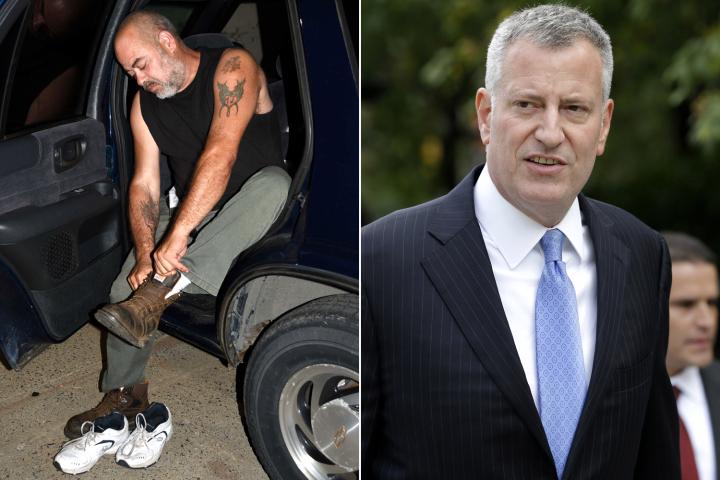
Over 300 New York City municipal employees didn’t earn enough to be able to afford a placte to live, the mayor has offered to find them permanent housing.

` `


© Zoran Milich
Responding to a New York Post report stating that more than 300 New York City municipal employees didn’t earn enough to be able to afford a place to live, the mayor has offered to find them permanent housing.
 
During a press conference on Monday, New York Mayor Bill de Blasio admitted there were people working for the city that were homeless, though he disputed the number initially reported.
What we’re facing now, this is becoming more and more of an economic problem. Meaning people have been displaced from their homes by the high cost of housing, even if they’re working,” de Blasio said at City Hall.

We’re going to make sure in every case, particularly with working folks, that we look for every opportunity to get them to permanent housing.

The mayor questioned whether the number of homeless city employees was over 300, with his spokeswoman Ishanee Parikh saying records showed that only 83 shelter residents have identified themselves as city employees.
View image on Twitter
De Blasio vows to put a roof over homeless city workers’ heads http://nyp.st/1NIMFoP 
Municipal union leaders told the Post, however, that the actual number is over 300, but many don’t report their employment status to shelters out of shame.

“There’s a social taboo that they believe comes with being homeless,” Joseph Puleo, president of Local 983 of District Council 37, the city’s largest blue-collar municipal-workers union, told the Post.


Read More Here

Monday, September 7, 2015

US workers’ pay plummeted 4% over the past 5 years – report

RT

© Shannon Stapleton
Despite nearly 250,000 jobs being created monthly in the US economy, the majority of Americans saw real wages plummet 4 percent over the past five years, when adjusted for inflation, according to new report by the National Employment Labor Project.
Stagnant wages have become a fact of life for nearly all of America’s workers, but workers in lower-paying occupations are finding it especially tough to keep up with the rising cost of living,” said Christine Owens, executive director of the National Employment Law Project (NELP), a research and advocacy group, in a statement.
Not only are their paychecks not growing, but their purchasing power has shrunk considerably, and to a far greater extent than that of higher-wage earners.”
The report looked at the percentage change in hourly wages for 785 occupations from 2009 to 2014, and then divided those jobs into five classifications. While hourly wages declined across all occupations, the hardest hit workers were those in lower- and mid-wage fields.


 Read More Here

Thursday, March 20, 2014

Ukraine Situation Could Become Very Pricey For All Concerned ...... Mess With The Bear , Get The Claws ?

Price tag for Russian gas to Ukraine could rise to $500

Published time: March 20, 2014 12:10

Reuters / Sergej Vasiljev
The price of Russian gas to Ukraine could rise to $500 per 1,000 cubic meters, as future developments in relations between Moscow and Kiev remain vague.
From April 1 the price Ukraine pays for Russian gas will go up to $360-$370 per 1,000 cubic metres, after Russia cancelled the discount agreed in late December, Pavel Zavalny, the head of Russian Gas Society told Izvestia newspaper.
In the worst case scenario, and Ukraine decides to take over Russian property, as well as new threats from radical nationalists, the price could jump to as high as to $500, the paper added.

Read More Here

.....

Russia to redirect trade elsewhere in case of EU-US sanctions

Published time: March 19, 2014 16:59


Russian President's Press Secretary Dmitry Peskov (RIA Novosti / Aleksey Nikolsky)
Russia will switch to other trade partners if economic sanctions are imposed by the US and the European Union, the Russian President's Press Secretary Dmitry Peskov has said.
"If one economic partner on the one side of the globe impose sanctions, we will pay attention to new partners from the globe’s other side. The world is not monopolar, we will concentrate on other economic partners," RIA news quotes Peskov.
According to him, possible economic sanctions by the US and EU on Russia are unacceptable, and the Russian Federation intends to offer further economic cooperation with the European Union.
"We want to keep good relations with the EU and with the US. Especially with the European Union as it is the main economic, investment and trade partner of the Russian Federation. Our mutual economic dependence assumes that we shall have good relations," the Russian President's Press Secretary declared. He also emphasized that discussion of global economic problems without involvement of Russia can't be a complete discussion.
In a Tuesday telephone conversation between Russia’s Minister for Foreign Affairs Sergey Lavrov and the US Secretary of State John Kerry they discussed the situation in Ukraine, and Lavrov said sanctions imposed by the US and the European Union against the Russian Federation are absolutely unacceptable and won’t come without consequences.
According to data from the EU’s Eurostat, Russia accounts for 7 percent of imports and 12 percent of exports in the 28 European Union bloc, making it the region's third most important trading partner, behind the USA and China.
In turn, the EU is Russia’s biggest trade and investment partner, with trade turnover estimated at $330 billion in 2012.

Read More Here

.....
Enhanced by Zemanta

A new study by Bankrate.com shows that about one third of uninsured Americans are going to remain without coverage and opt to pay the penalty. You can also legally opt out, explore eight options you may find interesting.


One Third of Uninsured Won’t Sign Up for Obamacare


The Fiscal Times

March 17, 2014
As the White House scrambles to get people signed up for health insurance before the March 31 deadline, many uninsured Americans say they are still planning to take their chances and remain without coverage.
A new study by Bankrate.com shows that about one third of uninsured Americans are going to remain without coverage and opt to pay the penalty.
The survey results suggest that the administration’s outreach to uninsured people may be falling short, with more than half of people without insurance unaware of the March 31 deadline—and even more unaware of subsidies that could make their policies more affordable.
Related: Obamacare May Be Failing the Uninsured
Bankrate surveyed 3,005 people and found that 41 percent of those who were uninsured said they plan to stay uninsured because they think that health insurance is too costly. Meanwhile, about 70 percent said they were unaware of subsidies available under the new law that could make their health plans more affordable.
The study’s findings are worrisome for the Obama administration since the key goal of the president’s health care law was to extend access to health coverage for the uninsured.
A separate study by the McKinsey consulting firm found just 27 percent of Obamacare enrollees were uninsured. That means that the majority of those signing up for Obamacare had previous insurance of some kind—whether they were kicked off their old policies, or they found a better deal on the exchanges. Though not confirmed by the White House, if accurate, that could mean the law is failing to meet its intended goal.
Related: Gallup: Employment, Obamacare Lower Uninsured Rate
Gary Cohen, an official for the Centers for Medicare and Medicaid Services said the administration has not been tracking how many of the Obamacare enrollees were previously uninsured.


Read  More Here
.....

Breitbart

Eight Ways to Opt Out of Obamacare

With the deadline to sign up for Obamacare having come and gone, many Americans have decided to “opt out” of President Obama’s signature health care reform law, choosing instead to pay the $95 penalty for sidestepping the individual mandate.

“For many Americans opting out of Obamacare is the best decision they can make, but it's important that they do it the right way—just refusing to buy health insurance and not having another way to pay for catastrophic medical expenses is a mistake,” Sean Parnell, author of the newly-released The Self-Pay Patient, told Breitbart News. “People who want to opt out should be looking at alternatives to conventional health insurance, such as joining a health care sharing ministry or purchasing a fixed benefits policy."
Parnell also strongly advises Americans against opting out and simply paying the “list” price for medical visits and prescription drugs without shopping around, or by relying solely on the local hospital emergency room for routine medical care.
“This approach leaves people who opt out vulnerable to sky-high medical expenses at inflated ‘list’ or ‘chargemaster’ rates, and can result in an inability to obtain needed care because of cost,” Parnell writes on his blog, selfpaypatient.com.
Instead, Parnell recommends the following eight options for those who have opted out of ObamaCare:
1. Join a health care sharing ministry, which are voluntary, charitable membership organizations that share medical expenses among the membership.
Parnell states that Samaritan Ministries, Christian Healthcare Ministries, and Christian Care Ministry are open to practicing Christians, while Liberty HealthShare is open to those who are committed to religious liberty.
Healthcare sharing ministries “operate entirely outside of ObamaCare’s regulations, and typically offer benefits for about half the cost of similar health insurance,” says Parnell. “Members are also exempt from having to pay the tax for being uninsured.”


Read More Here
.....
Enhanced by Zemanta

Friday, February 21, 2014

Hmmmm Factor : Obama plan: Cut tax breaks for richest retirement savers. Wants to spur saving among low and middle-income earners.

The legitimate questions to ask at this point in time  would  be .......

Exactly  what money  would  the low and  middle-income  earners  be  putting aside for  savings?

Considering the  unemployment  rate  and the  rising  number of the homeless how realistic or  honest  would this  proposal  be?  

In a  world where the  working  middle class are disappearing and the poor can barely feed themselves and their  families , are retirement  savings accounts truly an achievable reality?


~Desert Rose~

........

New Geography . com

The U.S. Middle Class Is Turning Proletarian

drill-press.jpg
The biggest issue facing the American economy, and our political system, is the gradual descent of the middle class into proletarian status. This process, which has been going on intermittently since the 1970s, has worsened considerably over the past five years, and threatens to turn this century into one marked by downward mobility.
The decline has less to do with the power of the “one percent” per se than with the drying up of opportunity amid what is seen on Wall Street and in the White House as a sustained recovery. Despite President Obama’s rhetorical devotion to reducing inequality, it has widened significantly under his watch. Not only did the income of the middle 60% of households drop between 2010 and 2012 while that of the top 20% rose, the income of the middle 60% declined by a greater percentage than the poorest quintile. The middle 60% of earners’ share of the national pie has fallen from 53% in 1970 to 45% in 2012.
This group, what I call the yeoman class — the small business owners, the suburban homeowners , the family farmers or skilled construction tradespeople– is increasingly endangered. Once the dominant class in America, it is clearly shrinking: In the four decades since 1971 the percentage of Americans earning between two-thirds and twice the national median income has dropped from 61% to 51% of the population, according to Pew.
Roughly one in three people born into middle class-households , those between the 30th and 70th percentiles of income, now fall out of that status as adults.
Neither party has a reasonable program to halt the decline of the middle class. Previous generations of liberals — say Walter Reuther, Hubert Humphrey, Harry Truman, Pat Brown — recognized broad-based economic growth was a necessary precursor to upward mobility and social justice. However, many in the new wave of progressives engage in fantastical economics built around such things as “urban density” and “green jobs,”  while adopting policies that restrict growth in manufacturing, energy and housing. When all else fails, some, like Oregon’s John Kitzhaber, try to change the topic by advocating shifting emphasis from measures of economic growth to “happiness.”

.....

Feb. 21, 2014, 5:00 a.m. EST

Obama plan: Cut tax breaks for richest retirement savers

Plan designed to spur saving by low-, middle-income earners

By Robert Powell, MarketWatch

President Barack Obama plans to ask Congress in early March, as part of his fiscal 2015 budget, to reduce some of the tax advantages for employer-sponsored retirement plans for higher-income earners, according to published reports.
Plus, the president wants to limit the value of all tax deductions, defined contribution exclusions and IRA deductions to 28% of income — and include an overall cap on all retirement accounts, including pensions, that could bring in $1 billion a year in new tax revenue, according to a Pensions & Investments report. Read Companies bracing for 1-2 retirement punch .
According to the report, the proposals are designed to direct more of the tax preference for retirement savings toward getting more low- and middle-income people into the habit of saving.
Based on current tax brackets, Pensions & Investments reported that the 28% limit would reduce the tax advantages of retirement savings for people earning more than $183,000 or couples earning more than $225,000. And the overall cap for all tax-preferred retirement accounts would limit them to providing an annual retirement income of $205,000, which would currently cap tax-preferred accounts at $3.4 million, but could go lower as interest rates rise.
So, who might feel the effects of this proposal? Largely, the top 5% of tax payers. According to the Tax Policy Center, a partnership between the Urban Institute and Brookings Institution, there are about 6.07 million Americans who earned above $200,000 in 2011 and they make up the top 4.2% of taxpayers, according to published reports. Read more about the president’s tax proposal here: Who makes more than $250k, and are they rich?
And what do experts have to say about what the president might propose? In the main, they say the rich need not worry that their tax breaks for saving for retirement will be cut.
“We’ve heard these kinds of proposals being discussed in policy circles for a couple of years now,” said Skip Schweiss, president of TD Ameritrade Trust Co. and managing director of TD Ameritrade Institutional. “It would not surprise me to see these ideas become more formalized through President Obama’s 2015 budget proposal.”
But even though experts expect the president to propose reductions to some of the tax advantages for employer-sponsored retirement plans for higher-income earners, few expect any congressional action. “Given the congressional divide, it’s hard to see something like this becoming law, but of course one never knows,” said Schweiss.

Enhanced by Zemanta