Showing posts with label Supplies. Show all posts

Thursday, September 17, 2015

Survival Food : Wheat Berries and not just for making bread


Wheat Berries - Long Term Storage - Part 1


Wheat Berries - Long Term Storage - Part 2

SpartanMonkee
SpartanMonkee


Wheat Berries - Long Term Storage - Part 3

SpartanMonkee
SpartanMonkee


Long-Term Survival Food Storage: Whole Wheat Berries

thenewsurvivalist
thenewsurvivalist


Making Bread from Home Ground Wheat

Published on Oct 29, 2012
I have been learning about food storage for a while now. I finally decided to start using Hard White Wheat and grinding it at home. I got a hand wheat grinder to see how I liked it. The verdict is in....LOVE, LOVE, LOVE IT! The bread is amazing! Now I know that every Sunday will be bread day around our house. The recipe I used is below. It's a basic bread recipe. The dough can be used for many things though. Of course bread but also dinner rolls, cinnamon rolls, pizza crust, you name it. I hope you try it and let me know how it turns out for you.
BASIC WHITE BREAD
Ingredients : 2 cups warm water (110 degees) 1/3 cup white sugar 1 1/2 tablespoons active dry yeast 1 1/2 teaspoons salt 6 cups bread flour
(The recipe does not call for dough enhancer but I included it. You'll see in the video)
Directions:
1. In a large bowl, desolve the sugar in warm water, and then stir in the yeast. It must sit to proof for about 10 minutes. It will develop a creamy foam.
2. Once the yeast if proofed, mix the oil and salt into it.
3. Mix in one cup of flour at a time. Once it forms a dough turn it out on a counter covered lightly with flour and kneed the dough until smooth and elastic.
4. Place in a well oiled bowl and turn the dough to coat with the oil.
5. Cover with a damp cloth and allow to rise until double in size, about an hour.
6. Punch the dough down and kneed for a few minutes more. Divide in half. Roll out each half into a rectangle. Roll each rectangle jelly roll fashion and place seam side down in a lightly greased bread pan. Allow it to rise another 30 minutes or so until it fills the pan or is 1 inch above the edge.
7. Bake at 350 degrees for 30 minutes.


.


Easy Wheat Sprouting nothing special needed

Uploaded on May 9, 2010
 Wheat can be stored easily for decades and is highly recommended for storage. Sprouting is one simple way to harness it's nutrition. You don't need anything special to do this and it takes only minutes of your time. For full nutrition check Nutrition Data's website. For ongoing info, blogs and other things related to survival and preparedness visit our website. wildernessinnovation com


Wheat berry recipes

by ingredients, cooking time, nutrition facts, collections


59 wheat berry recipes
Berry Berry Streusel Bars

Berry Berry Streusel Bars

 Raspberry jam and blueberries make these berry berry streusel bars packed with goodness and yumminess. Perfect for breakfast.
about 1 hour ago

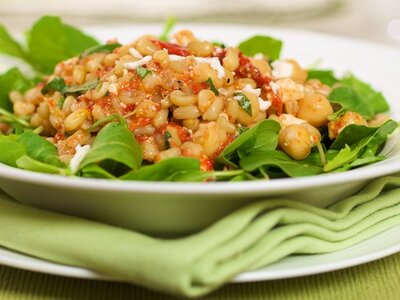
Arugula, Chickpea and Wheat Berry Salad

Arugula, Chickpea and Wheat Berry Salad

 Wheat berries, chickpeas, roasted bell peppers, and arugula are tossed with a refreshing and flavorful dressing. It fills you up with lots of goodness and yumminess.
2 minutes ago

Israeli Wheat Berry Stew

 Try this delicious rendition of stew that's made with great northern beans, wheat berries and a bit of cumin and turmeric.
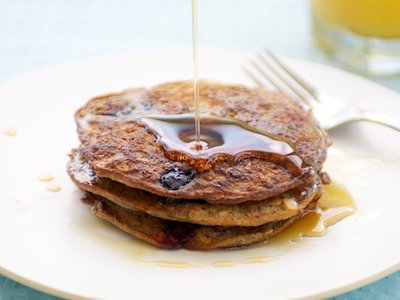
Oatmeal and Berry Pancakes

Oatmeal and Berry Pancakes

 These delicious pancakes are full of yumminess and goodness. They are moist in the inside, and slightly crispy on the outside. Berries give you some juicy explosion in every bite. They are perfect for breakfast.
about 9 hours ago

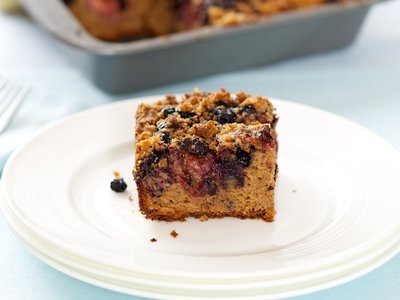
Mixed Berry Coffee Cake

Mixed Berry Coffee Cake

 Moist, fruity and very tasty! An ideal cake you can have with a cup of coffee or tea.
28 minutes ago

Warm Crepes with Berry Sauce

Warm Crepes with Berry Sauce

 Warm, juicy and fruity. These warm crepes are served with freshly made blueberry-raspberry sauce. Delicious and also good for you.


Wednesday, September 16, 2015

7 Survival Foods with an Unbelievable Shelf Life

Bulk Food Storage Containers
Bulk Food Storage Containers jpg  /   eb6tracker.com

Guest Post by Dan Sullivan
 
Let me ask you a question, when was the last time you read an article on survival food and said to yourself:
Yeah, I almost forgot about this food... It’s perfect! I’ll definitely get me some?
Although there are plenty of lists with survival food on the Internet, a lot of preppers are missing a few good ones that have amazing shelf life (if properly stored, usually in cool, dark, dry places, away from rodents).
That’s what I want to do in this article so here’s my list of foods that ultimately allow you to rotate your stockpile less often...


#1. Spam

 
You either love it or hate spam but I think we can all agree most people like it, right? First of all, Spam is a brand. Its main ingredients are pork, ham, potato starch and salt and it became popular during World War 2 because of it has great shelf life (which, according to the manufacturer, is infinite).
The really cool thing is that it’s also dirt cheap, around 5 to 10 bucks for a can on Amazon.
 

#2. Hardtack crackers

Put whole wheat flour, water and salt together and you’ve got crackers with 50+ years of shelf life! Amazing, right (as long as you store them well)? As their name suggests, these crackers are pretty hard to chew on. You’ll need to soak them in water, milk or even soup for at least 5-10 minutes before eating them.
 

#3. Pemmican

This is another fantastic food that lasts a very long time. How long depends on the storage conditions and the quality of the ingredients. Again, lots of recipes out there, you just need look them up.
 

#4. Canned Pink Salmon

I say pink salmon because it has one of the highest shelf lives of all canned foods: 3 to 5 years. Obviously, you can extend it even more if you store it under the right conditions, in a cool, dark place, away from moisture etc.
If you want, you can make your own at home but you will need a pressure canner, the jars need to be sterile, the lids have to be brand new and the recipe has to be followed to the letter. One wrong move and you could compromise your cans.

#5. Wheat berries

I’m not sure you noticed but the first four foods from the list don’t need to be cooked in order to be eaten. This is great if you’re worried that the smell might give you away in a post-SHTF situation where food will be scarce.
However, there are other foods with amazing shelf life, such as berries, that do require you start your propane stove.
Wheat berries are, in fact, the kernel of the grain except for the hull. Few people know that they have a much longer shelf life than flour, which is why I’m adding them to this list. White flour is good, it will last you 8 to 12 months, more if you store it properly. That’s more than enough if you rotate your stockpile once or twice a year.
But if you’re really looking to hit maximize shelf life, you might as well store it in the form of wheat berries. Just put them in Mylar bags with oxygen absorbers and then everything in food-grade buckets.
Of course, in order to turn them into flour, you’re gonna need a hand cranked grinder... and that’s something that may be a little harder to find one post-collapse.


#6. Dried pinto beans

OK, so pretty much all dried beans are going to last a very long time in proper conditions but I did promise you foods with an unbelievable shelf life, right?
A 2005 study by Larson, Sloan, Ogden and Pike found that dried pinto beans retain “total protein quality” over long periods of time. Of course, you’re gonna want to eat them long before the maximum 30 year shelf life they can give you. They’ll be as hard as a rock and you’re probably going to need a pressure canner to cook them.


#7. Dehydrated potato slices
These potato slices can last 25 years according to some manufacturers. It makes sense, since they have 0 fat and enough sodium. You can make your own potato slices at home, of course, but you can also just buy them and keep them in their original containers.
 
Well, this is it for now; I hope I’ve given you some pretty good ideas on what foods to add to your stockpile. Just remember that stockpiling them is not an excuse for you to rotate your stockpile less frequently simply because you’ll know they last long. Rotating your stash is important to make sure that, when it hits, your preps will last you as long as you need them to.
Another thing you need to remember is to not neglect your other preps such as water, medicine, tools, clothes and so on. Stockpiling is comfortable and easy but you’ll also need to focus on your skills, for instance.

Good luck!

Dan F. Sullivan
____________________________________________________________________

___________________________________________________________________
 
Look for more of Dan's  informative articles on his site  www.survivalsullivan.com

__________________________________________________________________

_________________________________________________________________

Sunday, September 13, 2015

Survival Food : Dehydrated Potatoes

How to (and how not to) Dehydrate Potatoes February 2013


.............................................

Dehydrating Sweet Potatoes The Homestead Survival

HomesteadSurvival
HomesteadSurvival


Survival Food : Pemmican

The Métis

Pemmican


Pemmican

  • A single buffalo supplied the Métis with a large amount of meat. Therefore, they needed to find a way to preserve some of that meat to keep it from going bad.
  • Most of the buffalo meat was used to make ‘pemmican’, which lasted for year without spoiling.
  • Pemmican was usually made from buffalo meat.
  • Drying the meat ensured that it did not go bad.
  • How to make pemmican:
    • First, the buffalo meat was cut into long strips.
    • The strips were then dried on racks, either over a fire, or in the sun.
    • The dried buffalo meat was then pounded into granular form.
    • Once in granular form, it was placed into animal-hide bags.
    • Hot buffalo fat was poured into the bags and mixed with the dried meat.
    • Wild berries were added to the mixture for flavour.
    • The hide bag were sewn shut, and the pemmican kept for years.
  • Pemmican was a nutritious and filling snack, and was eaily transported on long trade journeys.
  • Pemmican recipe
    • Ingredients:
      • 2 lbs of buffalo meat
      • ¼ cup of berries (blueberries or saskatoon berries)
      • 5 tablespoons of animal fat
    • Steps:
      • Cut meat into long strips
      • Hang meat in the sun to dry
      • When dry, pound strips into flakes
      • Mix together flakes and dried berries in hide bag (or bowl)
      • Add melted fat (hot)
      • Add berries (optional)


    Learn More About The Metis Here


     Pemmican - The Ultimate Survival Food

    Jas. Townsend and Son, Inc. Jas. Townsend and Son, Inc.


  Pemmican - The Ultimate Survival Food - Episode2 - 18th century cooking S5E3

Jas. Townsend and Son, Inc.


Pemmican - The Ultimate Survival Food - Episode 3 - 18th century cooking S5E4

Jas. Townsend and Son, Inc. Jas. Townsend and Son, Inc.


Pemmican Episode 4 - 18th century cooking with Jas Townsend and Son S5E5

Jas. Townsend and Son, Inc. Jas. Townsend and Son, Inc.


How To Render Fat, Part 1

HerbMentor HerbMentor


How To Render Fat, Part 2

HerbMentor

Tuesday, February 4, 2014

The Importance of Being Prepared


Article Written by Lee Flynn

Former British Prime Minister Benjamin Disraeli once said, “I am prepared for the worst, but hope for the best” (Quotery.com). Some people falsely believe that being prepared is the sort of thing that is only reserved for fear mongerers and doomsday enthusiasts. However, being prepared does not mean that you want the worst to happen. On the contrary, it means that, although you hope for the best, you are simply ready for anything that might come your way. In the same way that you get insurance in case your health declines, it is important to take out your own “insurance policy” for every area in your life. This might include food storage, home repairs, budgeting, or any number of tasks.

Large-Scale Disasters

The most common motivator for people when it comes to preparedness is the type of disaster that gains international attention. Hurricanes, tornadoes, tsunamis, and all manner of natural disasters have a habit of igniting the prepping spark in many people. Such occurrences are often unpredictable and can leave hundreds of people without homes or even, sadly, their loved ones. However, even those on the outskirts of a disaster can suffer dire consequences. At the very least, they may be trapped in their homes for days on end, perhaps without power or water. This is where your emergency food and water comes in handy.

Smaller Catastrophes

However, although these are the ones which gain the most attention, natural disasters are not the only, and certainly not the most common, reason for needing to keep certain emergency items in your home. You might not have considered it before, but a sudden job loss could come from nowhere and make it extremely difficult to feed yourself and your family.

Read More Here
Enhanced by Zemanta

Friday, January 17, 2014

Survival Medicine: Are Preppers Normal?

DrBones NurseAmy DrBones NurseAmy


Published on Jan 15, 2014
Are Preppers normal? Dr Bones answers the question that 97% of the population is asking. www.DoomandBloom.Net for more articles and information about medical preparedness.


Enhanced by Zemanta

Saturday, September 21, 2013

FEMA Readies 100,000 Person National Disaster Medical System Mobilization - Pandemic Response?


potrblog potrblog


Published on Sep 17, 2013
http://pissinontheroses.blogspot.com/...
(c)2013 www.POTRBLOG.com
FEMA 48 Hour Delivery Order: 100,000 "Doctor Scrubs"; 1000 (100 Person) Shelters; + Fuel, Showers, Bathrooms, and Hygine Equipment; Apparent Mobilization of the National Disaster Medical System
The situation appears to be a mobilization of the National Disaster Medical System
Summary:
Based on Federal Solicitations, FEMA is readying to deploy 100,000 medical personnel to 1000 shelter locations (100 medical personnel per location) on 48 hours notice. These shelter locations appear to be the housing quarters for the medical teams, as they are being stocked with atypical luxury, aka mobile showers, restrooms, hot food, medical clothing (scrubs), winter "sweat shirts and pants" etc.

Contractor comments/questions call it an "Armageddon scenario" and question the capabilities of their industries to support it. These Government solicitations have all the earmarks of massive logistical incompetence.

The threat being prepared for appears to be coming out of the Pacific Rim region, a likely scenario is the human spread of Avian Bird Flu (H7N9) out of China. We think less it is less likely (but we can't rule it out) that this is a Fukushima preparation because nuclear threats are invisible and usually deniable. Any such mobilization MUST BE less panic inducing than the threat which it seeks to quell, aka PANDEMIC.


PARTIAL Details:
100,000 "Doctor Scrubs" pants and shirts, 90% Adult Sizes (MUST DELIVER 50,000 with 48 hours notice)
100,000 "Sweat shirts and pants" 90% adult. (MUST DELIVER 50,000 with 48 hours notice)

1000 Shelters each holding 100 people, with mobile showers and restrooms supporting (2000 total showers).

And enough Fuel, Hot food delivery containers, sundries, protective equipment, hygine equipment and etc to supply.

6,000,000 autoclavable cotton blankets and so on and so forth, all must be available under "SURGE TEMPO" and typically in 48 hours notice.

8,100,000 liters of Bottled Drinking Water and 3,000,000 liters of Extended Shelf Life Drinking Water

Notable contractor comments:
Contractor A (Mobile showers and restrooms):
I think the Armageddon scenario is too large to provide the Federal Emergency Management Agency with several responsible parties....we could address and service the 20 camps in California, the 5 in Oregon and the 5 in Washington"
Contractor B: (6,000,000 Pcs order for autoclabable blankets)
Question4. Would we be able to get a longer lead time for the initial order and then 30 days for the remainder of the contract? As the blankets will be manufactured in Pakistan? It will be hard to carry 100,000 Pcs in Inventory. We on a general basis stock no more than 25,000 - 30,000 Pcs in inventory locally in GA.
Answer4. No.

Links to documents available at:
http://pissinontheroses.blogspot.com/...
Enhanced by Zemanta

Monday, July 22, 2013

The Top 10 Foods to NOT Store and How to re-package those you can.

pantry
STOP! Before throwing any of these items away, read this post about repackaging food!!
Based on my own personal experiences and mistakes, I do not recommend storing these foods in large quantities, long-term. Let me know what you think of my list and what other foods you would add.
I discuss this list in today’s episode of The Survival Mom Radio Hour.
1.  Any canned vegetable or fruit that you do not like. Don’t assume you will fall in love with slimy, aged canned apricots five years from now if you detest apricots now! Canned veggies and fruits aren’t nearly as tasty as fresh versions, so if you decide to store them, make sure you really like them.
2.  Tuna. I know that canned tuna is a staple in many food pantries. However, I’ve discovered that after a couple of years, canned tuna becomes mushy. Now, if you love the taste of tuna, you may not mind the mushy version, but for me, I really didn’t like it. Also, reports from a year ago found that every single bluefin tuna caught in the Pacific Ocean, in a study, was contaminated by radiation from Fukushima. I don’t know what the current status is of radiation in bluefin tuna, but I’d rather not store it in our food pantry.
3.  Flour. As flour ages, it can develop a stale, rancid smell. Additionally, it likely contains the microscopic eggs of flour weevils, which will hatch at some point. To get the longest possible shelf life out of flour, first place it in an airtight container and freeze it for about a week. This will kill the insect eggs. Then, before storing it, add an oxygen absorber or two, depending on the size of the container. Still, you can expect a shelf life of 18 months or so from flour, which is why most preppers prefer to store wheat.
4.  Saltine crackers.  Just for fun, take a sleeve of saltine crackers out of the box and set them aside, at room temperature, for 3 or 4 months. You’ll never get over the stench of rancid saltines! If you must, you could store them in an airtight container with oxygen absorbers, or learn how to make them from scratch. Buy and enjoy saltines but do rotate through them and don’t depend on a giant stash staying fresh a year from now.
5.  Graham crackers. I didn’t think our family favorite, graham crackers, could go bad, but they do go rancid with time. Again, you can repackage them in an airtight container  using oxygen absorbers, but that’s a lot of extra work. You can also store the ingredients to make homemade graham crackers. Have an extra 3 or 4 boxes around is quite fine. Just remember to rotate and use up the oldest crackers first, while storing the newly purchased crackers for later.


Read More Here


*******************************************************************************

image by Elana's Pantry
image by Elana’s Pantry
As a follow-up to my blog post about which foods you shouldn’t plan on storing long-term, here’s a list of foods typically found at grocery stores that can be stored but must be repackaged.
Keep in mind, that by repackaging these foods you will also be protecting them from oxygen, pests, and humidity, three of the five enemies of food storage. (The other 2 are heat and light.)
  • Raisins and other dried fruit
  • Oatmeal
  • Breakfast cereals
  • Any type of cookie or cracker
  • Beans
  • Rice
  • Pasta
  • Bread crumbs
  • Cornmeal
  • Candy
  • Pancake mix (Sometimes these are packaged directly inside the cardboard box without any type of inner plastic bag.)
  • Pasta, rice, and potato convenience mixes, such as Rice-a-Roni, Pasta-Roni, instant potatoes, scalloped potato mixes, etc. (These may either have microscopic insect eggs inside the package already and/or be invaded by insects and rodents from the outside.)
  • Tea bags (Repackage for best flavor and longest possible shelf life.)
  • Dried, instant milk (If not already in a sealed can.)
  • Spices and herbs packaged in plastic bags
  • Shortening
  • Chocolate chips, baking chips of any flavor
  • Nuts
  • Popcorn
  • Pretzels
  • Sugar, brown sugar and powdered sugar
  • Any type of mix to make bread, cornbread, pizza dough, etc.
  • Most anything else that is packaged in flimsy plastic bags and/or cardboard. This type of packaging is not intended for long-term storage, but that doesn’t mean the food inside can’t have a longer shelf life if repackaged correctly.

Repackaging instructions

Most everything on this list will do very well packaged by any of these procedures:


Read More Here


Enhanced by Zemanta