Showing posts with label sustainability. Show all posts

Thursday, September 17, 2015

Survival Food : Wheat Berries and not just for making bread


Wheat Berries - Long Term Storage - Part 1


Wheat Berries - Long Term Storage - Part 2

SpartanMonkee
SpartanMonkee


Wheat Berries - Long Term Storage - Part 3

SpartanMonkee
SpartanMonkee


Long-Term Survival Food Storage: Whole Wheat Berries

thenewsurvivalist
thenewsurvivalist


Making Bread from Home Ground Wheat

Published on Oct 29, 2012
I have been learning about food storage for a while now. I finally decided to start using Hard White Wheat and grinding it at home. I got a hand wheat grinder to see how I liked it. The verdict is in....LOVE, LOVE, LOVE IT! The bread is amazing! Now I know that every Sunday will be bread day around our house. The recipe I used is below. It's a basic bread recipe. The dough can be used for many things though. Of course bread but also dinner rolls, cinnamon rolls, pizza crust, you name it. I hope you try it and let me know how it turns out for you.
BASIC WHITE BREAD
Ingredients : 2 cups warm water (110 degees) 1/3 cup white sugar 1 1/2 tablespoons active dry yeast 1 1/2 teaspoons salt 6 cups bread flour
(The recipe does not call for dough enhancer but I included it. You'll see in the video)
Directions:
1. In a large bowl, desolve the sugar in warm water, and then stir in the yeast. It must sit to proof for about 10 minutes. It will develop a creamy foam.
2. Once the yeast if proofed, mix the oil and salt into it.
3. Mix in one cup of flour at a time. Once it forms a dough turn it out on a counter covered lightly with flour and kneed the dough until smooth and elastic.
4. Place in a well oiled bowl and turn the dough to coat with the oil.
5. Cover with a damp cloth and allow to rise until double in size, about an hour.
6. Punch the dough down and kneed for a few minutes more. Divide in half. Roll out each half into a rectangle. Roll each rectangle jelly roll fashion and place seam side down in a lightly greased bread pan. Allow it to rise another 30 minutes or so until it fills the pan or is 1 inch above the edge.
7. Bake at 350 degrees for 30 minutes.


.


Easy Wheat Sprouting nothing special needed

Uploaded on May 9, 2010
 Wheat can be stored easily for decades and is highly recommended for storage. Sprouting is one simple way to harness it's nutrition. You don't need anything special to do this and it takes only minutes of your time. For full nutrition check Nutrition Data's website. For ongoing info, blogs and other things related to survival and preparedness visit our website. wildernessinnovation com


Wheat berry recipes

by ingredients, cooking time, nutrition facts, collections


59 wheat berry recipes
Berry Berry Streusel Bars

Berry Berry Streusel Bars

 Raspberry jam and blueberries make these berry berry streusel bars packed with goodness and yumminess. Perfect for breakfast.
about 1 hour ago

Arugula, Chickpea and Wheat Berry Salad

Arugula, Chickpea and Wheat Berry Salad

 Wheat berries, chickpeas, roasted bell peppers, and arugula are tossed with a refreshing and flavorful dressing. It fills you up with lots of goodness and yumminess.
2 minutes ago

Israeli Wheat Berry Stew

 Try this delicious rendition of stew that's made with great northern beans, wheat berries and a bit of cumin and turmeric.

Oatmeal and Berry Pancakes

Oatmeal and Berry Pancakes

 These delicious pancakes are full of yumminess and goodness. They are moist in the inside, and slightly crispy on the outside. Berries give you some juicy explosion in every bite. They are perfect for breakfast.
about 9 hours ago

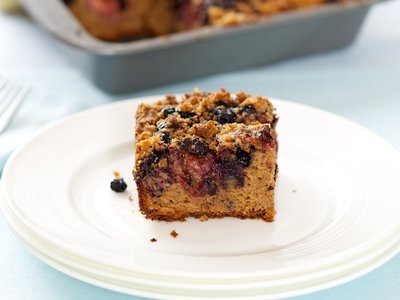
Mixed Berry Coffee Cake

Mixed Berry Coffee Cake

 Moist, fruity and very tasty! An ideal cake you can have with a cup of coffee or tea.
28 minutes ago

Warm Crepes with Berry Sauce

Warm Crepes with Berry Sauce

 Warm, juicy and fruity. These warm crepes are served with freshly made blueberry-raspberry sauce. Delicious and also good for you.


Thursday, September 10, 2015

5 Root Cellar Alternatives That Are Low-Cost And Easy-To-Make


Off The Grid News

Written by: Tricia Drevets Off-Grid Foods
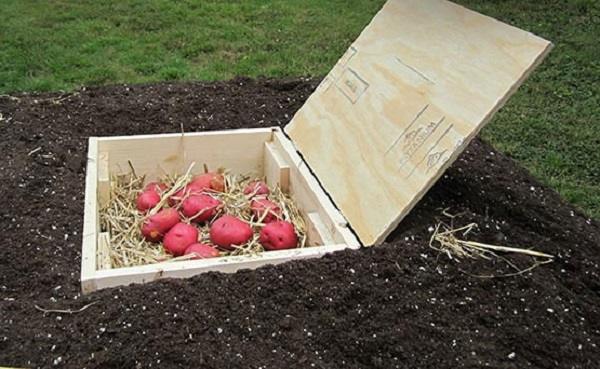
Image source: HomeDepot Image source: HomeDepot   During the summer there is nothing better than picking fruits and vegetables from your garden and then enjoying them at your dinner table that evening. The taste, freshness and convenience cannot be beat. But how can you continue to enjoy fresh homegrown produce when they’re not in season? One way is with a root cellar. It is with the use of root cellars that our ancestors provided nutritious food to their families all year round. Long before refrigerators were in every kitchen, most homes included some sort of root cellar that was designed to preserve nature’s bounty. Root cellars today can take many forms, from very basic to more complicated. But all of them provide a cool, ventilated, humid and dark space to store fresh food. Foods that do well in a root cellar environment include apples, pears, oranges, potatoes, carrots, beets, onions, garlic, winter squash and nuts.

Read More Here

Wednesday, September 9, 2015

A Plan for Food Self-Sufficiency

 
Planning a garden in advance can help you enjoy local, homegrown food year-round! Estimate how much to grow or buy and learn how to achieve food security with these guidelines.
By Cindy Conner October/November 2012
A well-planned garden can provide your family with the freshest, most nutritious produce, plus a more secure, self-reliant lifestyle.
Photo By Matthew T. Stallbaumer
Slideshow
Providing high-quality food for your family year-round takes foresight and planning, plus healthy doses of commitment and follow-through. Whether you grow as much of your food as you can or you source it from local producers, the guidelines here will help you decide how much to produce or purchase. The charts linked to in “Plan How Much to Grow” later in this article will also help you estimate how much space you’ll need — both in your garden to grow the crops, and in your home and pantry or root cellar to store preserved foods. Here’s a step-by-step plan to help you make the best use of your garden space (or farmers markets) to move toward homestead food self-sufficiency.

1. Establish Your Goals

Make a list of the foods you and your family eat now — and note the quantities as well. The charts linked to in “Plan How Much to Grow” further along in this article assume a half-cup serving size for fruits, vegetables and legumes, and a 2-ounce serving for dry grains. If your servings differ from the charts, be sure to adjust your calculations accordingly. Decide what you’d like to grow, noting the foods your family prefers and recognizing that not every crop will grow in every climate. Research different crop varieties: Some crops — such as melons — require long, hot days to mature, but certain varieties need fewer days to reach maturity, which allows them to be grown in areas with a shorter growing season. Don’t be afraid to start small and build gradually toward food self-sufficiency. A good starting goal might be to produce all of a certain crop that you use. An early milestone for me was growing all of the green beans we needed for a year and all of the ingredients for the spaghetti sauce I canned. Maybe you’ll aim to eat at least one thing from your garden each day. Keep your goals in mind as you’re planning a garden.
Read More Here

Tuesday, February 4, 2014

DIY Ideas for simple and durable rocket stoves for SHTF situations or everyday use

Cook Different Cook Different


Published on Dec 10, 2013
In this video I layout a pretty simple process for building a rocket stove that will you a lifetime and uses a very small amount of fuel (wood, sticks, pinecones, etc) to cook your meals with. Be sure to follow me on Facebook at http://facebook.com/cookingdifferent


.....

The "4 Block" Rocket Stove! - DIY Rocket Stove - (Concrete/Cinder Block Rocket Stove) - Simple DIY

desertsun02


Published on Nov 9, 2013

 
How to make a "FOUR BLOCK" Rocket Stove! Easy DIY. Four concrete blocks is all it takes to make it!. Cost $5.16. video shows you how to put it together. the stove funnels all its heat up under the bottom of the pan. uses very little fuel. fueled by small sticks, twigs and leaves. cooks great. wind and rain resistant


  .....

The "6 Block" Rocket Stove! DIY - "DUAL BURNER" Rocket Stove! (Concrete Block Rocket Stove) DIY

desertsun02


Published on Nov 17, 2013
Homemade "6 Block" Rocket Stove. DIY "Dual Burner" Rocket Stove is made from only 6 blocks!. similar to the 4 block rocket stove. uses the same blocks. (just add 2 "Half Blocks"). great for emergency/SHTF or everyday use

.....


Enhanced by Zemanta

The Top 5 Protein Sources for Your SHTF Diet

Tess Pennington
Ready Nutrition


Being well-nourished during a disaster can mean the difference between powering through the event with strength, stamina and energy or plodding through the situation barely able to put one foot in front of the other.
One often overlooked component of the prepper’s pantry is protein.  This vital nutrient:
  • Helps with the repair and building of muscle tissue
  • Helps the body heal from injuries
  • Provides long-lasting stamina
  • Helps boost the immune system
Protein is stored throughout the body. It can be found in muscles, bones, hemoglobin, myoglobin, hormones, antibodies, and enzymes. In fact, protein makes up nearly 45% of the human body. Without a steady supply, body functions will cease to operate effectively.
Protein is often thought of as one of the more challenging items to stockpile for an extended period of time. Most people think of a freezer full of juicy steaks and roasts when they contemplate protein. They feel that the next resort is tins of highly processed meat pieces.  The good news is, there are many ways to add muscle-building nutrients to your long term food storage without resorting to a sodium laden closet full of Spam.
To see a breakdown of protein amounts in food sources, click here.
Although pantry basics such as dry non-fat milk powder and powdered cheeses offer protein for the diet, there are other food sources to consider. Here are the top 5 healthy (and tasty) protein sources to add to your stockpile:
Beans
Beans are more than just a vegetarian staple.  While beans can stand on their own as a delicious protein source, adding beans to a dish that contains meat can stretch your budget by providing lots of protein while using less meat.
Due to their high fiber content, beans prevent blood sugar levels from rising too rapidly after a meal, making this food source an excellent choice for individuals with diabetes, insulin resistance or hypoglycemia. Having a high fiber food source also helps to slow the rate of absorption of carbohydrate thus making it a more energy efficient food source.
Dried beans provide the most bang for your food storage buck. They are one of the most low cost food sources on the market. The canned variety will prove to be more fuel efficient. Canned beans can often be purchased on sale. Plain canned beans and beans in barbecue sauce can provide instant nutrition in the event of a power outage.  If you don’t want to eat beans that have been processed, it’s easy to can your own.  Click here for directions on preserving homemade pork and beans.
Store dried beans in Mylar bags with oxygen absorbers, then placed the sealed bags inside large plastic food grade buckets for added protection.  Click here for details.
Chia Seeds
The Chia seed is a tiny little powerhouse that can add a lot of benefits to your long-term food storage while only taking up a small amount of space. The word “Chia” is actually the Mayan word for strength. In ancient cultures, they are considered the food of the warrior because of their nutrient density and ability to sustain running messengers for long durations without other food.
Chia seeds have double the amount of protein found in other seeds, as well as many other nutritional benefits.
  • 2x the protein of other seeds
  • 5x the calcium of milk
  • 2x the potassium of bananas
  • 3x the antioxidants of blueberries
  • 3x the iron of spinach
Chia seeds can be sprinkled dry on top of other foods, they can be sprouted or they can be soaked to create a tasteless gel to stir into soups or sauces.
Chia seeds can be stored for 2-4 years in a cool, dry place. They can be stored in large glass jars or Mylar bags.
Click here to learn more about the nutritional value and uses of Chia seeds.
Read More Here
Enhanced by Zemanta

How To Make Biomass Briquettes For Survival Fuel

The Do It Yourself World The Do It Yourself World


Published on Oct 18, 2013
Simple biomass briquettes you can make as a survival fuel source. Read full article: http://www.thediyworld.com/blog/?p=1469
With a simple caulk gun, some pvc tubing and a bit of hardware you can make a biomass briquette press. I show you how in a previous video. The link to that article can be found on the page above.
With access to a source of paper you can make your own survival heating and cooking fuel with ease. All you need is a bunch of shredded paper. If you have a paper shredder then you can shred paper yourself to use for biomass briquettes. You can also make a paper shredder if needed. Or you can shred paper by hand in an emergency.
For people living in the cities where wood as a fuel source is scarce this is a great survival skill to have. After the recent hurricanes on the East Coast many people were left without power for weeks or even months. People had not light, heat or access to clean drinking water.
Knowing how to make biomass briquettes can save your life and make a grid down situation more bearable.
If you live in the city it may be a good idea to have homemade biomass briquettes on hand already just in case of emergency.
You can use your biomass briquettes in a charcoal grill (outdoors only), in a wood stove or even an empty paint can in an emergency.
In a later article I will show you how to use a mix of paper and natural materials such as leaves to make biomass briquettes.
This project is presented by The Do It Yourself World.
http://www.TheDIYworld.com
Experiments and projects in off grid living, alternate energy, survival, hiking and more.


Enhanced by Zemanta

The Importance of Being Prepared


Article Written by Lee Flynn

Former British Prime Minister Benjamin Disraeli once said, “I am prepared for the worst, but hope for the best” (Quotery.com). Some people falsely believe that being prepared is the sort of thing that is only reserved for fear mongerers and doomsday enthusiasts. However, being prepared does not mean that you want the worst to happen. On the contrary, it means that, although you hope for the best, you are simply ready for anything that might come your way. In the same way that you get insurance in case your health declines, it is important to take out your own “insurance policy” for every area in your life. This might include food storage, home repairs, budgeting, or any number of tasks.

Large-Scale Disasters

The most common motivator for people when it comes to preparedness is the type of disaster that gains international attention. Hurricanes, tornadoes, tsunamis, and all manner of natural disasters have a habit of igniting the prepping spark in many people. Such occurrences are often unpredictable and can leave hundreds of people without homes or even, sadly, their loved ones. However, even those on the outskirts of a disaster can suffer dire consequences. At the very least, they may be trapped in their homes for days on end, perhaps without power or water. This is where your emergency food and water comes in handy.

Smaller Catastrophes

However, although these are the ones which gain the most attention, natural disasters are not the only, and certainly not the most common, reason for needing to keep certain emergency items in your home. You might not have considered it before, but a sudden job loss could come from nowhere and make it extremely difficult to feed yourself and your family.

Read More Here
Enhanced by Zemanta

California Halts Water Delivery to 'Farmers, Fish, and People'

KABC LOS ANGELES KABC LOS ANGELES


Published on Jan 31, 2014
As the drought deepens, California's Department of Water Resources said today it will provide no more water from the state water project to the 29 agencies that use it. KABC's Michael Linder reports.


.....

California drought: State Water Project will deliver no water this summer

Posted:   01/31/2014 01:10:58 PM PST | Updated:   a day ago
At Folsom Lake, Calif.,  the boat ramp is several hundred yards  from the water’s edge, January 2014.
At Folsom Lake, Calif., the boat ramp is several hundred yards from the water's edge, January 2014. (Rich Pedroncelli / AP)

For the first time in its 54-year history, the State Water Project, a backbone of California's water system, will provide no water to urban residents or farmers this year because of the severe drought, state officials said Friday.
The announcement does not mean that communities will have no water this summer. But it does mean that every region is largely on its own now and will have to rely on water stored in local reservoirs, pumped from underground wells, recycled water and conservation to satisfy demand.
Silicon Valley and parts of the East Bay -- particularly residents of Livermore, Pleasanton and Dublin, who receive 80 percent of their water each year from the State Water Project -- will feel the impact the most in the Bay Area.
Hardest hit, however, will be the state's huge agriculture industry.
"We expect hundreds of thousands of acres of land in the Central Valley to go unplanted," said Paul Wenger, president of the California Farm Bureau Federation. "That will cause severe economic problems in our rural regions -- loss of jobs and economic activity, with all the heartache that entails."
The state's decision to turn off its main spigot will be re-evaluated every month and could change if California sees significant rainfall in February, March and April, state water officials said at a Friday morning news conference.
Still, the news highlighted how California is in uncharted territory this year. Last year was the driest in the state's recorded history back to 1850. The Sierra Nevada snowpack is at 15 percent of normal, even after a storm this week. And January set more records for lack of rainfall.
"Today's action is a stark reminder that California's drought is real," said Gov. Jerry Brown. "We're taking every possible step to prepare the state for the continuing dry conditions we face."
Bay Area impact
The State Water Project, approved by voters in 1960 and a key legacy of former Gov. Pat Brown, the governor's late father, is a massive system of 21 dams and 701 miles of pipes and canals that moves water from Northern California to the south. It essentially takes melting snow from the Sierra Nevada, captures it and transports it from Lake Oroville in Butte County through the Sacramento-San Joaquin River Delta all the way to San Diego. In doing so, it provides drinking water for 23 million people from Silicon Valley to the Los Angeles basin and irrigates about 750,000 acres of farmland.
Read More Here
.....

Wine stocks could run dry as devastating drought in California threatens harvests and forces farmers to plant fewer crops

  • Officials ban access to vast reservoir to try to protect dwindling supplies
  • State would need snow and rain every other day from now until May to restore water levels
  • Ghost town submerged since 1950s revealed as reservoir runs low

By Daily Mail Reporter
|
As a drought tightens its grip on California, farmers in the Golden State are fearing harvests of almonds, oranges and grapes could be lost.

The state's famed vineyards and other farms will be further affected by the decision yesterday to not send water from a vast reservoir system to local agencies in spring.
The unprecedented move means water supplies for 25 million people, and irrigation for one million acres of farmland, will be forced to look to other sources.

Run dry: A boating speed limit buoy stands out on the dry bed of Black Butte Lake last month
The announcement was timed to give farmers more time to determine what crops they will plant this year and in what quantities.
Farmers and ranchers throughout the state already have felt the drought's impact, tearing out orchards, fallowing fields and trucking in alfalfa to feed cattle on withered range land.
Without deliveries of surface water, farmers and other water users often turn to pumping from underground aquifers. The state has no role in regulating such pumping.
'A zero allocation is catastrophic and woefully inadequate for Kern County residents, farms and businesses,' Ted Page, president the Kern County Water Agency's board, said in a statement.

'While many areas of the county will continue to rely on ground water to make up at least part of the difference, some areas have exhausted their supply.'

.....


Enhanced by Zemanta