Showing posts with label Healthcare. Show all posts

Monday, December 7, 2015

The Senate passed a bill Thursday that would both repeal significant portions of ObamaCare and defund Planned Parenthood.


The New American

Monday, 07 December 2015

Senate Votes to Repeal Much of ObamaCare, Defund Planned Parenthood

Written by 
 
The Senate passed a bill Thursday that would both repeal significant portions of ObamaCare and defund Planned Parenthood. This marks the first time that chamber of Congress has approved any type of ObamaCare repeal, in contrast to the dozens of such bills passed by the House of Representatives.

“Middle-class Americans continue to call on Washington to build a bridge away from ObamaCare. They want better care. They want real health reform,” said Senate Majority Leader Mitch McConnell (R-Ky.). “For too long, Democrats did everything to prevent Congress from passing the type of legislation necessary to help these Americans who are hurting. Today, that ends.”

Democrats, of course, controlled the Senate from 2010, when the Affordable Care Act (ACA) was passed, through 2014 and blocked all attempts at ObamaCare repeal during that period. Even after Republicans took charge, the minority was still able to stall repeal by threatening a filibuster. But the GOP outflanked them this time by using a parliamentary maneuver known as budget reconciliation to bring the bill, already passed by the House, to the floor for a vote. Ironically, this is the same tactic the Democrats, despite possessing a filibuster-proof majority at the time, utilized to ram the ACA through the Senate in late 2009.

The bill passed 52-47, with all Democrats plus two Republicans opposed. Senators Susan Collins (R-Maine) and Mark Kirk (R-Ill.) voted against the bill because of the amendment defunding Planned Parenthood, which they tried unsuccessfully to get removed. Senator Bernie Sanders (I-Vt.) missed the vote because he was out campaigning for the Democratic Party’s presidential nomination.


Read More Here

Tuesday, December 1, 2015

Currently about 50 million Americans meet the USDA criteria for food insecurity. About 15 million of them are children.


(Brandon Warren / Flickr)

American Hunger-Related Healthcare Costs Exceeded $160 Billion in 2014, According to New Study

Food insecurity, especially for children, remains near record high despite the Great Recession’s official end.

BY Elizabeth Grossman
Currently about 50 million Americans meet the USDA criteria for food insecurity. About 15 million of them are children.

While the official end of the Great Recession is a full five years behind us, there are now nearly 12 million more Americans who lack enough resources to access adequate food than there were in 2007, a number that has only improved slightly since United States food insecurity peaked at over 21 percent in 2009. These statistics alone are disturbing. But as detailed in a new study released today as part of Bread for the World Institute’s 2016 Hunger Report, absence of food security in the U.S. carries enormous healthcare costs, more than $160 billion in 2014.

Using data from the U.S. Department of Agriculture (USDA), Census Bureau and research on food security published in peer-reviewed academic journals between 2005 and 2015, a team of researchers led by Boston University School of Medicine associate professor of pediatrics John Cook, estimated these health care costs by looking at the costs of treating diseases and health conditions associated with household food insecurity plus earnings lost when people took time off work because of these illnesses or to care for family members with illnesses related to food insecurity.

As Cook, who is also research scientist and principal investigator with Children’s Health Watch, explained to In These Times, lack of access to adequate food does not necessarily directly cause a particular illness but “plays a role in that disease occurring.” Years of research consistently shows food insecurity increases the risk for a range of health problems. These risks are particularly great for children but poor and inadequate nutrition also increases risk for adult health problems, including obesity and chronic diseases, among them diabetes, hypertension and cardiovascular disease. It also exacerbates illness duration and severity–in some cases simply because people lack money for medication–and therefore treatment costs.

Putting this in a broader economic context, Bread for the World Institute points out that the U.S. “spends more per capita on health care than any other high-income country but compares poorly with these others on key population health indicators such as life expectancy and child survival. This is due,” report authors, “in part to our tolerance as a nation, for higher levels of poverty and hunger.”

Currently about 50 million Americans meet the USDA criteria for food insecurity. About 15 million of them are children. In 2014, 19.2 percent of U.S. households with children were food 
insecure–about a third higher than households without. The Boston University research team found if the costs of special education for children whose learning abilities are adversely affected by food insecurity are factored in along with related education impacts for high-schoolers, the $160 billion rose by an additional  nearly $18 billion. This brings a total estimate of direct and indirect health care costs of U.S. food insecurity in 2014 to $178.93 billion.


Read More Here

Wednesday, November 18, 2015

Obamacare enrollees are reeling from high deductibles


Obamacare (c) Desert Rose Creations / Family Survival Protocol 2013 photo obamacarelogo_zps3de31909.jpg
Obamacare (c) Desert Rose Creations / Family Survival Protocol 2013
........................................................................................................


First, the administration revealed that enrollments for Obamacare next year will barely hit 10 million, far below previous projections.

Then last week, the consulting firm of McKinsey & Company estimated that premiums for policies under the Affordable Care Act, also known as Obamacare, were going up substantially in 2016. For instance, the median rate increase for the lowest priced, highly popular “Silver” plan will rise by 11 percent – compared to just a seven percent increase in 2015.

Related: Millions Face Premium and Deductible Sticker Shock under Obamacare

Now there are troubling reports  that consumers will be facing soaring out-of-pocket costs for deductibles next year – increases that in many cases will neutralize the benefits of their health care plans or discourage some from purchasing coverage.

“That these deductibles are so high is clearly one of the reasons people aren’t buying a plan—they simply don’t see themselves getting anything for the money,” Robert Laszewski, president of Health Policy & Strategy Associates, a business and policy consultant, said in a newsletter on Monday.

Department of Health and Human Services officials insist that there are still plenty of plans available with low premiums for those willing to aggressively shop on the federal and state operated insurance exchanges. Americans have until the end of the year to enroll for the third season of Obamacare. But even in cases where consumers find good deals on premiums, they are likely to be stung on the back end by requirements to pay sizeable out of pocket costs before their Obamacare coverage actually kicks in.

The average annual out-of-pocket costs per worker increased nearly 230 percent between 2006 and 2015, according to an annual survey of employer health benefits coverage by the Kaiser Family Foundation.


Read More Here


................................................................................................

Americans Give Health Insurers a Big Thumbs Down

 
Americans haven’t been this fed up with health insurance companies in a decade, and their frustration likely won’t fade soon.

Consumer satisfaction with health insurance providers fell to the lowest level since 2005, largely due to the slow processing of claims and the rising costs of premiums, deductibles and copays, according to a new survey from the American Customer Satisfaction Index that dates to 2001.


Related: How Workers Are Getting Slammed With Higher Health Care Costs
 

Americans are extremely cost sensitive, especially in the health sector, and take notice of how fast their costs go up, says ACSI managing director David VanAmburg.

Obamacare also plays an indirect role. Providers are unable to keep up with customer service as more people purchase insurance, he says. And many insurers haven’t beefed up their staffing to deal with the increase in demand. As insurers become responsible for more consumers, they may need to recalibrate, VanAmburg says.


Read More Here

Monday, November 16, 2015

A Bill has just passed the US Senate, mandating that the US Department of Veteran Affairs ensure that all veterans receive immunizations (vaccines)


Activist Post

Interrupt Your Regularly Scheduled Program

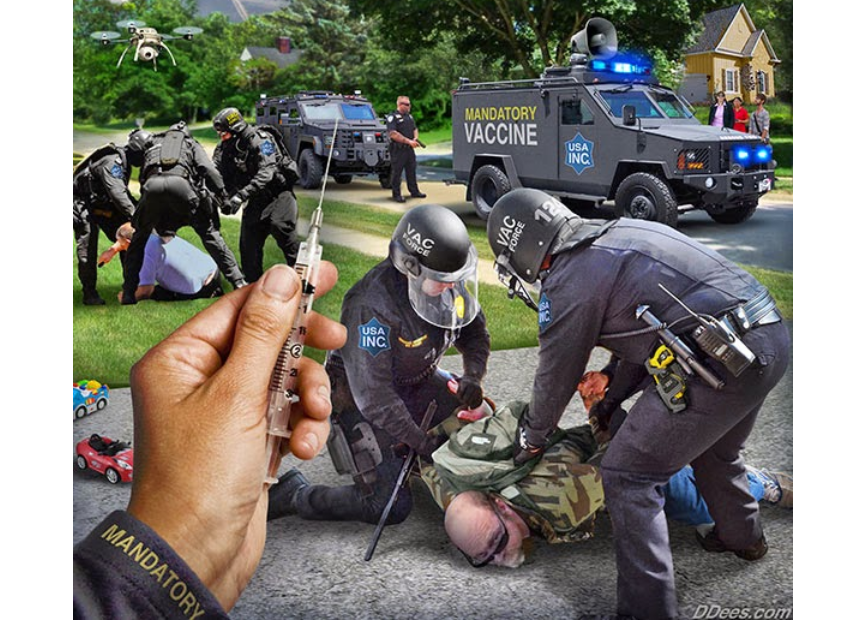
US Senate Passes Bill Approving Mandatory Vaccinations for Veterans

mandatory_vaccineBy Janet Phelan

Fundamentally, biological warfare is sneaky. It involves a microbial sucker punch to its intended target, often accomplished in a manner in which the aggressor can claim clean hands, while his victim may suffer or die.

Biological warfare can take a number of forms. The question—how can you get a bacteriological or toxic agent on board without the target being alerted– has been asked and answered. In addition to using humans and animals as vectors, biological warfare agents can be airborne, waterborne, foodborne or put into pharmaceuticals.

Substantial concerns have been voiced concerning the potential for inserting bioweapons into vaccines. Indeed, given the history of known contaminated vaccines, this is hardly a matter of speculation. Polio vaccines have been found to contain cancer. A Merck rotavirus vaccine was found to be contaminated with a pig virus. Another Merck product, the Hepatitis B vaccine, was reported to have been laced with the AIDS virus. In addition, a tetanus vaccine distributed in the Third World was found to contain human chorionic gonadotrophin, an anti-fertility agent known to produce spontaneous abortions.
 

The correlation between the rise in vaccinations of children and autism has become an urban legend.
A Bill has just passed the US Senate, mandating that the US Department of Veteran Affairs ensure that all veterans receive immunizations (vaccines) per a draconian schedule. At this juncture, active military must receive over a dozen vaccines. This piece of legislation is therefore an effort to extend the vaccine mandate to those who have previously served their country.


Read More Here

Monday, November 9, 2015

The Ghosts of War: Understanding the Shocking Suicide Rate of US Vets


Opinion
Get short URL
125066231

Why are suicide rates among veterans higher than in the general US population, American author David Swanson asks, posing yet another question: why does the subject of war as a suicide-related motive never arise in official studies?


The problem of high suicide rates among war veterans is widely discussed in the United States: the latest study has found that the suicide rate among recent veterans is 50 percent higher than non-military civilians.Incredible as it may seem, official reports brush aside the idea that war itself has anything to do with the problem, American activist and author David Swanson notes.
"Remarkably, the subject of war, their role in war, their thoughts about the supposed justifications (or lack thereof) of a war, never come up," Swanson wrote in his article for Information Clearing House.
The psychiatric studies and mass media reports are being focused on various "factors to blame" from "prior suicidality" to "poverty." However, they tell us virtually nothing, according to Swanson.
"Perhaps their goal isn't to tell us something factual so much as to shift the conversation away from why war causes murder and suicide, to the question of what was wrong with these soldiers before they enlisted," the author remarked.

Suicide rate for veterans far exceeds that of civilian population

Nearly one in five suicides nationally is a veteran, 49,000 took own lives between 2005 and 2011

By Jeff HargartenForrest BurnsonBonnie CampoChase Cook

 Updated:


Veterans are killing themselves at more than double the rate of the civilian population with about 49,000 taking their own lives between 2005 and 2011, according to data collected over eight months by News21.

Records from 48 states show the annual suicide rate among veterans is about 30 for every 100,000 of the population, compared to a civilian rate of about 14 per 100,000. The suicide rate among veterans increased an average 2.6 percent a year from 2005 to 2011, or more than double that of the 1.1 percent civilian rate, according to News21’s analysis of states’ mortality data.

Nearly one in every five suicides nationally is a veteran — 18 to 20 percent annually — compared with Census data that shows veterans make up about 10 percent of the U.S. adult population.
“Anytime a veteran who fought our enemies abroad or helped defend America from within our borders dies by their own hand, it’s completely unacceptable,” Rep. Jeff Miller, R-Fla., chairman of the House Committee on Veteran’s Affairs, told an American Legion conference in Washington earlier this year. The suicide rate has remained consistently high, he said, adding that more work was needed to address gaps in veterans’ mental health care.

“It’s not enough that the veteran suicide problem isn’t getting worse,” he said, “it isn’t getting any better.”


Read More Here

..........................................................................................

Report: Suicide rate spikes among young veterans

 
WASHINGTON -- The number of young veterans committing suicide jumped dramatically from 2009 to 2011, a worrying trend that Veterans Affairs officials hope can be reversed with more treatment and intervention.

New suicide data released by the department on Thursday showed that the rate of veterans suicide remained largely unchanged over that three-year period, the latest for which statistics are available. About 22 veterans a day take their own life, according to department estimates.

But while older veterans saw a slight decrease in suicides, male veterans under 30 saw a 44 percent increase in the rate of suicides. That’s roughly two young veterans a day who take their own life, most just a few years after leaving the service.

“Their rates are astronomically high and climbing,” said Jan Kemp, VA’s National Mental Health Director for Suicide Prevention. “That’s concerning to us.”


Related

Monday, October 26, 2015

Obamacare customers are facing an average 7.5 percent price increase for a key benchmark health plan next year; But the average rate hikes will vary dramatically from state to state


 POLITICO

obamacare_gty_629.jpg
Roughly 80 percent of Obamacare customers received subsidies. | Getty

Obamacare rates to rise 7.5 percent next year

But the figures will vary widely from state to state.

Obamacare customers are facing an average 7.5 percent price increase for a key benchmark health plan next year, according to limited data the Obama administration released just days before the start of a challenging enrollment season.

But the average rate hikes will vary dramatically from state to state — skyrocketing more than 30 percent in Alaska, Montana and Oklahoma while dropping 12.6 percent in Indiana.
The administration's analysis looks at the second-cheapest "silver" plan available to customers when open enrollment begins on Nov. 1. Those benchmark plans, which are among the most popular sold on the law's health insurance exchanges, are important because they're used to calculate how much federal support low- and middle-income exchange customers will receive toward their monthly premiums.

More than 70 percent of exchange customers chose silver plans this year, which cover about 70 percent of medical costs. Roughly 80 percent of Obamacare customers received subsidies, worth an average monthly credit of $270.


Read More Here

Friday, October 23, 2015

As Congress Fails to Act, 1 in 3 Seniors Facing Big Hike in Medicare Premiums


Wikimedia Commons
 
 
​
_
 
Hopes are dimming that Congress will intervene to block a huge Medicare premium increase of over 50 percent for nearly a third of the 50 million elderly Americans who receive their physician care and other health services through Medicare Part D.

Republicans and Democrats are deadlocked over how to come up with roughly $10.5 billion to prevent Medicare premiums from skyrocketing for millions of seniors beginning next January. The looming increase is the result of a quirk in the law that drives up premiums for wealthier Americans and poor people with chronic medical problems in years when the Social Security Administration doesn’t approve a cost-of-living adjustment for beneficiaries.

Related: Millions Face a 50 % Medicare Premium Hike If Obama and Congress Don’t Act
 
While both parties are interested in doing something to reduce or avert the premium hikes, Republicans are demanding that the cost of any bailout be offset by cuts in other areas of the Medicare program, while Democrats are resisting that approach. Moreover, there is a division between House Minority Leader Nancy Pelosi (D-CA) – a major champion of a bailout – and some Senate Democratic leaders who are less enthusiastic about the effort and how to pay for it.

“It’s a big mess,” said one Washington health care expert who is following the negotiations closely.
Negotiations may pick up later this month once the Centers for Medicare and Medicaid Services formally releases its official 2016 premium rates, according to a report on Thursday by the Morning Consult.


Read More Here_

Monday, October 19, 2015

Feds keeping us in the dark : 11 co-ops “are either on a corrective action plan or enhanced oversight. More than $900 million of the original $2 billion in loans has been lost.


Daily Caller News Foundation

Feds Hide Secret List Of 11 Staggering Obamacare Insurers

 
A man looks over the Affordable Care Act (commonly known as Obamacare) signup page on the HealthCare.gov website in New York in this Oct. 2, 2013 photo illustration. (REUTERS/Mike Segar)  A man looks over the Affordable Care Act (commonly known as Obamacare) signup page on the HealthCare.gov website in New York in this Oct. 2, 2013 photo illustration. (REUTERS/Mike Segar)

Richard Pollock

Federal officials have a secret list of 11 Obamacare health insurance co-ops they fear are on the verge of failure, but they refuse to disclose them to the public or to Congress, a Daily Caller News Foundation investigation has learned.

Just in the last three weeks, five of the original 24 Obamacare co-ops announced plans to close, bringing the total of failures to eight barely two years after their launch with $2 billion in start-up capital from the taxpayers under the Affordable Care Act.

All 24 received 15-year loans in varying amounts to offer health insurance to poor and low income customers and provide publicly funded competition to private, for-profit insurers. The eight co-ops to announce closings served populations in ten states: Iowa, Nebraska, Kentucky, West Virginia, Louisiana, Nevada, Tennessee, Vermont, New York and Colorado.

Nearly half a million failing co-op customers will have to find new coverage in 2016. More than $900 million of the original $2 billion in loans has been lost.
 
The 11 unidentified co-ops appear to be still operating but are now on “enhanced oversight” by the federal Centers for Medicare and Medicaid, which manages the Obamacare program. The 11 received letters from CMS demanding that they take urgent actions to avoid closing.

Aaron Albright, chief CMS spokesman, said 11 co-ops “are either on a corrective action plan or enhanced oversight. We have not released the letters or names.” He gave no grounds for withholding the information from either the public or Congress.

CMS officials have stonewalled multiple congressional inquiries into the co-op financial problems. The latest congressional inquiry came in a September 30 letter to CMS acting administrator Andy Slavitt demanding transparency over the troubled program.

“We have long been concerned about the financial solvency of CO-OPs,” three House Ways and Means committee members wrote to Slavitt. “Which plans have received these warnings or have been placed on corrective plans,” the congressmen asked. To date, they have received no reply.
Insurance commissioners in Vermont were the first to refuse to license the federally approved co-op there in 2013 because they feared those financial plans were unrealistic. But then the dominoes began to fall this year, resulting in at least eight co-op failures. And if CMS officials are to be believed, more failures may be on the way.

Sen. Charles Grassley , a senior member of the Senate Finance Committee who has been an outspoken critic of the troubled co-op program, said transparency should be a top priority for the faltering program.

“Since the public’s business generally ought to be public, CMS should have a good reason for not disclosing which co-ops are troubled,” he said.


Read More Here

Tuesday, September 29, 2015

Parents Threatened with Arrest for Treating Daughter’s Epilepsy with Legal Cannabis Oil at School


cannabis_oilBy Jay Syrmopoulos


 In a precedent-setting case, a state judge ruled this month that the mother of a New Jersey teenager with epilepsy, who is also her legal medical caregiver, cannot go to her school to administer her daughter’s cannabis oil.

The oil treatments, which are legal in the state, control the young girl’s seizures and allow her to function normally in school, according to her parents.

In its opinion, the court reasoned that state and federal laws prohibiting drug possession on school grounds takes precedence over the students’ right to use medical cannabis derivatives. This ruling is in spite of the fact that New Jersey has already legalized cannabis for medical use.

This court setback is the third such defeat for the Barbour family, who have vowed to continue appealing. According to legal experts, this case is believed to be the first of its kind in the United States.

Administrative Law Judge, John S. Kennedy ruled in January and again on appeal in August that the Larc School and the Maple Shade school district are stuck in a legal quandary. If allowed to administer the drug, the school nurse would be violating state laws, which ban the use of drugs in school zones and federal law that deems pot possession a crime.

According to a report by NJ.com:
Roger and Lora Barbour have sued to require the nurse at their 16-year-old daughter’s special education school in Bellmawr administer cannabis oil, just like the nurse dispenses prescribed medication to other students. Since April, Genny has attended only half-days of school so she can be home for her lunchtime dose of homemade oil, diluted in a small glass of cola.
In his 11-page ruling, the judge wrote that the family failed to show that their daughter would suffer “irreparable harm” if she were denied her medicine during the school day.

Read More Here

Friday, May 16, 2014

Senator Cornyn has called for an independent investigation into allegations that wait time data was manipulated at Department of Veterans Affairs clinics in Central Texas and San Antonio.

...

Senator demands independent investigation as VA scandal spreads

The chair of the Texas Senate’s veteran affairs committee on Monday called for an independent investigation into allegations that wait time data was manipulated at Department of Veterans Affairs clinics in Central Texas and San Antonio.
Sen. Sen. Leticia Van de Putte, D-San Antonio, made her comments as the burgeoning scandal over VA patient care reached the Rio Grande Valley, where a former VA doctor accused the department of delaying colonoscopies for veterans with cancer and jeopardizing veterans’ visits to non-VA specialists because the agency took so long to reimburse private providers.
In Austin, Van de Putte demanded accountability from top VA leaders over claims that scheduling clerks were trained to falsely input appointment data to make it appear that waiting times were far shorter than they really are. The VA aims to see patients within 14 days of their desired appointment dates, and medical centers are graded on their ability to hit those targets.
“It appears the motivation for the deception…was a personal pay day in the form of a VA performance bonus,” Van de Putte said. “Someone is responsible. These scheduling clerks didn’t just decide to falsify reports all over the country at the same time…The allegations show a pattern that crosses multiple clinics and shows the actions were condoned at a pretty high level.”
The claims of whistleblower Brian Turner, a VA scheduling clerk who said he saw data manipulation in Waco, Austin and San Antonio, were first reported by the American-Statesman last week.
On Monday, new allegations emerged against the VA Health Care Center in Harlingen, and officials with the VA’s Texas Valley Coastal Bend Health Care System, which oversees the facility. Dr. Richard Krugman, former associate chief of staff at the center, told investigators that “patient care was impacted by the VA’s requirements to cut costs,” according to documents obtained by the American-Statesman.

Read More Here

.....

Cornyn Demands Answers From VA Secretary

May 13 2014

WASHINGTON – U.S. Senator John Cornyn (R-TX) today announced on Fox News he has sent a letter to Veterans Affairs Secretary Eric Shinseki after several reports surfaced of abuse and mismanagement in VA clinics in Texas and across the country.  The letter asks several questions of Sec. Shinseki, and calls on the Secretary to provide answers during his testimony before the Senate Veterans’ Affairs Committee on Thursday, May 15. A video of Sen. Cornyn’s Fox News interview regarding VA failures can be viewed here. Sen. Cornyn’s questions for Sec. Shinseki include:
“Can you confirm that supervisors at VA facilities in Texas have not and are not ordering employees to ‘game the system’ by concealing wait times?
“Can you confirm that veterans diagnosed with cancer of any kind that requires chemotherapy are provided that treatment in a timely manner by the VA? 
“Can you confirm that any bonuses or pay raises are on hold for senior leaders at VA facilities in San Antonio, Austin, Waco, Harlingen, and all VA facilities where similar allegations have been made?
“Can you confirm that staff at facilities currently under investigation for allegations of falsified reports will not be assigned to investigate other VA facilities? 
“Can you confirm that documents are being preserved at all Texas VA facilities?”
The full text of the letter is below and attached.
May 13, 2014
The Honorable Eric K. Shinseki
Secretary of Veterans Affairs
810 Vermont Avenue, NW
Washington, DC  20420
Dear Secretary Shinseki:
I write to reiterate my deep concern regarding the numerous, troubling reports that continue to surface regarding mistreatment of our nation’s veterans at Department of Veterans Affairs (VA) facilities across the country.  These reports indicate that incidents—including the withholding of life-saving care from some veterans—were the result of a culture of cover-ups, indifference as to the health and welfare of our veterans, and a complete lack of accountability that pervades your Department.  Yet, the Administration’s response to these troubling revelations has been lethargic and its inaction puzzling.
During your testimony before the Senate Veterans’ Affairs Committee on Thursday, I call on you to provide direct, clear answers to these questions:
1.         According to recent reports, you have ordered a “face-to-face audit” of all Department of Veterans Affairs clinics.  Can you describe in detail how you intend for this audit to be conducted, its timeline for completion, and what measures are being taken to ensure these audits are conducted in an independent and transparent manner?  If the allegations are substantiated, what type of action are you willing to take to right these wrongs, and how will the responsible officials be held accountable?
2.         A whistleblower in Texas claims that during his time as a scheduling clerk for VA facilities in Austin, San Antonio, and Waco, he was directed by supervisors to hide true wait times by inputting false records into the VA’s scheduling system.  VA officials in San Antonio deny this, while VA officials in Austin claim employees may have been discouraged from using the electronic scheduling tool that would reveal long wait times, but that those orders did not come from “executive leadership.”  Can you confirm that supervisors at VA facilities in Texas have not and are not ordering employees to “game the system” by concealing wait times?
3.         An Austin-based surgeon recently contacted my office to inform me he is not accepting any further subcontracts from the VA due to failures in patient care that he has personally witnessed.  Specifically, he saw a veteran in August of 2013 who was referred to him by the VA after they detected a lesion they suspected was cancerous.  Already two months had lapsed between the time they detected the lesion and the time he saw the veteran.  This surgeon performed a biopsy and diagnosed it as laryngeal cancer.  He informed the VA that the veteran needed immediate chemotherapy – that they had a real chance to treat his cancer if they started chemotherapy right away.  Almost two months later, he followed up on his case only to learn the VA never provided chemotherapy, with no good excuse as to why.  The veteran died several days later.  Can you confirm that veterans diagnosed with cancer of any kind that requires chemotherapy are provided that treatment in a timely manner by the VA?
4.         A whistleblower in South Texas who formerly served as associate chief of staff for the VA Texas Valley Coastal Bend Health Care System in Harlingen, TX, told the Washington Examiner this week that roughly 15,000 patients who should have had the potentially life-saving colonoscopy procedure either did not receive it or were forced to wait longer than they should have.  He also claims that approximately 1,800 records were purged to give the false appearance of eliminating a backlog.  Can you confirm that veterans requiring colonoscopies to detect cancer are provided with the procedure in a timely manner?
5.         In 2012, VA medical facilities in Central Texas reported that 96 percent of veterans were seen by providers within 14 days of their preferred appointment date.  In the South Texas region that includes San Antonio, the statistics were even more impressive: 97 percent of veterans were seen within two weeks, according to annual performance reports.  Can you produce documents that show the original dates of veterans’ requests for appointments for 2012?
6.         According to public records, the director of the Phoenix VA hospital, where news investigations have discovered at least 40 veterans died while waiting for care and languishing on secret lists, received more than $9,000 in bonus pay in 2013.  Can you confirm that any bonuses or pay raises are on hold for senior leaders at VA facilities in San Antonio, Austin, Waco, Harlingen, and all VA facilities where similar allegations have been made?
7.         My staff attended a Quarterly Congressional Staffer and Veterans Service Organization Representative Meeting at the Central Texas Veterans Health Care System (CTVHS) Friday, May 9, 2014.  Sallie Houser-Hanfelder, director of the Central Texas Veterans Health Care System, told meeting attendees that, as part of the face-to-face audits you have ordered, a quality systems manager from CTVHS would be sent to another VA facility to assist with investigations there.  Can you confirm that staff at facilities currently under investigation for allegations of falsified reports will not be assigned to investigate other VA facilities?
8.         A former VA employee at the VA Greater Los Angeles Medical Center told the Daily Caller that employees at the Center destroyed veterans’ medical files in a systematic attempt to eliminate backlogged veteran medical exam requests.  The former employee said, “The waiting list counts against the hospital’s efficiency.  He said the chief of the Center’s Radiology Department initiated an “ongoing discussion in the department” to cancel exam requests and destroy veterans’ medical files so that no record of the exam requests would exist, thus artificially reducing the backlog.  In addition, you have been subpoenaed by the House Veterans Affairs Committee over concerns by Chairman Jeff Miller that evidence in Phoenix may have been destroyed after the Committee issued a document-preservation order on April 9.  A top VA official testified on April 24 that a spreadsheet of patient appointment records, which may have been a "secret list" proving misconduct, was shredded or discarded.  Can you confirm that documents are being preserved at all Texas VA facilities?
I look forward to your prompt and detailed responses to these pressing questions.
Sincerely,
JOHN CORNYN
United States Senator

.....
Enhanced by Zemanta

Friday, May 2, 2014

At least 40 U.S. veterans died waiting for appointments at the Phoenix Veterans Affairs Health Care system, many of whom were placed on a secret waiting list. Depraved Indifference or Premeditated Murder?

.....
Watch this video

Deaths tied to VA hospital's secret list


(CNN)
The secret list was part of an elaborate scheme designed by Veterans Affairs managers in Phoenix who were trying to hide that 1,400 to 1,600 sick veterans were forced to wait months to see a doctor, according to a recently retired top VA doctor and several high-level sources.
For six months, CNN has been reporting on extended delays in health care appointments suffered by veterans across the country and who died while waiting for appointments and care. But the new revelations about the Phoenix VA are perhaps the most disturbing and striking to come to light thus far.
Internal e-mails obtained by CNN show that top management at the VA hospital in Arizona knew about the practice and even defended it.
Dr. Sam Foote just retired after spending 24 years with the VA system in Phoenix. The veteran doctor told CNN in an exclusive interview that the Phoenix VA works off two lists for patient appointments:
There's an "official" list that's shared with officials in Washington and shows the VA has been providing timely appointments, which Foote calls a sham list. And then there's the real list that's hidden from outsiders, where wait times can last more than a year.
Deliberate scheme, shredded evidence
"The scheme was deliberately put in place to avoid the VA's own internal rules," said Foote in Phoenix. "They developed the secret waiting list," said Foote, a respected local physician.
The VA requires its hospitals to provide care to patients in a timely manner, typically within 14 to 30 days, Foote said.
According to Foote, the elaborate scheme in Phoenix involved shredding evidence to hide the long list of veterans waiting for appointments and care. Officials at the VA, Foote says, instructed their staff to not actually make doctor's appointments for veterans within the computer system.
Instead, Foote says, when a veteran comes in seeking an appointment, "they enter information into the computer and do a screen capture hard copy printout. They then do not save what was put into the computer so there's no record that you were ever here," he said.
According to Foote, the information was gathered on the secret electronic list and then the information that would show when veterans first began waiting for an appointment was actually destroyed.
"That hard copy, if you will, that has the patient demographic information is then taken and placed onto a secret electronic waiting list, and then the data that is on that paper is shredded," Foote said.
"So the only record that you have ever been there requesting care was on that secret list," he said. "And they wouldn't take you off that secret list until you had an appointment time that was less than 14 days so it would give the appearance that they were improving greatly the waiting times, when in fact they were not."
I feel very sorry for the people who work at the Phoenix VA. They all wish they could leave 'cause they know what they're doing is wrong.
Dr. Sam Foote
Foote estimates right now the number of veterans waiting on the "secret list" to see a primary care physician is somewhere between 1,400 and 1,600.
Doctor: It's a 'frustrated' staff
"I feel very sorry for the people who work at the Phoenix VA," said Foote. "They're all frustrated. They're all upset. They all wish they could leave 'cause they know what they're doing is wrong.
"But they have families, they have mortgages and if they speak out or say anything to anybody about it, they will be fired and they know that."
Several other high-level VA staff confirmed Foote's description to CNN and confirmed this is exactly how the secret list works in Phoenix.
Foote says the Phoenix wait times reported back to Washington were entirely fictitious. "So then when they did that, they would report to Washington, 'Oh yeah. We're makin' our appointments within -- within 10 days, within the 14-day frame,' when in reality it had been six, nine, in some cases 21 months," he said.

Thomas Breen was so proud of his time in the Navy that he wanted to be treated only at a VA facility, his family says.
In the case of 71-year-old Navy veteran Thomas Breen, the wait on the secret list ended much sooner.
"We had noticed that he started to have bleeding in his urine," said Teddy Barnes-Breen, his son. "So I was like, 'Listen, we gotta get you to the doctor.' "
Teddy says his Brooklyn-raised father was so proud of his military service that he would go nowhere but the VA for treatment. On September 28, 2013, with blood in his urine and a history of cancer, Teddy and his wife, Sally, rushed his father to the Phoenix VA emergency room, where he was examined and sent home to wait.
"They wrote on his chart that it was urgent," said Sally, her father-in-law's main caretaker. The family has obtained the chart from the VA that clearly states the "urgency" as "one week" for Breen to see a primary care doctor or at least a urologist, for the concerns about the blood in the urine.
"And they sent him home," says Teddy, incredulously.
Sally and Teddy say Thomas Breen was given an appointment with a rheumatologist to look at his prosthetic leg but was given no appointment for the main reason he went in.
.
.
Veterans dying waiting for healthcare


Are we fulfilling our promise to veterans?
Enhanced by Zemanta

Thursday, April 3, 2014

An Iraq war veteran who was grappling with mental health issues opened fire at Fort Hood, Texas, in an attack that left four people dead and 16 wounded


Gunman in Fort Hood shooting had behavioral issues, authorities say


An Iraq war veteran who was grappling with mental health issues opened fire at Fort Hood, Tex., in an attack that left four people dead and 16 wounded Wednesday afternoon, according to preliminary law enforcement and military reports. The gunfire sent tremors of fear across a sprawling Army post still reeling from one of the worst mass shootings in U.S. history.
Many basic details about the shooting remained unclear in the chaotic hours after the first calls for help around 4 p.m., but senior U.S. law enforcement officials said the incident did not appear to be linked to any foreign terrorist organizations. The shooter was among those who died, the officials said.
The officials identified the shooter as Army Spec. Ivan Lopez, 34, a military truck driver, who was dressed in his standard-issue green camouflage uniform. Lopez opened fire in two locations on the vast central Texas post, inside a building housing the 1st Medical Brigade and in a facility belonging to the 49th Transportation Battalion.
Police spent Wednesday night searching his apartment in Killeen, the city that abuts the Army facility. Gen. Mark A. Milley, the commander of Fort Hood, said the soldier, whom he did not identify by name, served four months in Iraq in 2011.
Milley said the shooter “had behavioral health and mental health issues.” He said the soldier, who self-reported a traumatic brain injury and was taking anti-depressants, had been under examination to determine whether he had post-traumatic stress disorder. “We are digging deep into his background,” Milley said.
Milley said the soldier opened fire with a .45-caliber Smith & Wesson semiautomatic pistol that was purchased recently but was not authorized to be brought on the post. He was eventually confronted by a female military police officer. He put his hands up but then pulled out a gun from under his jacket. “She engaged,” Milley said, and then the soldier put the gun to his head and shot himself.
The shooting was the third major gun attack at a U.S. military installation in five years, leaving the nation grappling with the prospect of yet more flag-draped funerals for troops killed on the homefront. A government contractor went on a shooting rampage at the Washington Navy Yard in September, leaving 12 people dead. In 2009, Army Maj. Nidal M. Hasan opened fire on a group of soldiers at Fort Hood preparing to deploy to Iraq and Afghanistan, killing 13 people and wounding more than 30.
Doctors at the Scott & White hospital in Temple, Tex., said Wednesday that they have treated eight of the wounded and that one more was on the way. Three of the patients were in critical condition in the ICU, and five were in serious condition. Seven of them were male, and one was female. Their injuries ranged from mild to life-threatening, a majority of them caused by single-gunshot wounds to the neck, chest and abdomen.
President Obama said he was “heartbroken that something like this might have happened again.” Speaking during a fundraising trip to Chicago, he pledged “to get to the bottom of exactly what happened.”


 Read More Here

.....


Four killed in shooting at Fort Hood; gunman dead, multiple injuries


A shooting at the Fort Hood military installation in Texas left at least four people dead, including the gunman, and more than a dozen were injured, according to authorities.
The gunman, identified by multiple government sources as Army Specialist Ivan Lopez, took his own life, officials said.
Lopez, 33, of Kileen, Tex., was wearing an Army uniform at the time of the shooting, Michael McCaul (R-Tex.), chairman of the House Homeland Security Committee, told reporters.
Four people were taken to Scott and White Memorial Hospital in Temple, Tex., and another two are being brought there, said Glen Couchman, the facility’s chief medical officer. Their injuries that “range from stable to quite critical,” he said.
The installation was locked down for much of the afternoon and into the evening after the shooting before being lifted shortly before 9 p.m. local time.
Speaking in Chicago, President Obama said his administration was following the shooting closely.
“I want to just assure all of us we are going to get to the bottom of exactly what happened,” he said. “We’re heartbroken something like this might have happened again.”
The base was the site of a shooting in 2009 that ultimately killed 13 people and wounded another 32, the worst mass murder at a military installation in U.S. history. Nidal Hasan was sentenced to death last year for the shooting after being found guilty of premeditated and attempted premeditated murder.

Read More Here

.....


BREAKING: Shooting at Fort Hood Military Base - 1 Death Confirmed


Published on Apr 2, 2014
SHOOTING SITUATION STILL ACTIVE, Multiple Gunned Down
FORT HOOD (April 2, 2014) At least one person is dead after a shooting late Wednesday afternoon on Fort Hood, a post spokesman confirmed.
Others were injured in the shooting, but the spokesman didn't say how many.
The gunman is still at large and the spokesman said the incident is being treated as an active-shooter situation.
Warning sirens sounded late Wednesday afternoon at Fort Hood because of the incident.
A man who said he was a witness told News 10 that about 20 shots were fired in a post motor pool in the area of Motor Pool Road and Tank Destroyer Boulevard.

He said at least three people were hit.

He said the three victims were taken to a hospital.

The post was on lockdown as a result of the shooting, which occurred at around 4:25 p.m.

People on post were told to stay indoors.

A message that scrolled across the top of the post's website said, "Shelter in place immediately. This is not a test."

The 1st Calvary Division, which is based at Fort Hood, sent a Twitter alert telling people on base to close doors and stay away from windows.

Texas A&M Central Texas in Killeen canceled evening and night classes Wednesday at Fort Hood and at its Fairway building because of the situation on post.

First responders from surrounding communities were headed to the post.

Bell County sheriff's deputies and Department Public Safety troopers were also responding, sheriff's Lt. Donnie Adams said.

Media were being directed to the post's Visitor's Center.

On Nov. 5, 2009, Army psychiatrist Nidal Malik Hasan opened fire at Fort Hood's Soldier Readiness Center, killing 12 soldiers and one civilian and wounding 29 others before two Fort Hood civilian police officers shot him.

He is now on the military's death row.
Enhanced by Zemanta